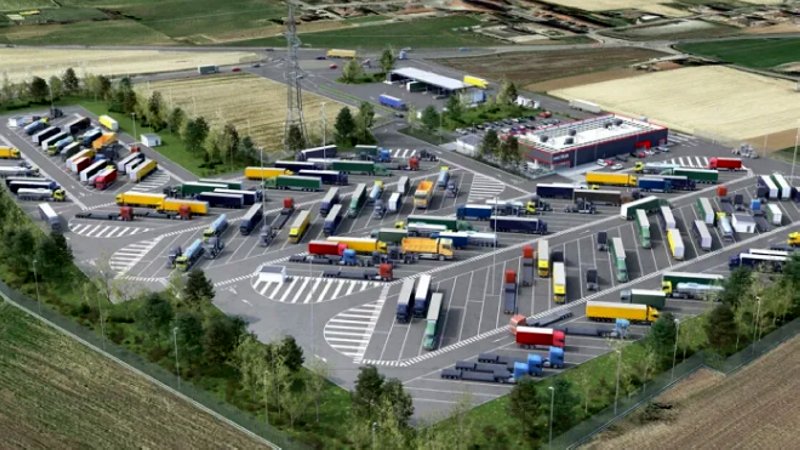





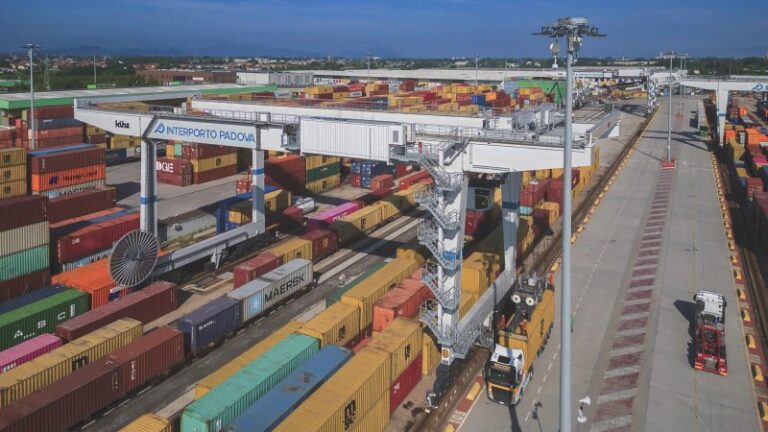
With the start of 2026, the supply of land-based intermodal services between Interporto Padova and northern Europe has increased, responding to growing demand from logistics operators and industrial players in north-eastern Italy. In mid-January, three new international rail services were activated, operated by Gts Rail, InRail and Lte Italia, with near-daily frequencies and strengthened capacity along corridors to Belgium and Germany. A key factor behind this service increase was the rise in train paths requested from Rete Ferroviaria Italiana, which resulted in the extension of full operations at the Rfi Interporto freight station to Sunday afternoons. This development improves operational continuity at the hub and better aligns operating windows with the requirements of international services.
The main new development is the launch of a connection between the Veneto intermodal hub and the Belgian port of Zeebrugge, operated by Gts Rail, consolidating services along the Italy–Belgium axis in an area considered strategic for intermodal flows from the north-east. The initial phase provides for three weekly services, with a planned increase to five trips during the second quarter of 2026. The first train from Zeebrugge arrived in Padua on 15 January, while the first outbound service from Padua to the Belgian terminal departed on Sunday 18 January.
Alongside the Belgian connection, two new services to Germany have been introduced. InRail, the railway undertaking of the Gruppo Autobrennero, has launched a service to Duisburg with six round trips per week, serving one of the country’s main industrial hubs. Lte Italia is also operating a new connection between Interporto Padova and the terminal of Rostock, a key German port, again with six pairs of trains per week.
2025 was also the year in which the company initiated an international opening of the intermodal terminal. On 18 December 2025, the award of the tender to the consortium Psa Intermodal Italy and Logtainer was announced, with a financial offer of €75 million. The transaction involves the creation of the company Intermodal Terminal Padova, with Interporto Padova holding 30% and the private partner 70%, alongside governance rights designed to safeguard the public component. These include representation on the board of directors and the chairmanship of the board of statutory auditors, as well as a binding intermodal designation for the area. The aim is to increase operations from around 8,000 trains per year to more than 15,000, and to raise volumes from over 411,000 TEU to approximately 700,000 TEU annually.
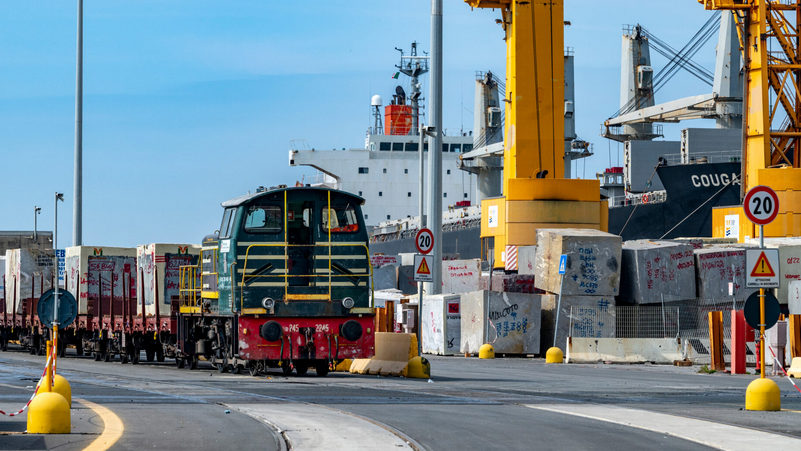
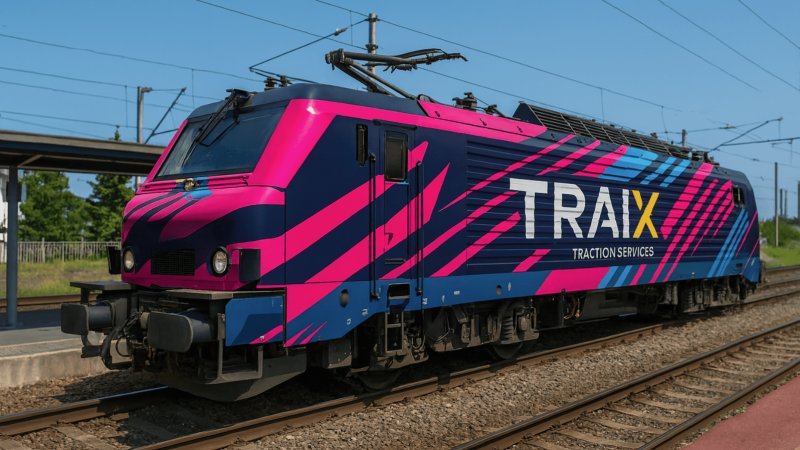
Another major operational innovation was the outsourcing of rail shunting services to Mercitalia Shunting & Terminal under a three-year contract worth €24 million. The traction fleet includes hybrid 744.1 locomotives and the use of HVO biofuel, with a direct impact on reducing emissions within the terminal area. In the same year, a new rail connection to the port of La Spezia was also launched, operated by the Gruppo Tarros, with weekly departures and transit via the Santo Stefano di Magra hinterland area, expanding access to maritime traffic.
At the same time, volume growth was accompanied by an acceleration in technological development. In March 2025, operational trials began for the remote control and automation of electric gantry cranes in the southern section of the terminal, across four 750-metre tracks with three active cranes. The project is based on an internally developed terminal operating system, featuring enhanced movement management and the integration of algorithms enabling the autonomous execution of part of the operations, with the objective of increasing productivity and capacity without further land take.
Site security was also addressed through a project involving automated aerial video surveillance. In June 2025, Enac (Italian civil aviation authority) issued an operational authorisation for “specific BVLOS” missions, allowing highly automated day and night flights. A drone takes off from a robotic hangar and sends alerts to the control centre, monitoring the intermodal terminal area, which covers around 350,000 square metres.
Finally, 2025 also consolidated the hub’s energy and environmental dimension, with the promotion of the first renewable energy community in Padua’s industrial zone. The initiative is based on a 1 MWp photovoltaic system covering around 20,000 square metres, with expected annual production of over one million kilowatt-hours and an estimated reduction of around 520 tonnes of carbon dioxide per year. In the same period, Interporto Padova completed the technological upgrade of part of the existing rooftop photovoltaic systems on its warehouses, increasing total installed capacity from 13 MWp to 16.3 MWp.
A.I.