




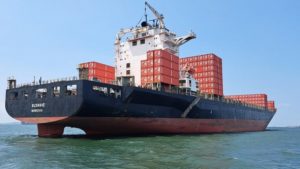
Ignazio Messina announced in January 2026 the resumption of port calls in Syria, adding the port of Latakia to the northbound rotation of its regular Mideast service, immediately after the call at Jeddah. The decision marks the company’s operational return to a market abandoned for several years and follows a profound shift in the Syrian geopolitical context, shaped by the fall of the Bashar al Assad regime in December 2024 and the subsequent lifting of international sanctions by the United States and the European Union.
According to the company, the inclusion of Latakia strengthens connectivity in an area considered strategic within its Mediterranean–Middle East–India network. The Mideast service is operated with three container ships of around 6,000 TEU, on an eighteen-day frequency, linking the main ports of the western and eastern Mediterranean with the Red Sea, the Persian Gulf and the India–Pakistan region. The addition of the Syrian port offers direct and regular connections to a market that is gradually reopening to international trade, capturing cargo demand linked to reconstruction and the restoration of supply chains.
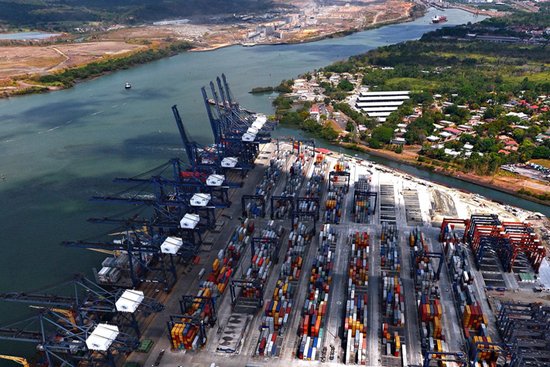
Messina’s move comes amid renewed interest by maritime operators in Syria. Latakia is the country’s main commercial port and handles almost all national container traffic. In 2025, the port recorded a significant increase in calls and volumes, supported by administrative simplification measures and infrastructure upgrades. Data released by the port authority indicate more than 1.5 million tonnes of cargo handled in the first nine months of the year, alongside a marked rise in vessels arriving from European ports.
A central element in Latakia’s operational relaunch is the 30-year agreement signed in May 2025 with the French group Cma Cgm for the management and expansion of the container terminal. The deal envisages total investments of €230 million across the initial phase and subsequent expansions, with the aim of increasing the port’s capacity to over one million TEU per year and upgrading draughts and berths to accommodate larger vessels. In parallel, in July 2025 Dp World signed a 30-year concession for the development of the port of Tartous, with an investment plan worth $800 million (around €740 million), confirming the interest of major international operators in the Syrian port system.
The return of European shipowners had already begun in October 2025, when a vessel from the Grimaldi Group called at Latakia carrying cars, machinery and industrial equipment, effectively reopening the maritime route between Italy and Syria after more than seven years. Messina’s operation stands out, however, for integrating the port into a regular liner service, ensuring continuity and predictability of connections compared with spot or occasional initiatives. In this sense, the Genoa-based company aims to position itself among the first operators to establish a stable presence in the Syrian market in the post-sanctions phase.
The return to Syria comes within a 2025 characterised by intense reorganisation and development activity for Ignazio Messina. On the industrial front, the year consolidated the definitive shift from the con-ro segment to fully containerised vessels, a transition initiated with the sale of eight con-ro units to the Msc Group in 2023. During 2024 and 2025, the fleet was strengthened through the acquisition of container ships on the second-hand market, bringing the total number of vessels operated, owned and chartered, to 21, with an overall capacity exceeding 40,000 TEU.
In support of the fleet renewal plan, in February 2025 the company secured a $50 million financing facility from a banking pool comprising Bper Banca and Banca Popolare di Sondrio, aimed at strengthening its owned fleet. On the operational side, Messina reinforced its presence in the Indian subcontinent, resuming calls at the port of Nhava Sheva after twenty years and establishing a wholly owned subsidiary in Mumbai to directly serve the local market. India is becoming one of the pillars of the group’s growth strategy in Asia–Europe trades.
In the western Mediterranean, between the end of 2025 and the beginning of 2026, a new container service dedicated to Algeria was launched, with regular connections between Genoa, Fos-sur-Mer, Barcelona and Algiers, against a backdrop of strengthening trade relations between Italy and Algeria. At the same time, the group continued its path of vertical integration, completing the acquisition of Terminal San Giorgio in the port of Genoa and developing rail intermodality through the Dinazzano terminal, linked to the main ports of northern and southern Italy.
The year 2025 was also marked by the operational management of the Red Sea crisis. Messina kept services active through the Suez Canal, absorbing higher insurance costs linked to war risk but avoiding the diversions around the Cape of Good Hope adopted by many large carriers. This choice helped preserve competitive transit times and contributed to an increase in container volumes, which in 2024 had already grown by 31.2% compared with the previous year.