





The joint offensive by the United States and Israel against Iran, which began on 28 February 2026, has triggered a systemic shock for global air transport, with particularly strong effects on the Europe–Asia axis. Within a few weeks, the closure or severe restriction of airspace over Iran, Iraq, Kuwait, Israel, Bahrain, Qatar and the United Arab Emirates has decimated operations at major Middle Eastern hubs, leaving a significant share of traffic “orphaned” from traditional Gulf carriers. European airlines and Turkish Airlines have rapidly moved into this gap, reallocating capacity and adding new frequencies to Asia.
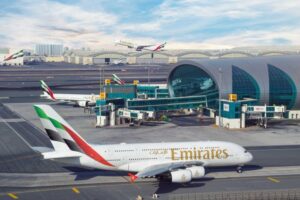
Over recent decades, Arab carriers – notably Emirates, Qatar Airways and Etihad – have built dense hub-and-spoke networks based on the geographic centrality of major airports in Dubai, Doha and Abu Dhabi, which have increasingly acted as connectors between Europe, Asia and Africa. Repeated Iranian attacks, including strikes on these airports, have undermined this architecture. According to analyses based on OAG data, Middle Eastern carriers have had to remove around 1.7 million weekly passenger seats, roughly one third of their pre-war capacity.
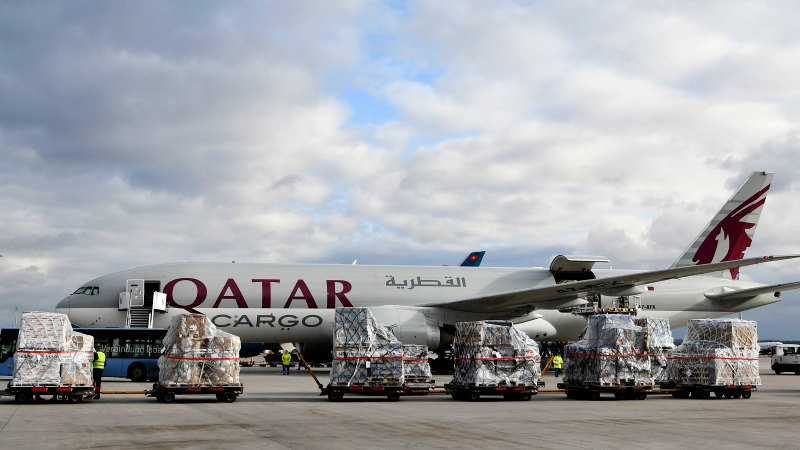
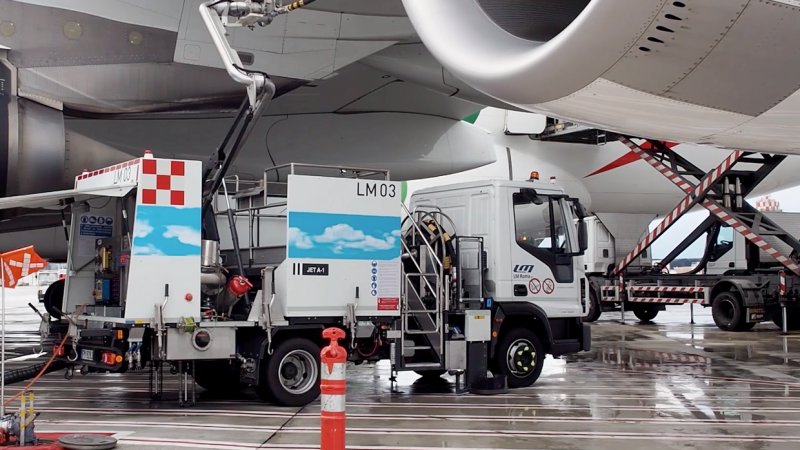
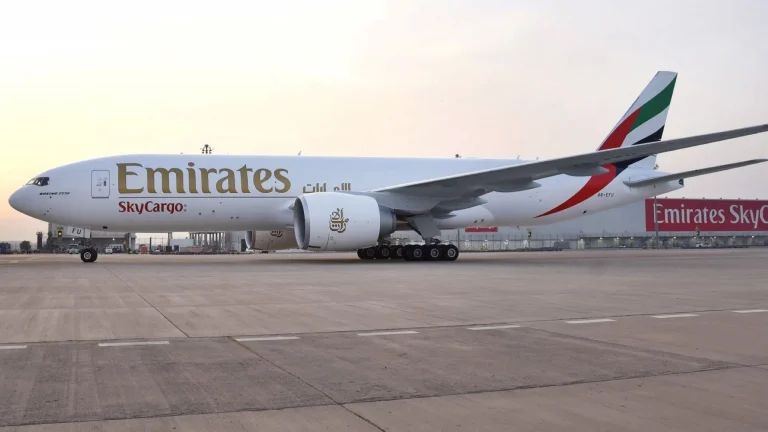
According to Bloomberg, Qatar Airways is currently operating at around 20% of its pre-conflict schedule, while Etihad is flying with frequencies reduced by about half. Emirates, following a temporary shutdown after a drone strike in mid-March damaged a fuel storage area at Dubai International, has recovered to around 75% of capacity, but remains well below the levels that had established it as a key global connector.
As connecting flights via the Gulf between Europe and Asia have thinned out, passengers and belly cargo have been forced to seek alternatives via direct routes or other hubs. At the same time, the surge in fuel prices – which have nearly doubled following Iran’s tightening of control over the Strait of Hormuz – has particularly hit carriers heavily exposed to medium- and long-haul operations, highlighting the fragility of the Middle Eastern hub model under conditions of war and infrastructure disruption.
European carriers have moved quickly into this space, having previously been under pressure from their Middle Eastern competitors. Based on Flightradar24 tracking, in the month following the start of the conflict, European airlines added 677 flights to Asia, recovering around 12% of the routes lost due to the collapse in Gulf-based capacity. This is not only about new connections, but also a reallocation of wide-body aircraft previously deployed on now-suspended or reduced Middle Eastern routes.
Lufthansa has been among the most aggressive operators in this repositioning. The German airline has increased frequencies to key Asian destinations such as Singapore and cities in South Asia, while also strengthening its African network, for example to South Africa, capitalising on growing long-haul demand and the absence of Gulf competitors. Its summer schedule also includes additional flights and frequencies to India and South-East Asia, partly offsetting the loss of intercontinental feed previously provided by Middle Eastern hubs.
In the United Kingdom, British Airways has increased services from London to Bangkok and Singapore and is planning to launch or reinforce long-haul routes via Asia, including services to Colombo and, in the longer term, Melbourne via South-East Asia. This additional capacity is aimed at capturing premium and leisure demand with medium-to-high spending power, historically contested with Emirates and Qatar Airways on routes to Oceania and South-East Asia.
Air France-KLM has adopted a slightly different strategy. Rather than significantly increasing frequencies, the Franco-Dutch group is boosting capacity on existing routes by deploying higher-density aircraft or configurations with more seats, particularly on destinations such as Bangkok, Singapore, Delhi, Mumbai, Shanghai, Tokyo and Phuket. Some additional frequencies are still planned on key routes, especially where the connectivity gap left by Gulf hubs is most evident.
European carriers are not the only ones benefiting from the Middle Eastern crisis. US airlines are also gaining from the rebalancing, albeit through dynamics less directly linked to the closure of Gulf hubs. United Airlines and Delta Air Lines have increased wide-body long-haul capacity by 11% and 12% respectively, largely in line with pre-existing growth plans, but now operating in a more favourable demand environment across Europe and Asia. In practice, additional aircraft deployed on transatlantic and transpacific routes are capturing part of the flows that previously transited via the Gulf, supporting point-to-point services or connections through European and North American hubs.
Asian long-haul carriers are also adapting, particularly those based in Japan, South Korea and South-East Asia. These airlines are showing strong resilience, with significant fare increases and pricing behaviour that suggests confidence in their ability to absorb long-haul demand no longer served by Gulf carriers. Average fares on some Europe–Asia routes have risen by several hundred euros per ticket, indicating a market under severe supply pressure.
Among the key players in this new balance is Turkish Airlines, which has positioned itself at the centre of intercontinental traffic in recent years. Istanbul’s role as a natural crossroads between Europe, Asia and Africa makes it the main alternative hub to the Gulf on east–west routes. In the weeks following the outbreak of the conflict, the Turkish carrier has gained market share, driven by increased transit demand on routes that bypass the Middle East via the Caucasus or, alternatively, more southerly corridors through Egypt and East Africa.
The airline has expanded its offer to Asia and Africa, leveraging its extensive destination network and the capacity of the new Istanbul airport, designed for strong growth in intercontinental traffic. However, it remains exposed to a significant risk: fuel hedging coverage of around 40–50%, well below the 70–85% typical of major European groups. With fuel prices nearly doubled, this could erode a substantial portion of the margins generated by increased volumes.
Despite figures suggesting a “revival” of European long-haul operations, analysts urge caution. Much of the capacity reallocation towards Asia is opportunistic: aircraft shifted from the Middle East are not always optimised for the new routes, which are often longer or characterised by different demand profiles, while high fuel costs limit the potential for structural expansion.
Moreover, industry consultants widely believe that Gulf carriers will not abandon their global hub ambitions. Once at least partially acceptable security conditions are restored and key airspaces reopen, Emirates, Qatar Airways and Etihad could return to the market with aggressive pricing strategies, supported by strong fundamentals and state backing. At that point, European airlines risk finding themselves with additional capacity deployed on routes that may suddenly become far more competitive. When the war ends, the key question will be whether European carriers can consolidate the advantage gained, turning a tactical shift into a lasting change in global air transport.
Michele Latorre