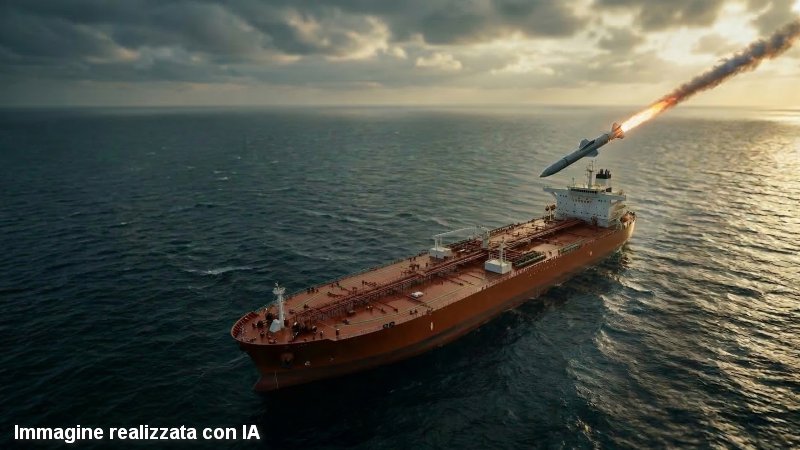





Since the end of February 2026, the Strait of Hormuz has become one of the most dangerous maritime areas in the world. Iran’s Islamic Revolutionary Guard Corps has claimed responsibility for a series of drone and missile attacks against commercial vessels in the area, triggering a collapse in traffic of more than 91% compared with normal levels. Maritime tracking platforms show hundreds of tankers waiting in the Persian Gulf, unable or unwilling to complete the passage towards the Gulf of Oman and the Arabian Sea. According to estimates by Greek analysts, between 100 and 150 of these ships are owned by Greek interests, with at least 80–85 Greek seafarers directly involved in the crisis.
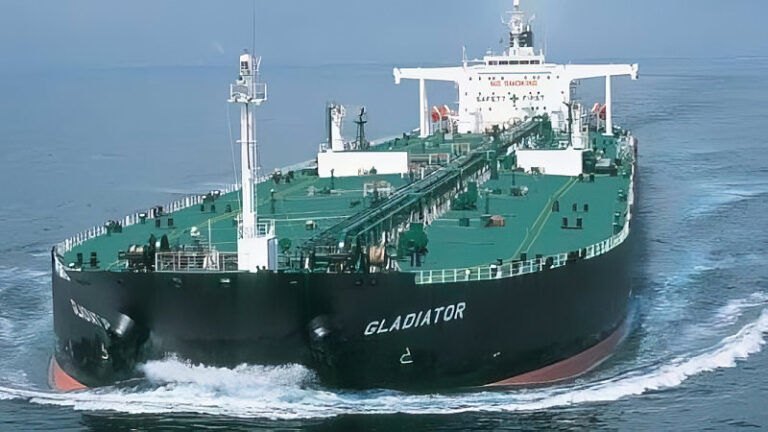
Against this backdrop, the shipping group controlled by George Prokopiou — and in particular its subsidiary Dynacom Tankers Management — has taken a different approach. Between 9 and 10 March 2026, five tankers from the Dynacom fleet are reported to have already crossed, or to be crossing, the Strait, making them among the very few large commercial vessels to do so since the crisis began. The most documented case is that of the Shenlong, a Suezmax-class tanker. The vessel loaded around one million barrels of Saudi crude at the Ras Tanura terminal in Saudi Arabia and left the Persian Gulf on 4 March bound for Hormuz. On that same date — according to data from the platforms Kpler, Lloyd’s List Intelligence and MarineTraffic — the Shenlong disappeared from tracking systems for almost five days. The signal reappeared on 9 March off India’s western coast, with Mumbai as its destination. This suggests that the passage through Hormuz took place during the period in which the vessel was invisible to civilian tracking systems.
George Prokopiou is one of the world’s most influential private shipowners. Born in Athens in 1946, he controls an empire that includes Dynacom Tankers for oil tankers, Dynagas for LNG transport and Sea Traders for dry bulk cargo, with more than 150 ships under management and around 85 vessels under construction. He is known for his ability to operate in geopolitically high-risk environments. In the past, Prokopiou was placed by Ukraine on a list of “international sponsors of the war” because of the role of his vessels in transporting Russian crude within the limits of the European price cap. The label was later withdrawn, but it reinforced his reputation as a shipowner willing to accept significant political risk in exchange for higher economic returns.
The logic behind the decision to continue transits through Hormuz is similar. According to the Wall Street Journal, sending five tankers into the Strait at this moment represents “one of the boldest moves” of Prokopiou’s career. The reasoning is twofold: in a situation where almost no competitors are willing to transit, those who continue can command exceptionally high freight rates, thanks to transport demand that remains strong — particularly from Asia — and a supply of tanker capacity that has suddenly become extremely scarce. At the same time, even partially maintaining the flow of crude exports from the Gulf helps prevent a further surge in global energy prices, with reputational implications for the Greek shipowner.
Operationally, the Shenlong’s passage was not without precautions. Dynacom tankers are reported to have embarked armed security teams and adopted reinforced navigation protocols in line with guidelines from Western navies and instructions issued by the Greek Ministry of Shipping. In addition to standard insurance cover, the voyages were reportedly backed by specific policies with very high premiums, structured in a way that kept the operation economically viable in light of the exceptional freight rates. Crews were offered special allowances, including salary increases and compensation in the event of death or disability, to persuade them to accept the risks associated with the transit.
The lack of tracking was most likely the result of the deactivation of the AIS, one of the most debated aspects of the entire episode. The practice — which temporarily makes a vessel invisible to public tracking systems, though not to local radar — is intended by operators to reduce exposure to potential hostile actions. However, it is legally controversial and raises safety and transparency concerns, as this operating mode also limits oversight by other sea users and maritime authorities.
Greece is the country most exposed to the crisis in the private shipping sector. It controls around 30% of the global tanker fleet, and the immobilisation of 100–150 Greek-owned vessels in the area has direct consequences for both the industry and the national economy. The Greek Ministry of Shipping has issued continuous alerts to ships sailing under the Greek flag or linked to Greek interests, stressing that any formal closure of the Strait would have devastating effects not only for the merchant fleet but for the entire global economy. Greek institutions and public opinion are caught between the central role of the maritime sector for the country and concern for the lives of seafarers, in a scenario in which the decisions of Prokopiou and Dynacom push that tension to its extreme limits.
P.R.