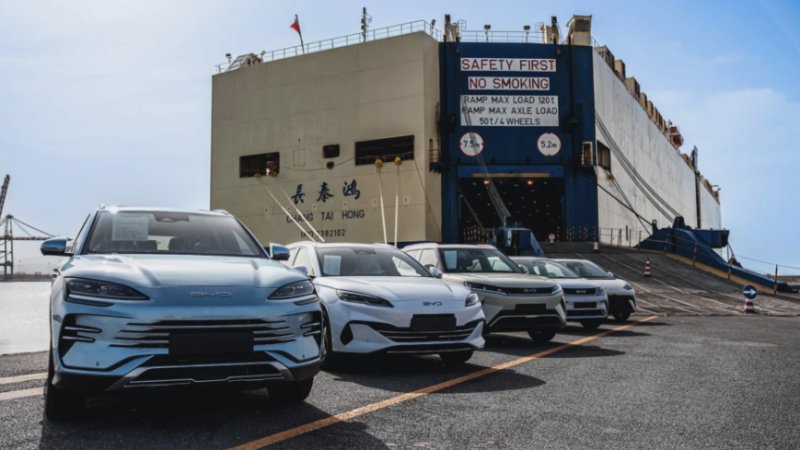










The German federal parliament has approved a €1.35 billion investment programme to expand and upgrade the port of Bremerhaven, with the aim of turning it into a dual-use maritime logistics hub for both civil and military purposes in line with NATO requirements set out in the Operationsplan Deutschland. The decision, adopted on 13 November 2025 by the Bundestag’s budget committee, is intended to ensure adequate transit capacity for handling large volumes of military vehicles and personnel in the event of a crisis. According to the Bundeswehr’s operational plan, up to 800,000 allied troops and 200,000 vehicles should be able to cross Germany within six months to reach the Alliance’s eastern flank.
The funding comes entirely from the federal defence budget. The first tranche of €150 million will be available in 2026, while €1.2 billion will be allocated through to 2031 for the construction and upgrading of port infrastructure. According to Bremen’s mayor Andreas Bovenschulte, this is the largest state subsidy ever granted to a project in the Land. The site selection was backed by Defence Minister Boris Pistorius and several federal MPs, who highlighted Bremerhaven’s already established role in allied military logistics.
The investment has reignited the broader debate on Germany’s port infrastructure needs. The Zentralverband der deutschen Seehafenbetriebe has argued that at least €3 billion from the defence budget would be required to ensure full operational efficiency across all ports relevant to national defence, while a further €15 billion from the special infrastructure fund would be necessary to clear the maintenance backlog at North Sea and Baltic Sea ports. The DGB Nord union has supported calls for a stable annual allocation of €500 million, arguing that national logistical resilience depends on long-term planning.
The work plan presented by Bremenports includes modernising around three kilometres of the container quay, replacing the swing bridge on the Columbusinsel, upgrading Speckenbüttel station and improving road access in the Überseehafen area. It also covers interventions on the energy network and preparations for shore-side power supply. The company has described these works as dual-use infrastructure, supporting commercial activity while being readily adaptable for military requirements.
Operators have broadly welcomed the decision. BLG Logistics, the port’s main operator, noted that the allocation of funds recognises the strategic importance of a port that already handles around one million tonnes of heavy cargo and 4.4 million TEU per year. ZDS and DGB Nord described the move as a “clear signal” from the federal government on the need to strengthen port logistics with defence considerations in mind.
The most significant criticism has come from Hamburg, which was excluded from the funding despite being Germany’s largest port. The local political debate has focused on responsibility for the omission, while at federal level a key factor was highlighted in the assessment: the minority stake held by the Chinese company Cosco in a Hamburg terminal, considered sensitive from a security standpoint in NATO-related projects. The lack of funding has fuelled tensions between the local SPD and CDU, which have exchanged accusations over the handling of the matter.
On the social front, the Northern Germany Peace Alliance has criticised the investment, calling it a step towards turning the port into a NATO platform for transferring weapons and heavy equipment to Eastern Europe. The Die Linke Bremerhaven party has also opposed the allocation of resources, arguing that increased military capacity is being prioritised over the region’s commercial needs.
Bremerhaven’s geopolitical position and its long-standing military logistics tradition have nevertheless played a significant role in the project. The port, used by the United States already in the post-war period and throughout the Cold War, offers deep-water, tide-independent berths and facilities specialised in handling heavy cargo — factors that reinforced the federal government’s choice to concentrate the new NATO logistics hub there.