





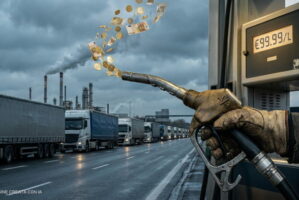
France has launched a new support package for businesses affected by rising fuel prices, triggered by the war in Iran and tensions in oil markets. At the start of April 2026, the Ministry of the Economy and Finance defined the “prêts flash carburant” scheme, namely subsidised loans for small and medium-sized enterprises with high exposure to energy costs. Applications will open on 13 April 2026 via the platform of Bpifrance (public investment bank), which is responsible for operational management.
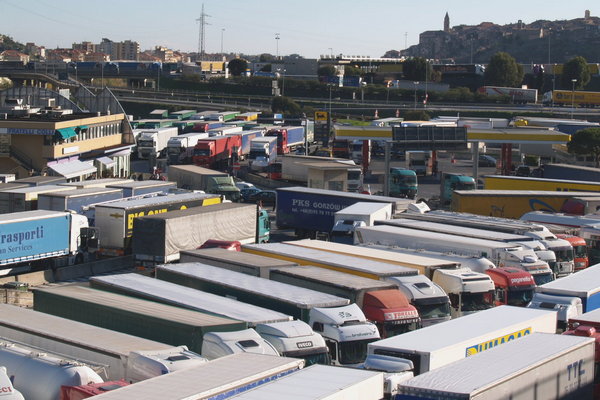
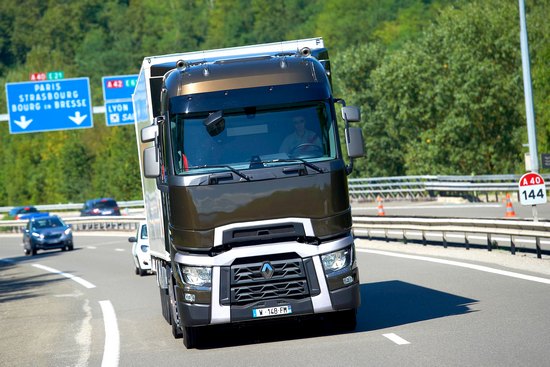
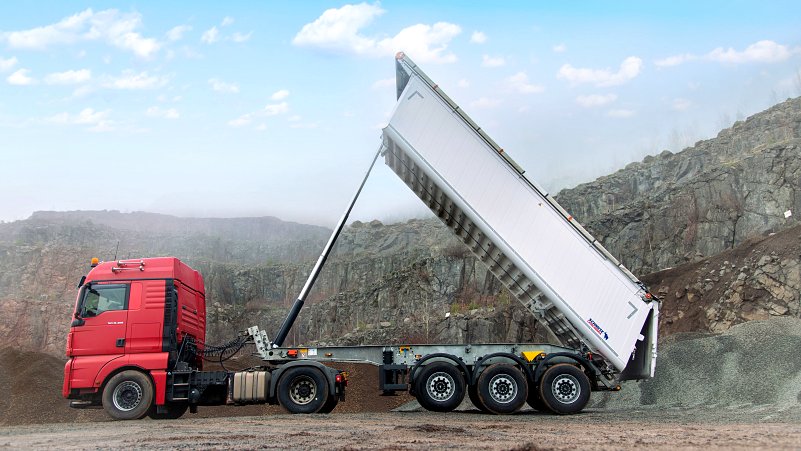
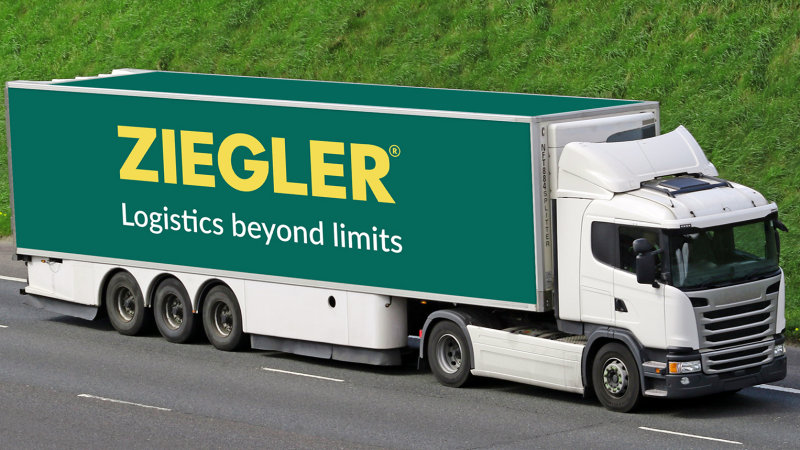
The measure is aimed in particular at road haulage, agriculture and fishing, sectors in which fuel has a direct impact on operating costs. Eligibility is subject to a minimum threshold: fuel expenditure must account for at least 5% of company turnover. The objective is to concentrate resources on the activities most exposed to the energy shock, avoiding dispersion.
At the core of the scheme are loans of up to €50,000, with a duration of 36 months and an annual interest rate of 3.8%. No collateral or personal guarantees are required, a feature designed to facilitate rapid access to liquidity. However, these are repayable instruments, not grants: beneficiary companies will have to repay the capital over the following three years, also to avoid the risk of infringement procedures by the European Union. The approach marks a departure from 2022, when Paris introduced blanket pump discounts to contain the impact of rising energy prices. That decision weighed heavily on the public deficit, pushing the government towards more targeted solutions compatible with budget constraints.
The measure comes amid strong pressure on pump prices. Since early spring 2026, the rise in oil prices linked to the conflict in Iran has directly affected the operating costs of energy-intensive businesses, squeezing margins, particularly for smaller firms. To limit potential distortions, the government has also launched around 500 inspections at service stations and urged refineries to increase production.
While the use of loans injects liquidity into the system quickly, it shifts the financial burden onto companies in the medium term. This represents one of the main points of tension with trade associations, which warn of a risk of rising debt at a time already marked by tight margins and cost volatility. In road haulage, where fuel accounts for a significant share of costs, the sustainability of repayments will depend on the evolution of energy prices in the coming months. The government’s strategy is also facing pressure from the opposition, which is calling for cuts in fuel taxation, including reducing VAT on energy to 5.5% and lowering excise duties. The executive has rejected this approach as too costly and poorly targeted, reiterating the need to focus resources on the most exposed sectors.
Antonio Illariuzzi