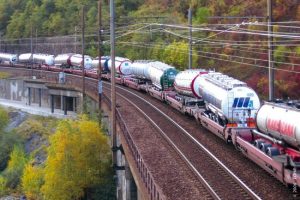







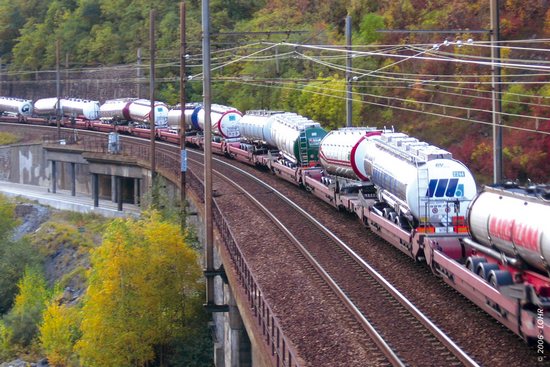
The European Commission approved on 17 March 2026 a public support measure for combined transport along the Alpine Rail Motorway between Aiton in France and Orbassano in Italy. The decision concerns the service for transferring semi-trailers by train along the historic Frejus line, covering around 175 km through the Mont Cenis tunnel, and was jointly notified by the Italian and French ministries of transport. Brussels’ approval allows the reactivation of a service that had been suspended since 21 April 2025 due to the interruption of public funding. The measure was deemed compatible with EU state aid rules as it is aimed at encouraging combined transport and reducing the environmental impact of transalpine freight traffic.
Compared with the past, however, there is a significant change in the structure of the service. The new support scheme will no longer be based on a single concessionaire but will be open to multiple railway operators providing combined transport services on the Aiton–Orbassano route. According to industry sources, the aim is to increase competition, improve service efficiency and address the competitive issues that had already emerged under previous schemes.
The reactivation of the Alpine Rail Motorway forms part of a strategy launched in the early 2000s following the 1999 Mont Blanc tunnel accident, with the objective of shifting heavy traffic from road to rail along Alpine corridors. Over time, the service has been supported by various aid schemes authorised by the Commission, but operational continuity has depended on the availability of public resources and changes in the regulatory framework. In June 2025, Italy and France reached an agreement to relaunch the service, providing an initial allocation of €2.5 million each for the restart. However, the actual reactivation was subject to approval by the European Commission, which only arrived in March 2026 after verification of compliance with the new guidelines on aid for land and multimodal transport.
Public support makes it possible to offer more affordable tariffs to hauliers, a necessary condition to encourage modal shift along a corridor characterised by high volumes of heavy traffic. The resumption of the service also addresses concerns that emerged during the 2025 suspension, when the risk of increased flows of industrial vehicles raised alarm among local communities in the Susa Valley and the Maurienne.
The Aiton–Orbassano route is important within the trans-European transport network, particularly along the Mediterranean corridor of the TEN-T network, where the European Union plans to complete infrastructure standards by 2030. In this context, the Alpine rail motorway represents an immediate operational solution to anticipate modal rebalancing, pending completion of new infrastructure such as the Turin–Lyon line.
Looking ahead, opening the support scheme to multiple operators could affect the structure of the Alpine combined transport market, encouraging the entry of new players and a more diversified service offering. The system’s ability to ensure financial continuity and adequate service levels remains crucial to consolidating the modal shift over time and making the use of the Alpine rail motorway a stable option for the road haulage supply chain.