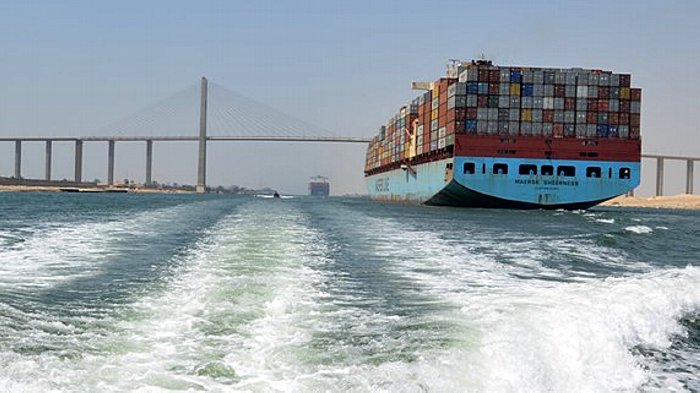


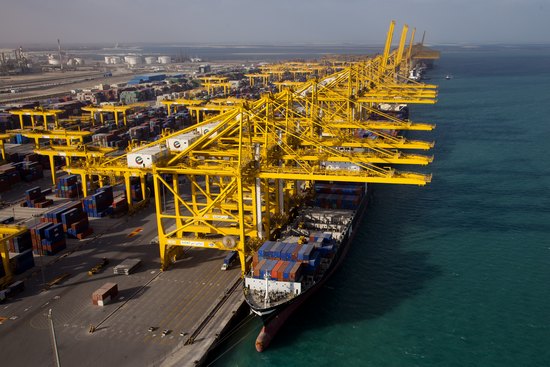



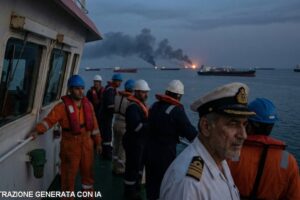


In March 2026, DP World activated an emergency arrangement to ensure continuity of flows to the port of Jebel Ali, following severe restrictions on traffic through the Strait of Hormuz caused by the conflict involving Iran, the United States and Israel. The measure allows vessels bound for Dubai to call at the ports of Khorfakkan and Fujairah, on the UAE’s eastern coast, avoiding passage through the Persian Gulf, before transferring containers overland to Jebel Ali. The decision responds to a drop in direct calls and rising insurance costs and operational risks along traditional routes.
The mechanism is based on a bonded land corridor linking the eastern ports with the Dubai hub. DP World coordinates the transfer of containers under a bonded road transit regime, while Dubai Customs, through Customs Notice No. 03/2026, has introduced a temporary facilitation allowing operators to avoid customs clearance at alternative ports of arrival. Goods are instead transferred directly to Jebel Ali or the Free Zones, where all customs formalities are completed. According to Dubai Customs, the aim is to keep cargo flows smooth and reduce the risk of terminal congestion during a period of intense pressure on supply chains.
From an operational perspective, the most significant change concerns the reconfiguration of the sea–land logistics chain. Shipping lines must adjust rotations and cargo manifests, designating Khorfakkan or Fujairah as discharge ports for containers originally destined for Jebel Ali. This requires continuous updates to documentation systems and closer coordination with agents and digital platforms such as Dubai Trade. Freight forwarders and importers also face increased operational complexity, with more intricate handling of delivery orders and documentation flows.
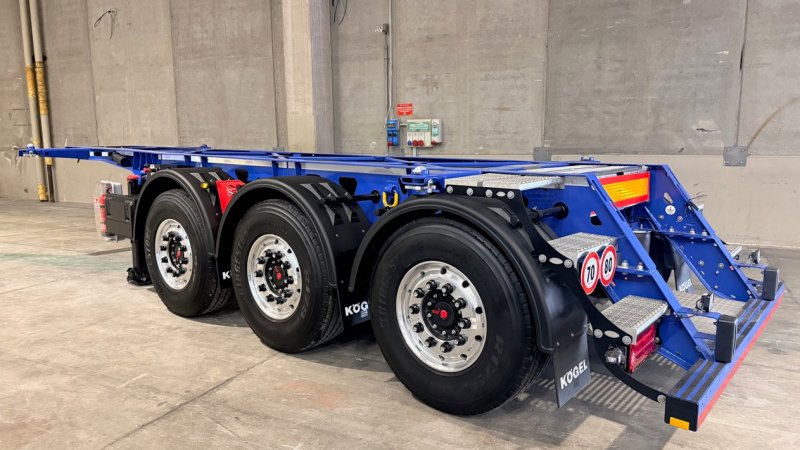
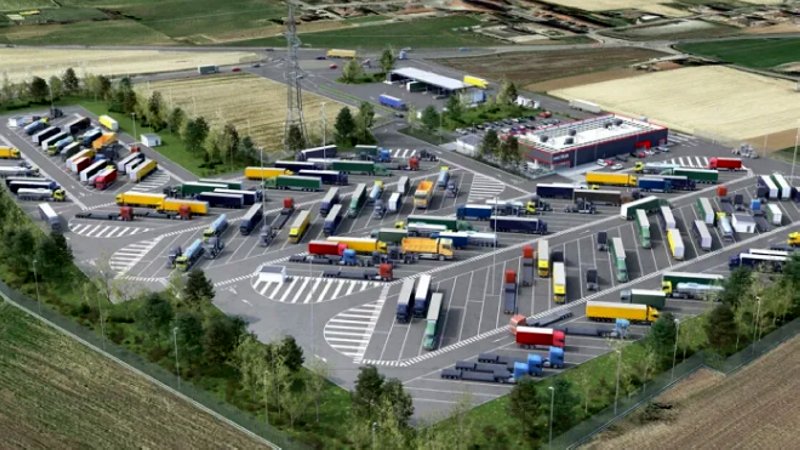
For road transport operators in the UAE, the corridor is driving an immediate increase in demand for haulage services. Containers are moved over several hundred kilometres along the domestic road network, with DP World coordinating flows to ensure continuity and security. This is placing pressure on available capacity, particularly if volumes diverted from maritime routes continue to rise. According to sector analyses cited by Whalesbook, there is a risk that, in the medium term, both alternative ports and land infrastructure could approach saturation levels.
A central element concerns customs management. The “secure bonded movement” regime allows containers to remain under control without triggering import procedures in the UAE at the point of arrival, preserving the tax advantages of the Free Zones. According to operational notes issued by Andersen and other consultants, this is crucial to avoid impacts on duties and VAT, but requires a high level of documentary accuracy and coordination between operators, customs brokers and authorities. Errors in transit management could lead to disputes or delays in final clearance procedures.
While road transport increases the number of operational steps, it reduces the risk of prolonged waiting times at sea or in congested ports. For time-sensitive goods such as food products, pharmaceuticals or industrial components, overland diversion is often preferable to shipment delays. According to the Global Cold Chain Alliance, cold chain logistics is among the main beneficiaries of this solution, which limits deterioration risks linked to extended delays. However, the introduction of the land corridor increases overall logistics costs, as road transport and additional insurance costs linked to the geopolitical context are added to maritime freight.
At the same time, DP World has activated outbound land corridors from Jebel Ali to regional destinations such as Dammam and Sohar, further expanding the role of road transport in managing the crisis. The overall impact is a temporary but significant transformation of the Dubai hub’s operating model. Jebel Ali remains the central point for customs clearance and distribution, but loses part of its role as the primary maritime entry point, which shifts to eastern coast ports. This redesigns operational sequences, lengthens the logistics chain and increases the importance of intermodal management.
Mara Gambetta