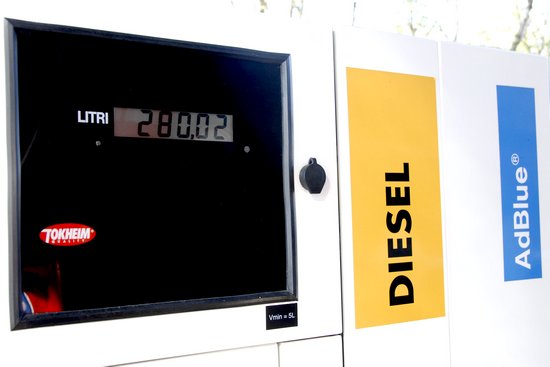



In mid-March 2026, the Slovak government approved a resolution allowing fuel retailers to charge higher diesel prices to vehicles with foreign licence plates and to limit the quantity that can be purchased per refuelling. The measure, initially valid for 30 days, is aimed at countering so-called fuel tourism, particularly in border areas with Poland. According to Reuters, the provision also authorises quantitative restrictions of up to “a full tank plus ten litres” per vehicle and introduces a pricing system based on the average levels in neighbouring countries.
The move comes amid growing pressure on the national fuel distribution network. Prime Minister Fico said several service stations in the north of the country had temporarily run dry due to the influx of foreign motorists and hauliers attracted by lower prices than those in neighbouring countries. The phenomenon also includes the filling of jerry cans and additional containers, increasing the risk of local shortages. In this context, the government has also introduced a maximum spending limit of €400 per refuelling and a ban on carrying more than ten additional litres.
The measure specifically targets diesel, while petrol remains excluded from the differentiated pricing mechanism, although some sources report possible overall purchase limits. The decision to focus on diesel reflects its central role in freight transport and professional mobility, with immediate implications for cross-border logistics. The Slovak government attributes price pressures to two main factors: rising international quotations linked to the conflict in the Middle East and disruptions in Russian crude supplies via the Druzhba pipeline, which runs through Ukraine.
In this scenario, the Slovnaft refinery, controlled by the Hungarian group Mol, has played a significant role in discussions with the government. Bratislava had already reached an agreement with the company to contain domestic prices, seeking to protect local consumers. However, the price gap with neighbouring countries has fuelled abnormal refuelling flows, increasing demand in border areas. The government’s response has therefore been to introduce a selective system.
On 24 March 2026, the European Commission set out its position during the daily briefing in Brussels. A spokesperson described the measure as “highly discriminatory” and “contrary to EU law”, stressing that while it understands the need to support citizens during a period of energy strain, Member States cannot introduce measures based on nationality. According to the Commission, the principles at stake are fundamental to EU law: the prohibition of discrimination, the free movement of goods and a level playing field for economic operators. Brussels has also signalled the possibility of launching infringement proceedings if Slovakia does not amend or withdraw the measure, following the standard procedure that can ultimately lead to the Court of Justice.
The central issue is indirect discrimination based on nationality. Although the rule refers to vehicles registered abroad, in practice it affects operators and citizens from other Member States. This conflicts with Article 18 of the Treaty on the Functioning of the European Union, as well as provisions on the free movement of goods. The link between pricing and vehicle registration makes it difficult to justify the measure as proportionate to the objective of preventing shortages. Moreover, introducing higher prices for foreign vehicles directly affects the operating costs of hauliers transiting through Slovakia, creating a potential barrier to the free provision of services. This could also have implications for cabotage and the competitiveness of transport companies within the single market.
The issue of proportionality is another critical point. Even if the objective of avoiding shortages is considered legitimate, the Commission may argue that less restrictive alternatives exist, such as uniform quantity limits for all users or interventions on strategic reserves. Brussels tends to favour non-discriminatory tools even in emergency contexts.
More broadly, the Slovak case raises questions for European logistics. Industry associations fear a possible knock-on effect along trans-European corridors, with the introduction of differentiated regimes that would increase uncertainty over transport costs. The existing patchwork of national policies on excise duties, subsidies and price caps already creates heterogeneous conditions. For hauliers, the predictability of refuelling costs is essential for route planning and rate-setting. The introduction of variable pricing based on vehicle registration adds a further variable that is difficult to manage in an integrated market.
Antonio Illariuzzi