





After more than fourteen years of work, delays and anticipation, the Frejus tunnel is now ready to begin a new chapter in its history. On Monday 28 July 2025, the second bore of the road tunnel will come into service. Long awaited by the freight transport sector, the development addresses the growing demand for safer and more reliable alpine transit. The timing is key for road traffic between Italy and France, as from 1 September 2025 the Mont Blanc tunnel will shut for fifteen consecutive weeks for scheduled maintenance. During this period, an increase in lorry traffic through the Frejus is expected.
The new tunnel stretches for a total of 12.848 kilometres, with 6.495 kilometres in French territory and 6.353 in Italian, running parallel to the existing tunnel at a distance of about fifty metres. Its internal diameter is eight metres and the route has been designed for one-way traffic heading towards France. The current tunnel in use will instead accommodate vehicles bound for Italy. This physical separation of traffic flows is the main benefit of the new layout: although the overall capacity of the tunnel will remain unchanged, safety will be improved thanks to the elimination of two-way traffic.
The project required an investment of 700 million euros, financed by the concessionary companies Sitaf on the Italian side and Sftrf on the French side. Work began on the Italian front in December 2010 and on the French side in July 2011, with the two tunnels connected on 17 November 2014, when the dividing diaphragm was broken through. However, the road to full operation has proved long and complex. The tunnel’s entry into service, originally scheduled for 2021, was postponed several times: first to 2022, then to 2023, then to June 2024, and finally to the confirmed date in July 2025. The main causes of delay were the Covid-19 pandemic, soaring raw material costs and the need to complete additional safety tests.
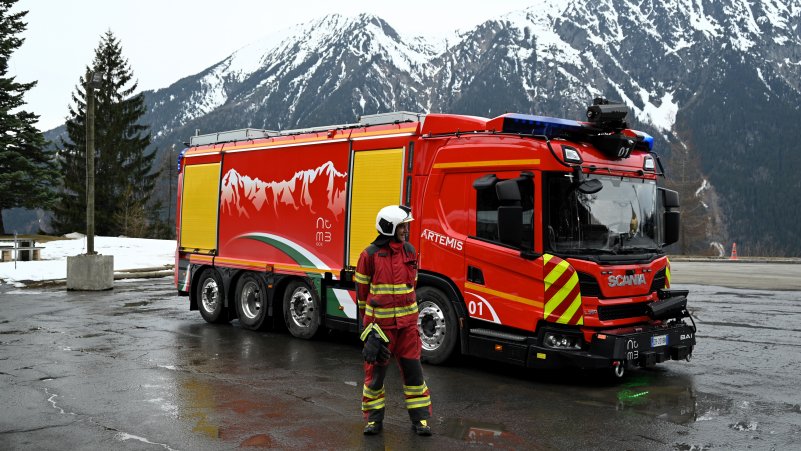
In terms of safety, the new tunnel introduces advanced technological systems. On the Italian side, a control centre has been built to manage both tunnels in a coordinated and continuous manner. The entire stretch is monitored by temperature sensors, smoke and fire detection systems, thermal imaging portals to detect heat anomalies at the entry points, a network of hydrants spaced every 130 metres and nine driveable bypasses to allow quick access for emergency vehicles. Traffic conditions will be governed by speed limits ranging from 50 to 70 kilometres per hour, with a minimum distance of 150 metres required between vehicles.
Since 2020, the infrastructure has been managed by the Astm group (Gavio Group), which holds a 67.22 percent stake in Sitaf, the concession holder until 2050. With the new bore in operation, the Frejus becomes the longest twin-tube motorway tunnel in Europe, overtaking even the Gran Sasso tunnel. This milestone confirms the strategic importance of the crossing in the transalpine corridors, not just symbolically but for the vital role it plays in the continent’s logistics flows.