



From 1 January 2026, Bulgaria will join the eurozone and adopt the single European currency. This step marks the culmination of a long process of alignment with EU legislation. Far from being a merely symbolic gesture, it demonstrates the country’s growing integration—not only economically, but also in terms of infrastructure—with the rest of the continent.
It is in this context that the decision by the Bulgarian authorities in Sofia and their North Macedonian counterparts in Skopje to build the first cross-border railway connection between the two countries should be viewed. Both nations are investing in the development of the rail corridor that will link the Bulgarian capital with Kumanovo, the second largest city in North Macedonia. A symbolic element of this project is the new 2.4-kilometre tunnel that will connect the railway arriving in Gyueshevo, Bulgaria, with that of Deve Bair in North Macedonia. This tunnel is expected to be operational by 2028.
The cross-border section forms part of the Connecting Europe Facility 2021–2027, with EU funding amounting to €69 million. For its own part of the project, Bulgaria estimates that modernising the line from Sofia to the North Macedonian border will require an investment of more than €1.5 billion. North Macedonia, meanwhile, has already upgraded the 30-kilometre stretch between Kumanovo and Beljakovce and is currently constructing a new section from the latter to the Romanian border, to be completed in two phases.
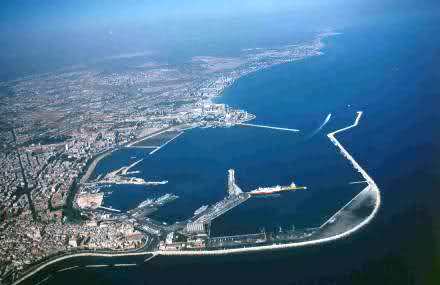
The railway link between the two countries opens up new prospects for the whole of Southeastern Europe. The new line is set to become a key section of Corridor VIII, the multimodal route that begins—at least ideally—from Italy’s Adriatic ports and runs all the way to Bulgaria’s eastern Black Sea coast. Much of the railway along this corridor, which will stretch from the Albanian ports of Durrës and Vlorë to the Bulgarian ports of Varna and Burgas, is still under construction, with a total length of around 600 kilometres.
Bulgaria’s investment strategy extends beyond the corridor with North Macedonia and includes a range of significant projects aimed at transforming the national railway network. It is important to note that north–south rail connections in the country are hampered by the Stara Planina mountain range, which effectively bisects the country. To address this, the Bulgarian government plans to construct three railway tunnels that would especially benefit freight rail services.
The first tunnel, between Stolnik and Mezdra in western Bulgaria, would create an additional route to the northeast of Sofia along the corridor connecting Greece to Romania. The second, between Hristo Danovo and Troyan, would establish a new north–south connection, since the two towns are currently unlinked due to the mountainous terrain. The third tunnel will cross the Hainboaz Pass (also known as the Republic Pass), offering an alternative to the central mountain route.
All routes have been designed with rail freight in mind, featuring gradients that never exceed two per thousand—an ideal value for the transit of heavy trains under European standards without the need for double traction. This not only reduces operational costs but also enhances the competitiveness of rail transport. The projects will be financed through public-private partnerships. In addition to the ambitious plan for these three new tunnels, Bulgaria is also working on the opening of a new railway border crossing with Turkey and is investing in intermodal terminals and the port of Burgas.
Piermario Curti Sacchi