




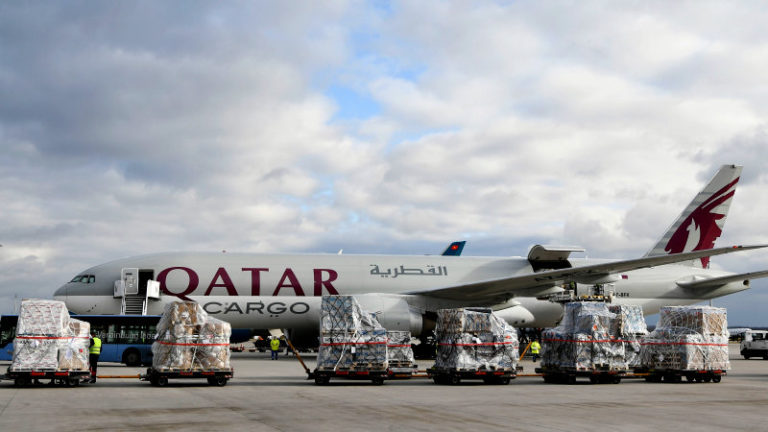
The third Gulf war – along with restrictions at airports on the Arabian Peninsula and the closure of Iranian and Iraqi airspace – has reshaped passenger routes between Europe and Asia, and consequently cargo flows in aircraft belly holds. Belly capacity along the Asia–Middle East–Europe corridor is estimated to have fallen by nearly 40%, with immediate effects on delivery reliability and rates.
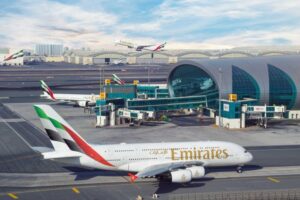
Major Gulf airports – particularly Doha and Dubai – had, before the conflict, become key hubs for consolidation, especially for perishables, pharmaceuticals, fashion and high-value components, much of which travelled in the belly holds of wide-body passenger aircraft operated by the region’s leading carriers. Their exclusion due to the war has created a capacity gap. The result has been cargo stranded in cargo cities, transit delays and forced rerouting via alternative hubs in the Caucasus, Central Asia or Africa, with longer transit times and less seamless connections.
The outcome has been a wave of congestion and a forced realignment of supply chains. Some of the most urgent flows are being diverted onto the limited number of freighter aircraft available, while other volumes are shifting back to sea, particularly exports less sensitive to transit times. At the same time, freight forwarders are competing for the remaining belly space on European and Turkish carriers. Meanwhile, air cargo rates on key routes to and from Asia have surged by as much as 90–95% in a matter of weeks, driven both by the shortage of capacity and a doubling of fuel costs.
For European airports with a strong cargo focus, the combination of freighter cancellations and reduced belly capacity is already having an impact. In the first ten days of March, freighter movements fell by around 25%, while volumes carried in passenger aircraft holds dropped by more than 10%, with direct repercussions for handlers, freight forwarders and supply chains reliant on air just-in-time logistics. It is still difficult to predict the long-term consequences of the war on air cargo, which will largely depend on the duration of the conflict itself – something that no one, not even the parties involved, is currently able to determine.
M.L.