






According to WorldACD Market Data, which processes more than 500,000 transactions each week, average global full-market air cargo rates increased by 10% week on week in the period from 9 to 15 March 2026, reaching $2.67 per kilo, including surcharges. This follows an already significant rise the previous week, when rates climbed by 8%. Looking only at average spot rates, the increase was even sharper at 12% week on week, reaching $3.19 per kilo, up 22% compared with the same period last year. The highest spikes were driven by shipments originating from the Middle East and South Asia (MESA), where spot rates jumped a further 22% week on week to $4.37 per kilo, marking a 58% year-on-year increase. Global volumes rose by 4% week on week, supported by the continued post-Lunar New Year recovery in Asia Pacific (+5% week on week) and a partial rebound in volumes from MESA origins (+30% week on week). On a yearly basis, however, global tonnages remain down by 7%.
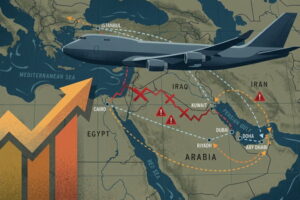
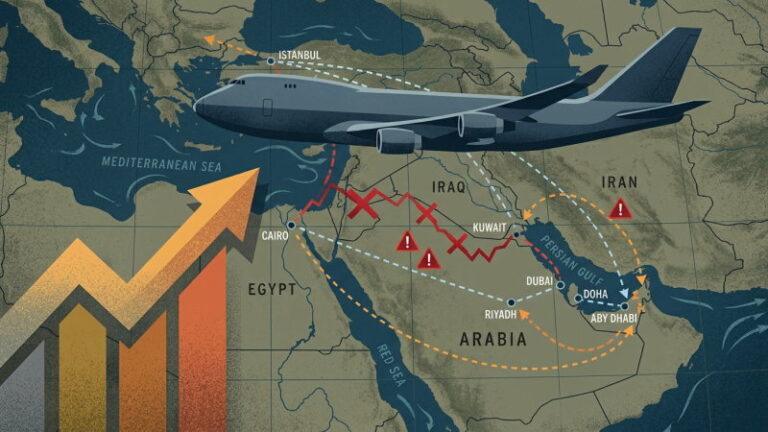
The recovery from MESA follows a sharp collapse the previous week, when capacity from the region fell by 50% week on week and volumes dropped by 33%. In the latest week, with the partial reopening of some airports and airspace and the use of alternative routes bypassing restricted areas, capacity rebounded by 35% week on week, enabling a 30% week-on-week recovery in tonnages. In particular, volumes from Gulf countries surged by 74% week on week after a 65% drop the previous week, although they remain around 50% below pre-conflict levels, based on the week from 16 to 22 February. Average spot rates from Gulf countries rose a further 22% week on week to $3.77 per kilo, about 56% above pre-war levels.
Tonnages from South Asia, traditionally reliant on Gulf carrier capacity, also partially recovered, rising 24% week on week, although still 20% below pre-conflict levels. Spot rates from South Asia increased by 24% week on week to $3.54 per kilo, up by more than 60% in just two weeks.
Looking at specific trade lanes from MESA, volumes to Europe rebounded by 27% week on week, but remain 20% below pre-conflict levels and 9% lower than the same period last year. Tonnages from Dubai saw a strong recovery, rising 67% week on week after a 39% drop the previous week, though still 30% below pre-conflict benchmarks. Spot rates from MESA origins to Europe increased by a further 21% week on week, following the already substantial 60% rise the previous week, reaching levels 70% above last year and nearly double pre-war values. Rates from Dubai rose an additional 9% week on week after a 90% surge the previous week, reaching $3.93 per kilo, more than double both last year’s levels and pre-conflict benchmarks.
A similar trend was observed on the MESA–US route, where volumes rose by 22% week on week, although still 20% below pre-conflict levels and just 2% below the same period last year. Spot rates from MESA origins to the US increased by a further 25% week on week, after a 30% rise the previous week, reaching 50% above last year’s levels and more than 65% above pre-war values. Rates from Dubai to the US recorded another sharp increase, rising 56% week on week to $8.46 per kilo after nearly a 50% jump the previous week, reaching 2.5 times last year’s levels and exceeding pre-conflict values.
On the operational front, further capacity restrictions were recorded at the end of the second week of March to and from the United Arab Emirates, where currently only UAE-based carriers are authorised to operate. This follows a drone attack on a fuel terminal that has severely limited aviation fuel availability. Qatar Airways Cargo, the world’s leading international air freight carrier, announced on 19 March the resumption of selected cargo operations to and from Doha, which had been suspended over the previous three weeks, while continuing to run some limited services outside the Qatari hub.
The availability and cost of aviation fuel have become a critical factor in recent weeks. The effective closure of the Strait of Hormuz has driven a further 11% week-on-week increase in fuel prices, which are now nearly double (+94%) pre-conflict levels. This has prompted carriers to apply additional fuel surcharges and, in some cases, war risk surcharges, further pushing up overall rates.
Outside the crisis area, tonnages to and from Asia Pacific origins continued to recover following the February Lunar New Year slowdown, despite the loss of part of the capacity typically operated by major Gulf carriers. Volumes from Asia Pacific origins increased by a further 5% week on week, reaching around 30% above levels seen during the Lunar New Year week, although still 12% below pre-holiday levels. Spot rates rose by 9% week on week to $3.94 per kilo, up 12% year on year. On the Asia Pacific–US route, volumes grew slightly (+3%) after a 17% surge the previous week, with strong weekly recoveries from China and Hong Kong bringing tonnages back to levels only slightly below (-4%) those of the same period in 2025. Spot rates also increased significantly, rising 8% week on week across all major regional origins except Japan (-2%).
On the Asia Pacific–Europe route, volumes rose by a further 5% week on week after a 17% increase the previous week, again supported by the post-Lunar New Year recovery. Despite the recent rebound, volumes remain 12% below equivalent levels last year, although comparisons are complicated by the different timing of the Lunar New Year in 2025. Spot rates from Asia Pacific to Europe have been more heavily affected by the Middle East crisis than those to the US, increasing by 13% week on week after a 12% rise the previous week. All major Asia Pacific origins recorded higher rates to Europe, with more moderate increases from Singapore (+1%) and South Korea (+3%) compared with other key export markets in the region.