





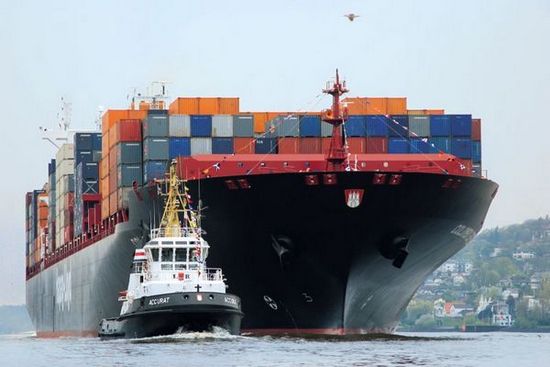
- Hapag-Lloyd will acquire Zim for $35 per share, with a total value of around $4.2 billion, equivalent to approximately €3.5 billion. The all-cash transaction represents a premium of up to 126% over the unaffected August 2025 share price and consolidates the world’s fifth-largest container shipping operator.
- The structure provides for the separation of Israel’s strategic activities into New Zim, controlled by Fimi, in order to comply with golden share constraints. Hapag-Lloyd will integrate the international operations, while the new entity will retain vessels and functions considered relevant to the security of the State of Israel.
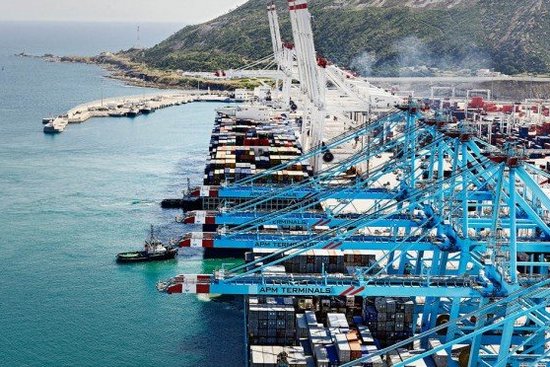
- The integration strengthens scale beyond 3 million TEU of capacity and more than 18 million TEU handled annually, with over 400 vessels. The transaction forms part of ongoing sector consolidation and is linked to Gemini Cooperation, with industrial, regulatory and geopolitical implications.
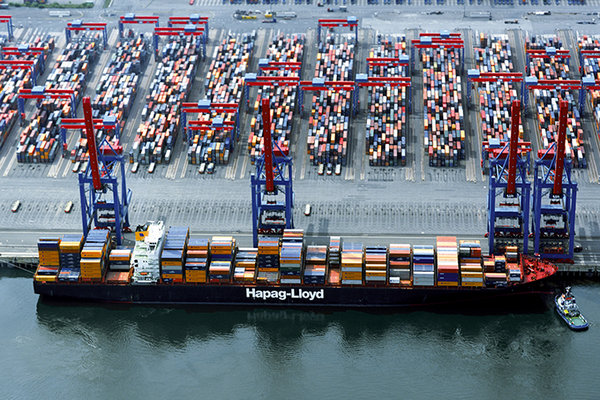
On 16 February 2026 Hapag-Lloyd announced that it had reached a definitive agreement to acquire Zim Integrated Shipping Services, the historic Israeli container shipping carrier. The transaction, unanimously approved by Zim’s board of directors, provides for an all-cash consideration of $35 per share, for a total value of approximately $4.2 billion, equivalent to around €3.5 billion.
The price represents a premium of 58% compared with the closing price on 13 February 2026, 90% over the 90-day volume-weighted average price and 126% over the unaffected price of $15.50 on 8 August 2025, prior to market speculation. The transaction does not involve the issuance of new Hapag-Lloyd shares and is presented as a capital allocation decision aimed at increasing scale, network reach and presence in key markets.
The deal stands out for its complex corporate structure, designed to comply with the constraints of the golden share held by the State of Israel in Zim. This instrument requires the maintenance of a minimum number of Israeli-owned vessels, the obligation to keep the company’s headquarters in Israel and the availability of the fleet for emergency or conflict situations, including the transport of strategic supplies such as ammunition, grain and fuel.
To reconcile Hapag-Lloyd’s entry with these constraints, the transaction provides for a spin-off of the assets deemed strategic and essential, which will be transferred into a new entity called New Zim. This company will be controlled by Fimi Opportunity Funds, an Israeli private equity fund, which will assume the rights and obligations associated with the golden share. New Zim will operate sixteen vessels deployed on global routes relevant to Israel and will benefit from commercial and network support from Hapag-Lloyd.
International operations not subject to the restrictions of the special state share will be integrated into the German group’s perimeter. In this way, Hapag-Lloyd will consolidate economic and operational control over the majority of Zim’s global activities. From an industrial perspective, the transaction strengthens Hapag-Lloyd’s position in global container shipping. The German carrier starts from a capacity of more than 2.3–2.4 million TEU, while Zim stands at around 0.7 million TEU. The combined group therefore exceeds 3 million TEU, with more than 400 vessels and annual cargo volumes above 18 million TEU.
The integration of the two companies consolidates Hapag-Lloyd’s fifth position globally, widening the gap over Ocean Network Express and placing it immediately behind the four leading global operators: MSC, Maersk, CMA CGM and COSCO. The German company’s stated objective is to increase network density across the Transpacific, Intra-Asia, Atlantic, Latin America and Eastern Mediterranean trades, improving the mix between direct and feeder services and the management of empty containers.
The transaction comes at a time of consolidation among container lines, marked by freight rate volatility, a reshaping of alliances and growing scrutiny from supervisory authorities. In this context, greater scale is seen as a key factor in stabilising fleet utilisation, diluting costs and strengthening operational resilience. The integration of Zim enables Hapag-Lloyd to expand its geographical coverage and increase critical mass on highly competitive routes.
A key element of the deal is its connection with Gemini Cooperation, the operational and commercial alliance between Hapag-Lloyd and Maersk on major trades. The combined Hapag-Lloyd–Zim network will be able to feed Gemini’s hub-and-spoke model, with the aim of improving schedule reliability and vessel utilisation. At the same time, for Zim and the future New Zim, access to a broader network represents a competitive strengthening factor towards Israel and other strategic markets.
From a geopolitical perspective, the transaction takes into account the presence among Hapag-Lloyd’s largest shareholders of Qatar Holding, with around 12.3%, and the Saudi sovereign wealth fund Public Investment Fund, with approximately 10.2%. This shareholding structure made the full transfer of Zim under foreign ownership with Gulf participation politically sensitive. The solution of the demerger and the control of New Zim by Fimi addresses this sensitivity, ensuring continuity of maritime functions considered critical under Israeli control.
The transaction is now subject to approval by Zim’s shareholders and to antitrust and regulatory clearances in several jurisdictions, including the European Union and the United States, as well as specific approval by the State of Israel in relation to the golden share. For Zim shareholders, the cash offer provides immediate monetisation at a significant premium to previous market levels, in a historically cyclical sector characterised by strong earnings volatility. For shippers, the companies present the transaction as a lever to expand the network and improve service reliability, although questions remain over concentration on certain trades and bargaining power in a market increasingly dominated by a limited number of large operators.
P.R.