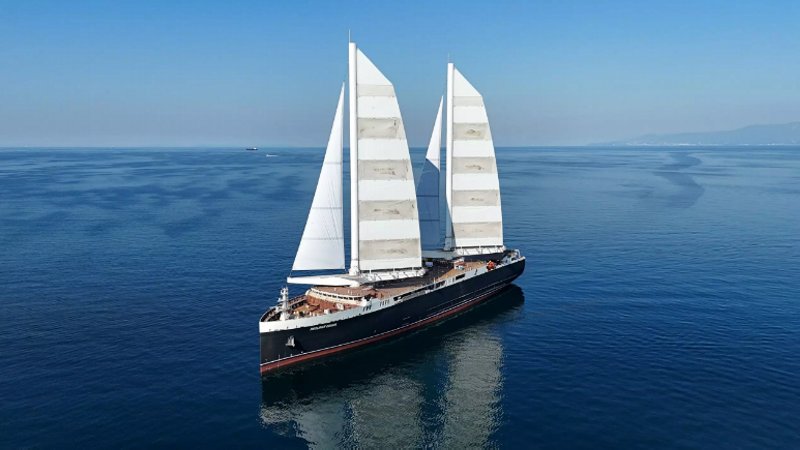









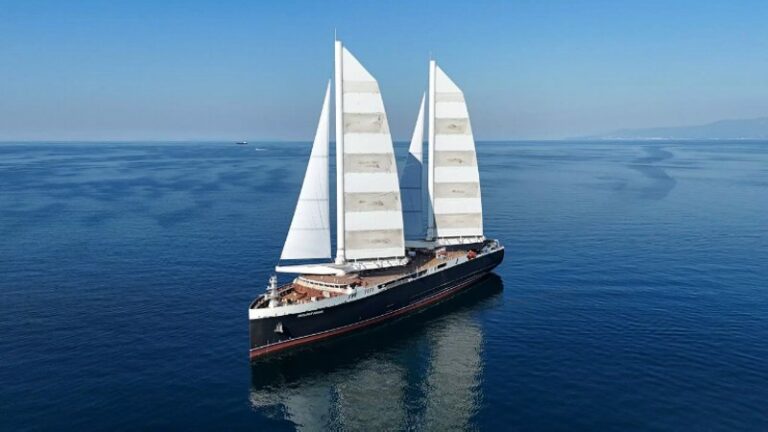
Nine transatlantic round voyages and more than 62,000 nautical miles: these are the results of the first year of operation of Neoliner Origin, the 136-metre sail-powered ro-ro operated by Nantes-based shipping company Neoline, which entered service in October 2025. According to the shipowner's assessment, published on 5 November 2026, the vessel consumed 66% less fuel over the entire period than the Global Logistics Emissions Council (Glec) fleet benchmark. For 2026 alone, the reduction rises to 70%. Neoline estimates that this represents savings of 3,502 tonnes of fuel and a reduction of 11,228 tonnes of CO2 emissions. Neoline also simulated the same routes using an equivalent conventional vessel without sails, travelling at 15 knots. On this basis, fuel savings on the 2026 voyages range from 62% to 67%. Neoline reports a 15% uncertainty margin, linked to variations in scheduled arrival times that the virtual vessel model does not yet take into account.
The service connects Montoir-de-Bretagne with Saint-Pierre-et-Miquelon, Baltimore and Halifax, with Zeebrugge added as a port of call in September 2026. During its first year, the vessel carried 1,845 cargo units, totalling approximately 12,063 tonnes and 55,889 cubic metres, including vehicles, containers, oversized cargo, industrial machinery and refrigerated goods, as well as more than 170 passengers. Failures in the SolidSail system supplied by Chantiers de l'Atlantique nevertheless restricted the use of the sails, particularly at full sail. On 18 October 2025, during the maiden crossing, the upper panel of the aft mainsail was damaged and the vessel continued in hybrid mode, using both sails and engine power. Further failures, including damage to the sailing equipment, occurred during winter storms in the North Atlantic between the first and second voyages, leading to a technical stop in France from 30 December 2025 to 30 January 2026.
In December, Neoline also reorganised the service. The sailing cycle was extended from four to five weeks, except during the summer. On the February and March 2026 departures, the vessel called at Saint-Pierre only on the return leg, increasing the Saint-Nazaire–Saint-Pierre transit time to 22 days from the usual 8–10 days. On 27 June, while returning from Saint-Pierre-et-Miquelon to Montoir, a mechanical failure caused the forward mainsail to fall onto the boom. There were no injuries or risks to the vessel's safety, and it continued under engine power. From 5 July, a stop in Lorient allowed the damage to be assessed and the sail removed. Loading at Montoir was postponed from 9 to 13 July, and the following voyage was scheduled with reduced sail capacity. Chantiers de l'Atlantique launched a technical investigation into the causes. For 2026–2027, Neoline aims to reduce fuel consumption by at least 78% compared with the Glec benchmark. A technical stop is scheduled for February 2027 to restore the full SolidSail system. Chairman and chief executive Jean Zanuttini is confident that fuel savings could approach or exceed 80% as early as 2027.
M.G.