





European hauliers are becoming increasingly less loyal to their truck suppliers, at least according to the 2026 edition of the European Truck Market Outlook, published on 8 September 2026 and prepared by Bain & Company partners Karl Strempel, Phillip Roberts and Eric Zayer. The study shows that the industry's average Net Promoter Score (NPS) has fallen to 13, down 21 points from the 2022 survey. The research involved 507 fleet managers in Germany, France, the United Kingdom, Italy and Poland, representing companies of all sizes operating both medium- and heavy-duty trucks. One operator in three says they are likely to switch brands when making their next purchase, while another third expresses no particular attachment to their current manufacturers. This declining loyalty does not reflect negative expectations for the market: more than 60% of respondents expect to expand their fleets over the next three years, while fewer than 10% anticipate a reduction. Expectations are strongest in Italy, where 71% of operators plan to grow, followed by the United Kingdom at 65%. The proportion also exceeds 55% in Germany, France and Poland.
Volvo, Scania and Mercedes-Benz lead the NPS rankings, although their positions vary considerably by country and customer segment. Compared with the previous survey, the relationship between loyalty and fleet size has reversed: in 2022, loyalty increased with the number of vehicles, whereas today large and medium-sized fleets record the lowest score (10) and owner-drivers the highest (28). Bain attributes this to the more complex requirements of large fleets, which manufacturers are struggling to meet fully in an increasingly concentrated market. Fleet composition also plays a role: operators whose fleets are dominated by a single brand give that manufacturer an NPS more than 20 points higher than those for whom it represents a minority of vehicles. On average, manufacturers also score around 20 points higher in their home markets than in export markets. Nevertheless, willingness to change suppliers is high across all five countries. In Poland, the most loyal market in the survey, almost one operator in four says they are likely or very likely to switch brands, rising to 45% in France. German operators are the most undecided: almost half express no clear preference either way. In Germany, the intention to switch also decreases with fleet size, falling to 25% among large operators, with 43% remaining neutral.
According to Bain, declining loyalty creates opportunities particularly for Chinese manufacturers. The study examines Sinotruk, FAW, Dongfeng, Shacman, Foton, BYD, Sany, XCMG, Farizon (Geely) and Windrose. Around one operator in three has already had contact with at least one of these manufacturers and considers it likely or very likely that they will purchase a Chinese truck within the next three years. Interest is stronger in the medium-duty segment than in heavy-duty vehicles and exceeds 50% among operators willing to adopt battery-electric trucks. In the United Kingdom, openness to Chinese brands is twice as high as in Germany and Poland. Small and medium-sized fleets are also more receptive, while owner-drivers remain cautious because a breakdown involving their only vehicle would have a disproportionate financial impact. Large fleets, the authors observe, do not yet appear ready to commit a substantial proportion of their vehicles to an unproven brand. Some 61% of respondents expect Chinese trucks to cost between 10% and 30% less than Western alternatives. To assess the potential trajectory of Chinese brands, the study examines urban buses, a segment leading the electrification of public transport. In 2025, zero-emission vehicles accounted for 58% of sales in the European Union, compared with 4% for coaches and intercity buses. Chinese manufacturers increased their share of the European market from around 10% in 2017 to approximately 30% in 2023, a level that remained stable in 2024 and 2025 following a response from European manufacturers based on competitive products, service networks and customer relationships.
What has not changed over three decades of surveys are the main purchasing criteria: reliability, price and total cost of ownership remain far more important than aftersales service and brand reputation. For internal combustion engine vehicles, reliability is mentioned by half of respondents and is the leading criterion for owner-drivers, while small fleets prioritise the purchase price and medium-sized and large fleets focus on total cost of ownership. Payload capacity ranks among the five most important criteria only for owner-drivers. This year, Bain compared purchasing criteria for internal combustion engine and battery-electric vehicles, finding that they are becoming increasingly similar: purchase price and total cost of ownership lead the rankings for both categories. For electric trucks, charging speed ranks above reliability, suggesting concerns over operational downtime, while features such as bidirectional charging remain at the bottom of the list. Aftersales service is not a leading purchasing criterion in either case: customers buying combustion-engine vehicles attach greater importance to service quality and cost, while the geographical coverage of the service network carries equal weight for both categories.
In operators' assessments, Chinese electric trucks score highly on price, total cost of ownership and technology, and already outperform Western brands in perceived driving range, energy efficiency, connected services and onboard information and entertainment systems. Bain cautions, however, that it remains to be seen whether the vehicles will live up to these expectations in real-world operation. Their main weakness is trust in the brand, followed by the coverage and quality of aftersales services and residual value, areas in which European manufacturers retain an advantage.
Operators expect that only half of new trucks will have internal combustion engines by 2030, a share that could fall to around one-third by 2035. These projections nevertheless remain below the targets set by legislators. Hydrogen is expected to remain a niche technology until at least 2035, while interest in hybrid trucks has almost halved compared with 2022, when one operator in four expressed interest. In the short term, expectations for electric vehicles are broadly similar across the countries surveyed. By 2035, however, Poland and Italy anticipate lower shares of battery-electric trucks than France and Germany, a difference the study attributes to fleet composition rather than attitudes towards electrification.
According to the study, total cost of ownership is no longer the main obstacle to electric truck adoption, as cost parity with diesel has largely been achieved in long-haul operations across Europe's major markets. In Germany, heavy-duty electric trucks used for long-distance transport can achieve a total cost of ownership up to 15% lower over five years of operation, thanks to cheaper energy and savings on road tolls. Purchases are now being held back by inadequate public charging infrastructure, high upfront prices, reduced operational flexibility and charging times. German operators, who are the most operationally prepared, are also the least willing to pay a premium, averaging no more than 10%.
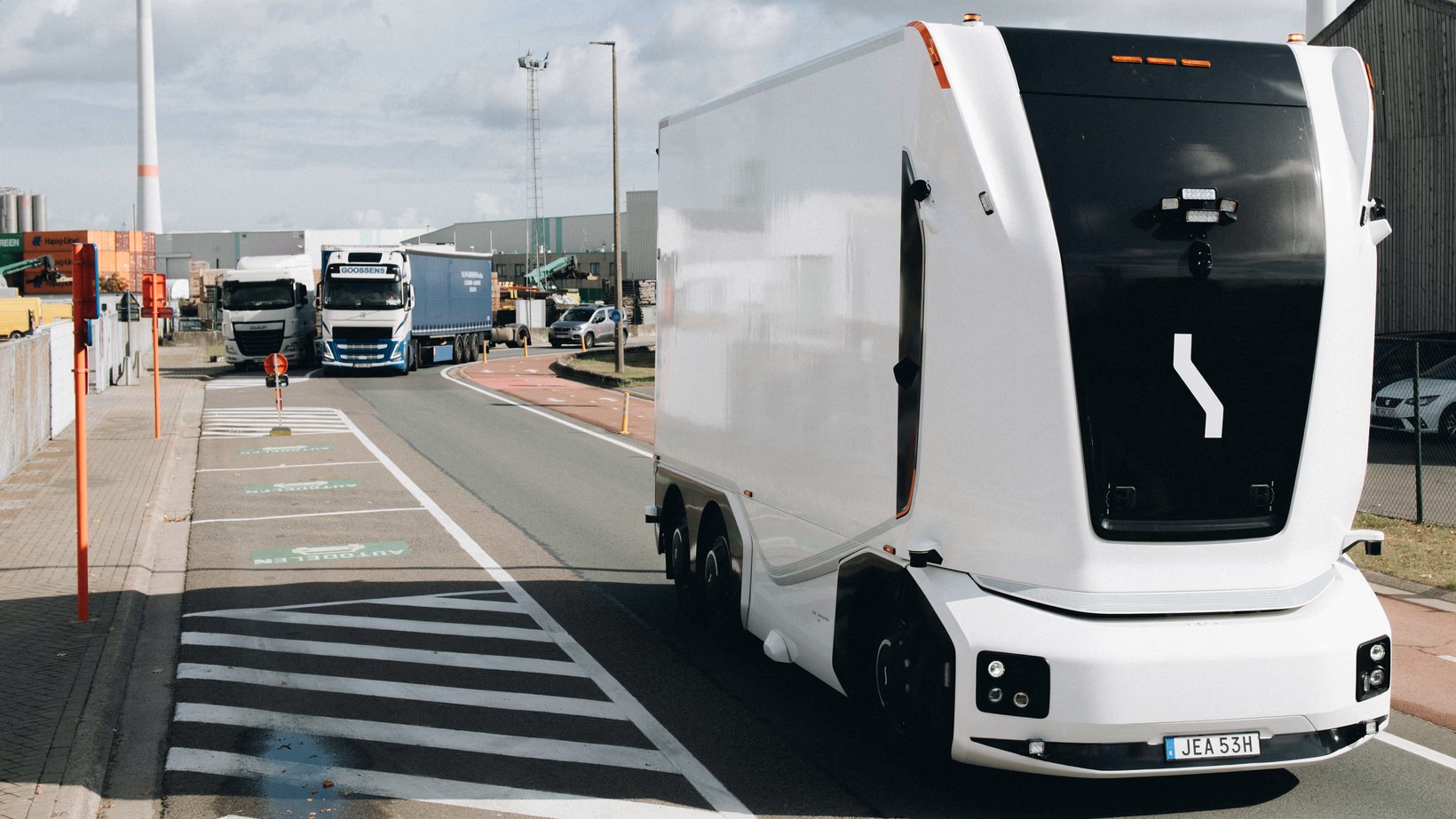
Autonomous driving is also entering fleet operators' plans, at least on paper: 43% of respondents are assessing the economic and operational implications of introducing driverless trucks into their fleets, while almost 40% believe that between 26% and 50% of their transport volumes could eventually be handled in this way. Only 7%, however, have begun negotiations with suppliers of autonomous driving solutions.
To address declining customer loyalty and growing competition from China, Bain advises European manufacturers to focus above all on restoring cost competitiveness, monitoring satisfaction among customers for whom their brand accounts for a minority of the fleet, narrowing the price gap for electric trucks through financing or pay-per-use schemes, and capitalising on two advantages that Chinese competitors currently lack: integrated ranges of combustion-engine and battery-electric vehicles, and in-house financing companies. The study also notes that larger fleets purchase fewer aftersales services, putting pressure on an important source of profit margins for manufacturers.
Pietro Rossoni