






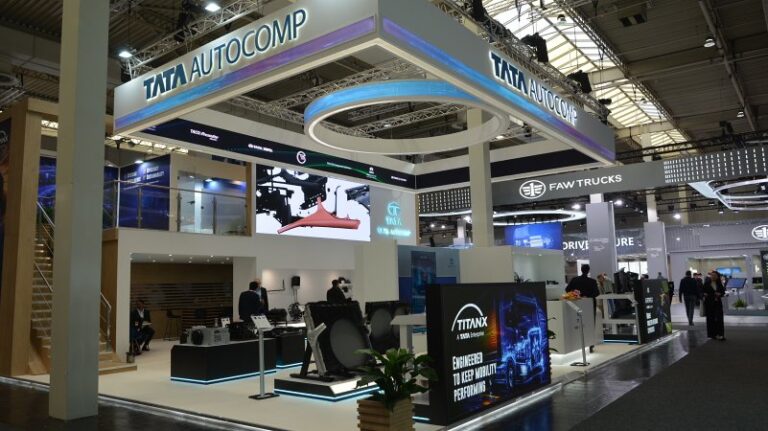
Tata was there. Iveco was nowhere to be seen. At IAA Transportation in Hanover, the Turin-based manufacturer did not have its own stand, while the Indian group preparing to acquire it was represented by several technology businesses. At the same time, Tata Motors is conducting a voluntary public takeover offer for all shares in Iveco Group, valuing the company at €3.82 billion. The acceptance period closes on 26 October, with payment scheduled for 30 October and a possible reopening from 2 to 6 November if the legal conditions are met. The aim is to acquire the entire share capital and delist Iveco Group from Euronext Milan. However, completion depends on a minimum acceptance threshold of 95%, which will automatically fall to 80% if the extraordinary general meeting on 16 October approves the so-called “back-end” resolution.
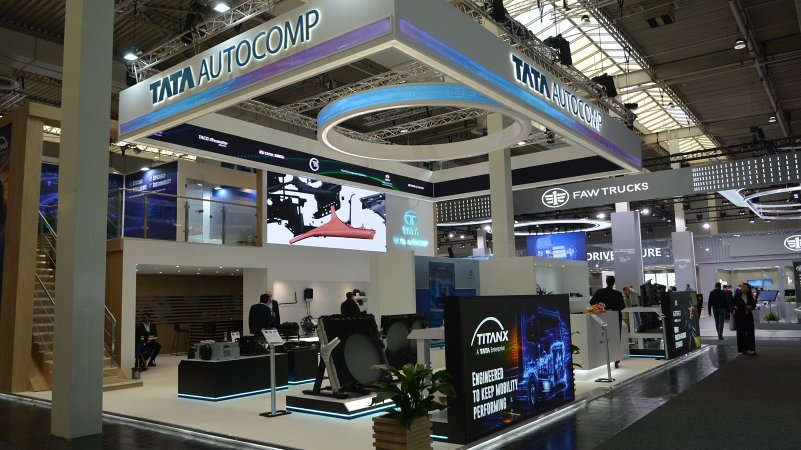
At IAA, Tata did not exhibit the commercial vehicles it sells in India or present a range intended for the European market. Instead, its presence remained focused on technology and industrial solutions. Tata AutoComp Systems showcased commercial vehicle solutions across four areas: electrification, thermal systems, lightweighting and services. Its portfolio includes batteries, traction motors, battery cooling systems, power electronics, electric compressors, thermal management, busbars and charging systems. The company therefore presented itself more as a supplier than a conventional vehicle manufacturer. Tata AutoComp operates 74 plants across India, North America, Latin America, Europe and China, employs more than 20,000 people and has 22 business units, including 11 joint ventures with international component manufacturers. Tata Elxsi, another group company specialising in software and engineering services, also exhibited alongside Tata AutoComp. Its expertise covers software-defined vehicles, connectivity, advanced driver assistance systems (ADAS), autonomous driving and digital architectures for commercial vehicles.
Iveco had already held the launch of its Model Year 2026 range at its own event in July. The Iveco Experience took place at OGR in Turin from 1 to 4 July, bringing together around 2,000 customers, dealers, suppliers, journalists and employees. The manufacturer presented the S-Way, Eurocargo and Daily, alongside the electric S-eWay, eDaily, eJolly and eSuperJolly models, as well as its new brand identity. Some Iveco vehicles were nevertheless on display at IAA on the stands of bodybuilders and vehicle converters. What was missing was the manufacturer's own platform, which at previous editions had allowed it to compete for attention directly with Daimler Truck, Volvo Trucks, Scania, MAN, DAF, Renault Trucks and other major international manufacturers.
It would be wrong to assume a direct causal link between the two developments. Iveco had already decided to use its Turin event as the launch platform for its 2026 range, and its decision not to exhibit at IAA forms part of the manufacturer's trade fair strategy. Symbolically, however, the coincidence is difficult to ignore. IAA 2026 highlighted a European industry in which the boundaries between vehicle manufacturers, technology suppliers and global industrial groups are changing rapidly. And while major Chinese and other Asian brands increased their visibility in Hanover, Tata is preparing to establish a direct presence at the heart of Europe's commercial vehicle industry through Iveco.
Massimiliano Barberis