








The digital tachograph works, but the way it is used has remained unchanged. This is the argument put forward in an article by Ineo, which challenges the description of a device as “smart” simply because geolocation and remote data download functions have been added, without changing how drivers use it every day. On this basis, Ineo calls for a certified mobile application and minimum usability standards that tachograph manufacturers would be required to meet.
The transport industry is discussing artificial intelligence, predictive cloud platforms and the green transition, yet commercial vehicle drivers still have to deal with an interface that has remained largely unchanged for around 20 years: tiny dot-matrix displays, slow scrolling menus and unintuitive button combinations. For Ineo, this is not simply a matter of appearance. Tachograph records are used as the basis for penalties imposed on drivers and transport companies, affecting already tight operating margins. In its view, digitalisation should begin by making drivers' work easier, rather than merely replacing equipment with newer models or introducing additional administrative requirements.
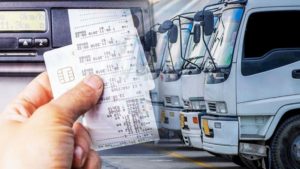
Ineo gives the example of exemptions from driving and rest time rules under Article 12 of Regulation (EC) No 561/2006. In the event of unforeseen circumstances or documented emergencies, the provision allows drivers to exceed driving limits to reach a safe stopping place or return home or to their employer's operational centre. In practice, the author points out, drivers print a slip on thermal paper, write the reason for the exemption on the back and keep it in the cab for 56 days. The company must then retain it for at least a year, with the risk that the ink may fade or the document may be lost, potentially leading to a penalty months later. There is a further paradox. The quarterly report on drivers' activities that companies must provide to them also includes instances of exceeding driving limits for which a valid justification exists and which therefore do not constitute infringements. According to the author, this creates resentment and disputes between drivers, who feel they are being unfairly reprimanded, and companies, which have no alternative way of handling the situation.
This raises a question: why can drivers not record their justification directly in the tachograph's memory, so that it remains digitally accessible alongside the corresponding instance of non-compliance with driving and rest time limits? Ineo believes such a solution would make record-keeping easier for both drivers and companies, while also simplifying data analysis. Its proposal is for a standardised, certified mobile application that connects the driver's smartphone to the onboard tachograph. It would allow drivers to monitor their driving and rest times, receive alerts about possible irregularities and enter justifications directly into the device's memory.
Finally, Ineo refers to the latest upgrade required by legislation, which introduced geolocation and remote data downloads to make roadside enforcement more effective. According to the article, the upgrade has led to numerous malfunctions, leaving companies paying fines for problems with equipment they were legally required to install but which does not operate correctly. Ineo therefore calls for manufacturers to be legally required to guarantee minimum usability standards that make drivers' work easier.
Antonio Illariuzzi