





The third conflict in the Persian Gulf, which shows no sign of easing, is also affecting one of the most strategic supply chains for European road haulage: that of AdBlue, the urea-based solution essential for the operation of emission reduction systems installed on Euro V and Euro VI diesel commercial vehicles. The crisis mechanism originates in Ras Laffan, Qatar, where in early March 2026 drone attacks struck the world’s largest liquefied natural gas complex, operated by QatarEnergy. The company immediately suspended production and exports, forcing several major Western energy firms to declare force majeure.
The sudden interruption of these volumes pushed gas prices on the European benchmark market, the Dutch Title Transfer Facility, up by 45% in a single session in early March 2026, with intraday peaks of up to 52%. By mid-March 2026, TTF gas is trading between €50.12 and €51.40 per megawatt hour, levels that make basic chemical production uneconomic across the continent. The link between gas prices and AdBlue is direct. AdBlue is an aqueous solution composed of 32.5% automotive-grade urea and 67.5% demineralised water. Producing urea requires synthesising ammonia through the Haber-Bosch process, which operates at temperatures of 400 to 500 degrees Celsius and pressures of 150 to 300 bar, using natural gas both as fuel and as feedstock. Methane costs account for up to 80% of the variable costs of ammonia synthesis: any gas price above €40–50 per megawatt hour effectively wipes out the margins of European plants. At €50 per megawatt hour, production in Europe is no longer viable.
This vulnerability is compounded by the progressive dismantling of Europe’s chemical capacity in recent years. The most emblematic case is Basf, the continent’s largest chemical multinational, which in 2025 reported significant operating losses at its Ludwigshafen complex in Germany. The group responded with a cost-cutting plan worth around €2.3 billion by the end of 2026, including 4,800 highly skilled job cuts and the closure of eleven production plants in Germany. At the same time, Basf invested $10 billion (around €9.2 billion) to build a new integrated facility in Zhanjiang, China. AdBlue was among the products synthesised at Ludwigshafen to keep ammonia lines operational. With the downsizing of these plants, Europe’s capacity to produce the additive domestically is now significantly and likely irreversibly reduced.
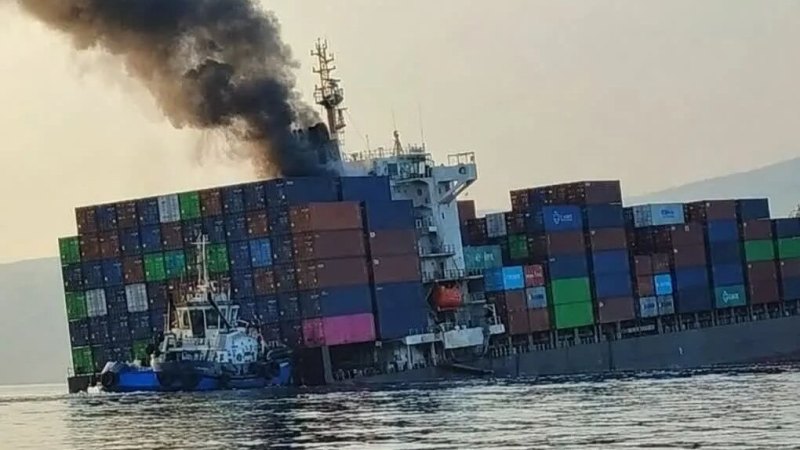
On the import side, the situation is worsened by the de facto closure of the Strait of Hormuz, where in the first week of March 2026 commercial vessel traffic dropped by 97%, with LNG carrier transits falling to zero. The Persian Gulf exports around 35% of the world’s urea and 27% of global ammonia. The closure of this corridor does not translate into immediate shortages in destination markets, but operates through what logistics defines as a “delay effect”: cargoes already at sea continue to arrive for several weeks, but gaps in early March loading windows will result in empty ports and tanks with a delay of three to six weeks. The physical impact is expected between late March and April 2026.
An early signal of the impending crisis comes from aggregated European data. According to Copa-Cogeca, the pan-European association of farmers and cooperatives, imports of nitrogen fertilisers into the European Union had already fallen to just 179,877 tonnes in January 2026, compared with 1.18 million tonnes in the same month of the previous year. Current stocks in Italian warehouses are not being replenished at an adequate rate.
At the same time, international energy markets are under further strain. Asian spot gas prices have exceeded €70 per megawatt hour, creating a differential with European prices sufficient to divert LNG carriers towards the Pacific. According to vessel tracking data from the first week of March, carriers such as the Simsimah, departing from the US Plaquemines terminal, and the Bw Brussels, sailing from Nigeria’s Bonny Island terminal, altered course to circumnavigate Africa and head to Asian markets instead of docking in European Atlantic and Mediterranean ports. At the beginning of February 2026, European gas storage levels were already around 30% of total capacity, leaving a thin safety margin for the end of winter and the spring refill season.
The rise in gas prices has quickly fed through to urea quotations on international markets. According to Trading Economics data updated on 13 March 2026, the global average price of urea stands at $599.50 per tonne, up 34.27% over the past month and 56.53% year-on-year compared with March 2025. The Egyptian hub, a key node for Mediterranean imports, has recorded sharp increases driven by speculation over a prolonged disruption at Hormuz. In US hubs such as New Orleans, trading on 2 and 3 March broke previous August highs, reaching $540–550 per tonne in the short term.
The crisis also exposes a latent tension between agriculture and road haulage over access to the same raw materials. Urea is the chemical basis for both nitrogen fertilisers and AdBlue. In a context of physical scarcity, demand from road haulage — inelastic due to regulatory requirements, as onboard electronics prevent engine start without the additive — tends to prevail over agricultural demand, which can be reduced at the cost of lower yields per hectare. The second- and third-order risk is that diverting urea away from agriculture could reduce yields for spring crops such as maize, soya and sorghum, with inflationary repercussions on basic food prices.
On the technology front, the industry is seeking defensive responses to protect operating fleets. In mid-March 2026, Bosch announced an expansion of its Denoxtronic urea filter portfolio, now for the first time compatible with third-party systems such as Cummins Hilite, widely used on vehicles across Europe including Mercedes-Benz Actros, Daf and Scania. The move aims to simplify spare parts sourcing for independent workshops and distributors, reducing the risk of damage to SCR catalysts caused by degraded or non-compliant urea solutions — a growing threat in a market under increasing pressure on the availability of quality product.
Pietro Rossoni