






- In February 2026, the Government of Panama assumed direct control of the Balboa container terminal on the Pacific side and Cristóbal on the Atlantic, after the Supreme Court of Justice declared unconstitutional the law approving the concession to Panama Ports Company, controlled by Hong Kong-based CK Hutchison, which has operated the facilities since 1997.
- The Autoridad Marítima de Panamá (Panama Maritime Authority) has entrusted temporary management to Apm Terminals for the Pacific side and to Til-Msc for the Atlantic for a period of up to 18 months. The two terminals handle nearly 4 million TEU a year and are central to Canal traffic.
- Beijing reacted in severe terms, pledging “necessary measures” to safeguard Chinese companies and warning of potential economic consequences for Panama. The episode forms part of the broader US–China competition over strategic infrastructure and global maritime corridors.
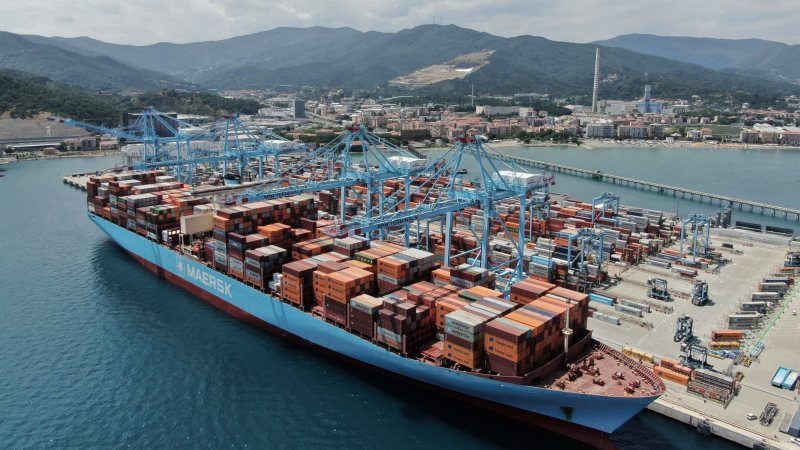
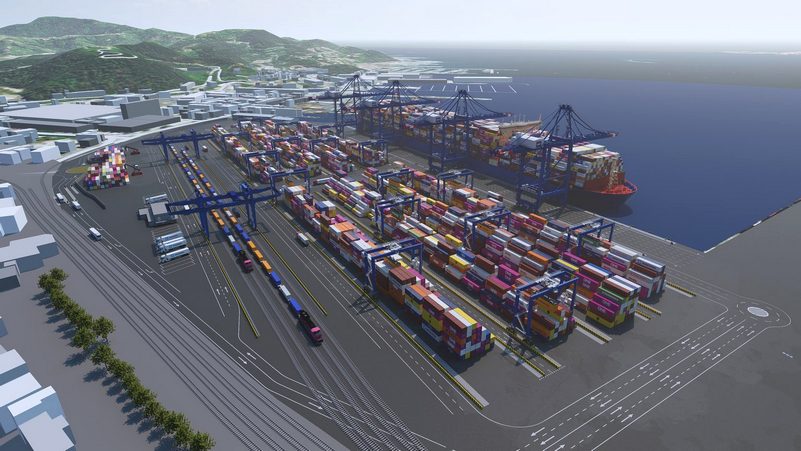
The Government of the Republic of Panama took direct control of the Balboa container terminal on the Pacific side and Cristóbal on the Atlantic after the Supreme Court of Justice declared unconstitutional the law approving the concession to Panama Ports Company, controlled by Hong Kong-based CK Hutchison. The ruling, made final with its publication in the Official Gazette on 23 February 2026, annulled a concession arrangement in force since 1997. Following the judgment, President José Raúl Mulino signed a decree ordering the temporary occupation of the infrastructure. The Autoridad Marítima de Panamá took operational possession of the ports, including cranes, yard equipment and IT systems, with the stated aim of avoiding disruption at two hubs that together handle nearly 4 million TEU per year, more than one third of the country’s container throughput.
The Supreme Court found unconstitutional both the law that had approved the original concession and its 2021 renewal, which extended the agreement by 25 years. Publication of the ruling rendered the legal framework null and void, obliging the State to intervene to prevent a management vacuum at infrastructure deemed strategic. Management has been temporarily assigned, for up to 18 months, to Apm Terminals Panama for Balboa and to Terminal Investment Limited, the terminal arm of the Msc group, for Cristóbal, with the aim of ensuring operational continuity while the Government prepares an international tender for a new long-term concession.
The Panamanian Government stressed that the occupation does not amount to a definitive expropriation of the assets, but rather a temporary measure to safeguard the public function of the terminals pending determination of the “real value” of the facilities and the definition of subsequent legal steps. The Ministry of Labour, led by Jackeline Muñoz, said no redundancies are planned among the approximately 1,200 workers involved.
CK Hutchison and its subsidiary Panama Ports Company reacted strongly. The group described the termination of the concession and the occupation of the terminals as “illegitimate” and “illegal”, arguing that the authorities had intervened even before the ruling was fully effective and warning of risks to safety and operations. In a filing with the Hong Kong Stock Exchange, CK Hutchison added that it reserved the right to take all legal action, including international arbitration.
The temporary entry of Apm Terminals and Til-Msc into the two Canal ports raises questions about competitive dynamics in the Caribbean area. Balboa and Cristóbal are transhipment hubs for traffic between Asia, the Americas and Europe. The presence, albeit temporary, of the terminal arms of the world’s two largest shipping groups could influence port calls and alliance balances, albeit within a framework regulated by the Autoridad Marítima de Panamá and subject to an international tender in the coming months.
The Government’s decision also opens a diplomatic and geopolitical front. China, which is closely monitoring the issue, has reacted both officially and unofficially on three levels: institutional, corporate and strategic. After the annulment of the concession to Panama Ports Company, Chinese foreign ministry spokesperson Guo Jiakun said that China “will take all necessary measures to safeguard the legitimate rights and interests of Chinese enterprises”. The ministry described the ruling as “in conflict” with the legal framework on which the concession had been based.
Beijing also warned that Panama could face “significant political and economic consequences” if it proceeds without taking into account CK Hutchison’s rights, an unusually direct tone towards a Central American country. China’s official narrative suggests that the Supreme Court’s decision was also shaped by external political pressure, particularly from the United States. Shortly after his election to the presidency, Trump said that the United States would “take back” Panama, in direct reference to the presence of a Chinese group – CK Hutchison is headquartered in Hong Kong – at the two terminals.
Outside official channels, Bloomberg reports that Beijing has asked some large state-owned enterprises to suspend new projects and investment negotiations in Panama. The same sources speak of suggestions to consider rerouting traffic to other ports, where economically viable, as a form of indirect pressure. Several analysts describe the Balboa–Cristóbal case as a setback for China’s presence in Latin America and as part of a US strategy aimed at limiting Beijing’s influence over key nodes of global trade.
For maritime transport and logistics operators, the 18-month transition phase represents a period of regulatory uncertainty but also operational continuity ensured by two groups with global terminal management expertise. The outcome of the forthcoming international tender and any evolution of the dispute with CK Hutchison will have implications not only for Panama, but also for the competitive landscape of Caribbean ports and for the intermodal corridors revolving around the Canal.
M.L.