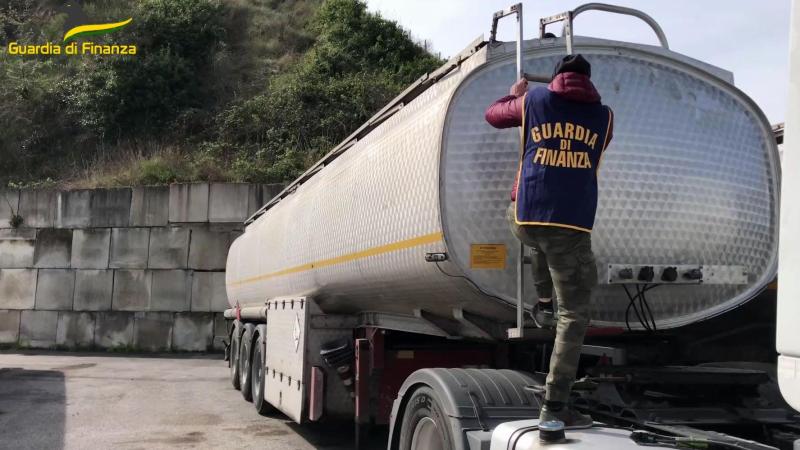







In February 2026, the Public Prosecutor’s Office in Marsala requested that five people be committed to trial as part of an investigation into the bankruptcy of a road freight transport company based in the province of Trapani. The company was declared insolvent by the Tribunale di Marsala (Court of Marsala) in November 2020. The insolvency, quantified at approximately €1.271 million, concerns an operator active in road haulage, headquartered in the area between Mazara del Vallo and Marsala. The alleged offences include fraudulent bankruptcy and tax evasion. The investigation was conducted by the Guardia di Finanza (Financial Police) under delegation from the Public Prosecutor’s Office.
According to investigators, the de facto and formal directors of the bankrupt company, together with the managers of three other related businesses, allegedly removed or diverted company assets and resources before and during the financial crisis. Among the elements at the centre of the inquiry are articulated lorries, semi-trailers, rigid trucks and financial assets amounting to several hundred thousand euros. The vehicles are said to have been sold or transferred to companies considered to be connected, progressively stripping the assets of the firm that subsequently went bankrupt.
The request for committal for trial is also based on the findings of the bankruptcy receiver, who has joined the proceedings as a civil party to safeguard creditors. It will now be up to the judge for the preliminary hearing to decide whether to order a trial. The 2020 bankruptcy forms part of a wider business history already marked, in previous years, by preventive asset measures. In 2014 the Direzione Investigativa Antimafia di Trapani (Anti-Mafia Investigation Directorate of Trapani) executed a seizure of assets worth around €2 million, ordered by the Tribunale di Trapani (Court of Trapani) against the entrepreneur considered to be at the centre of the corporate group. The measure covered properties, land, vehicles and shareholdings, including the entire share capital of the company that later went bankrupt. In 2016 the confiscation was confirmed for a value exceeding €1.8 million.
The preventive measures were linked to an alleged agreement between members of Sicilian and Campanian organised crime aimed at controlling fruit and vegetable transport to markets in southern Italy. Those events concern a different strand from the current bankruptcy allegations, which focus on corporate management and transactions carried out in the period leading up to insolvency. At present, there are no formal links between the bankruptcy proceedings and specific mafia-related charges.
The prosecution’s case reflects a pattern that has already emerged in other investigations in the Trapani area: the continuation of transport operations through newly established companies, while the original entity accumulates debts to the tax authorities and suppliers. In similar cases, the Guardia di Finanza has alleged the creation of new companies to continue operating with the same fleet, leaving the company destined for bankruptcy without vehicles and with liabilities exceeding €2.5 million.
In the present case, liabilities of €1.271 million represent a significant threshold for a medium-sized local operator. In the road haulage sector, characterised by tight margins, high fuel and maintenance costs, and substantial tax and social security exposure, liquidity management is a critical factor. When a fleet is transferred or fragmented across multiple legal entities, the balance sheet can deteriorate rapidly and the risk of insolvency increases. In recent years the province of Trapani has recorded a series of investigations involving transport and logistics companies, with allegations ranging from bankruptcy and tax offences to, in some cases, the unlawful receipt of public funds.