




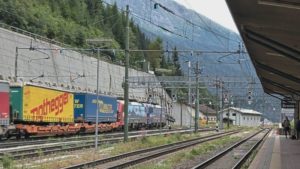
The creation of a single European railway area remains a more than valid project, but achieving this objective is proving far from straightforward. The main testing ground directly involving Italy is the Brenner axis, also because this cross-border route has long been under the spotlight. A central role is played by the Brenner Corridor Platform (Bcp), which brings together several working groups under the presidency of the European Coordinator for the Scandinavian–Mediterranean Corridor, Pat Cox. The vision pursued by the transport ministries and infrastructure managers of Italy, Austria and Germany, together with Bbt, the company building the base tunnel, is to create a harmonised corridor from Munich to Verona, laying the foundations now to make the most of the future rail infrastructure.
Beyond the commitment shown by the institutions, which cannot be denied, much remains to be done. Evidence of this emerges from the Bcp documents. The Platform has carried out an in-depth analysis of all regulations in force on the railways of the three countries. Focusing solely on operational rules for train drivers, sixty different sets of regulations across the three railway administrations were analysed and compared. The outcome showed that for fewer than half no adjustments are required, thanks to existing cross-border harmonisation, while for 36 national rules action is needed. The Bcp has therefore developed its own proposals and forwarded them to the competent national authorities so that appropriate measures can be adopted. This is all the more important given the significant medium-term prospects for the Brenner, as highlighted by a freight transport study produced by the Platform itself.
Some guidelines emerge. The expected infrastructure development along the Brenner rail axis will contribute to a significant reduction in generalised transport costs. This factor, combined with growth in trade flows, particularly between Italy and central and western Europe and between Austria and Germany and eastern European countries, lays the foundations for a substantial increase in modal share in favour of rail.
The potential growth of rail traffic already appears significant in the medium term and will be even greater in the long term. It is therefore necessary, the study states, to remove the remaining bottlenecks in each country, which are significant in the medium term, along the axis. In addition, “transport policy actions can lead to further significant increases in rail traffic compared with current conditions, shifting traffic volumes from road to combined rail transport”.
Supporting these arguments are two studies on the capacity of the Brenner corridor prepared by the Bcp in December 2025. The first refers to a traffic projection with a horizon in the middle of the 2030s, while the second looks to the mid-2040s. In both cases, the base tunnel is assumed to be open to traffic and in operation. In the first projection, however, some infrastructure limitations would remain, especially in Germany, while in the second scenario all planned access works are assumed to be completed.
The hourly paths available for freight trains in Bolzano will be 158 in the 2030s, rising to 214 in the 2040s. The base tunnel together with the historic line indicate an initial capacity of more than 200 paths, increasing to almost 280. The greatest potential is achieved with the full quadrupling of the line on the Austrian side, where figures of 258 paths are mentioned, rising to more than 330.
Piermario Curti Sacchi