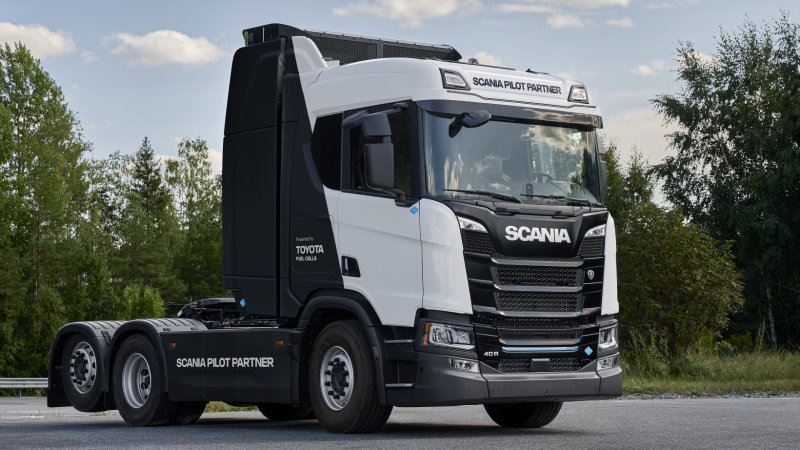







The Italian market for industrial vehicles over 3.5 tonnes gross vehicle weight closed 2025 in negative territory, with a largely unchanged technological mix. According to Federauto (the Italian association of motor vehicle dealers), based on data from the Ministero dei Trasporti (Ministry of Transport), 27,005 units were registered during the year, down 3.72% from 28,049 in 2024. This result confirms a phase of structural weakness in the heavy vehicle sector, against an increasingly complex operational and regulatory backdrop. Sales analysis highlights a widening gap between European regulatory targets for CO₂ emissions reduction and the operational reality of heavy transport, characterised by stringent requirements in terms of range, operating costs and continuity of working hours.
In terms of powertrain, diesel remains firmly central. Registrations totalled 25,993 units, down 4.85% year on year but still accounting for 96.25% of the market, compared with 97.39% in 2024. Ten years after the launch of European policies aimed at phasing out internal combustion engines, the truck market therefore continues to be dominated almost uncontested by diesel.
As for alternative fuels, 2025 saw a sharp collapse in natural gas, both compressed and liquefied, with registrations down 30.77%, interrupting a trend that in previous years had pushed the circulating fleet beyond 3,000 units. According to Federauto, the strong regulatory push towards electric-only traction has also helped to slow down solutions that are already available and operational, which, particularly through the use of Bio Cng and Bio Lng, currently ensure a very limited environmental impact.
By contrast, sales of electric trucks increased, rising by 178.77% in percentage terms. However, this figure must be viewed in the context of still very low absolute volumes: registrations rose from 212 to 591 units, with market share increasing from 0.76% to 2.19%. Almost all of this growth is concentrated in the tractor segment below 7.49 tonnes, which accounted for 506 vehicles, including 51 road tractors. Above this threshold, electric vehicles remain virtually absent, with just 31 rigid trucks registered during the year. Overall, the road tractor segment recorded a decline of 6.95%.
Analysis by weight class shows differing trends across segments. The lightest range, between 3.51 and 7.49 tonnes, recorded growth of 8.85%, with 1,806 registrations, confirming greater resilience among vehicles used for urban and regional distribution. The sharpest contraction affected the medium segment between 7.5 and 16 tonnes, which fell to 2,647 units, down 13.72% year on year, highlighting a particularly weak phase for this category. Vehicles over 16 tonnes, which represent 83% of the total market with 22,558 registrations, saw a decline of 3.23%, broadly in line with the overall trend and indicative of the difficulties associated with a rapid technological transition in the most operationally intensive applications.
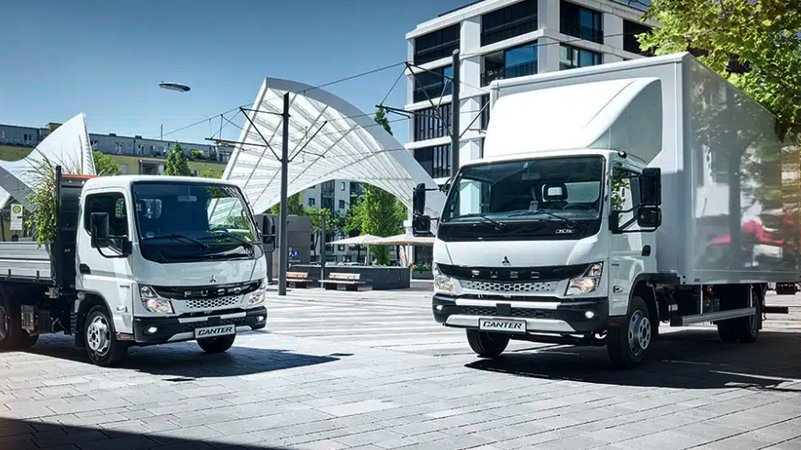
Among manufacturers, Iveco confirmed its position as the most registered brand with a 30.00% market share, despite a 10.91% reduction in volumes. On smaller absolute numbers, even steeper declines were recorded by Scania (-14.05%), Isuzu (-41.71%) and Astra Veicoli Industriali (-47.77%). Moving against the trend were Mercedes Benz Trucks (+16.42%), Renault Trucks (+13.65%) and Mitsubishi Fuso (+12.57%), while Fiat, on very limited volumes, posted growth of over 300%. These figures should be assessed bearing in mind that not all manufacturers cover the full range of weight segments.
At the conclusion of its analysis, Federauto points out that heavy industrial vehicles have so far received no exemptions in the management of CO2 emission penalties. The new package of measures presented by the European Commission in December, while introducing some flexibility, is regarded by operators as contradictory and insufficient. The sector hopes that the European Parliament, which is due to examine the package in the coming weeks, and in particular the Environment Committee, will step in to correct the distortions that continue to fuel buyer uncertainty and slow the adoption of all applicable technologies for heavy vehicles.
In this scenario, further complicated by persistent geopolitical uncertainties, Federauto considers it difficult to formulate forecasts for 2026 that differ significantly from a substantial confirmation of the 2025 results, also pending the launch of the incentives provided for under the multi-year fund recently approved by the Government at the request of Federauto itself, together with Anfia, Anita, Unatras and Unrae.
Massimiliano Barberis