



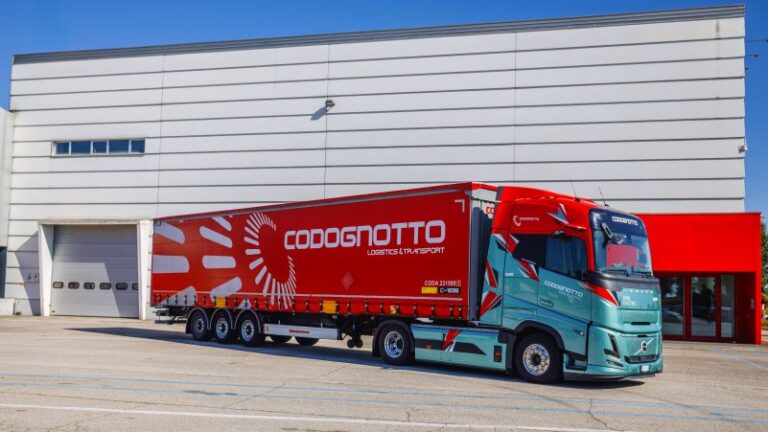
Volvo Trucks, Codognotto and Inter Ikea Group have launched a new long-haul electric transport project as part of the Swedish furniture group’s supply chain energy transition. The initiative covers the transport of furniture and home accessories along three routes in northern Italy: Portobuffolé–Piacenza, Piacenza–Corsico and Piacenza–Padua, linking Ikea suppliers with distribution centres and retail outlets across the region.
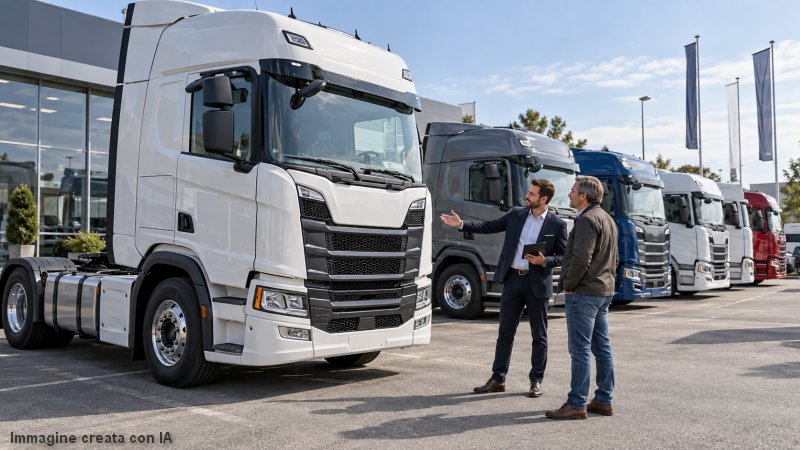
The project involves the deployment of a Volvo FH Aero Electric, newly added to Codognotto’s fleet and dedicated to these routes. The vehicle has a gross combination weight of 44 tonnes and is equipped with a 540 kWh battery, enabling an estimated daily range of around 500 kilometres. Operations are scheduled for 252 days a year. The routes were designed by the Veneto-based transport company to minimise stops and reduce empty mileage, enabling more efficient integration of inbound and outbound logistics.
According to Inter Ikea Group, the initiative forms part of its global strategy to achieve zero-emission deliveries by 2030, through investments in innovative logistics solutions and targeted partnerships. For the charging infrastructure, Codognotto has partnered with Fleet220, a collaborator of Volvo Trucks Italia, which provides 43 kW AC charging stations and full service management.
This project represents the latest step in a broader innovation programme launched in 2025, spanning digitalisation, transport decarbonisation, intermodal development and international expansion. On the digitalisation front, the group took part on 22 May 2025 in a cross-border e-CMR pilot along the Vicenza–Linz corridor, in collaboration with Scortrans, the Ministero dei Trasporti (Ministry of Transport), Ram, Circle Group, Accudire and industry associations Anita and Fedespedi. The trial demonstrated the full operational capability of the end-to-end model developed under the European eFTI4EU project, from the generation of the electronic document within the TMS to roadside checks via the eFTI Gate Italy, delivering benefits in terms of reduced administrative time, simplified procedures and enhanced security.
At European level, Codognotto is also active within the European Commission’s Digital Transport and Logistics Forum, in the subgroup focused on plug-and-play models for logistics data sharing, contributing to the development of a federated and harmonised information exchange system. Operationally, 2025 also saw the continuation of collaborative logistics initiatives using the Transporeon platform and integrated TMS solutions to manage loading and unloading slots, improving coordination between shippers and carriers and overall service quality.
In terms of decarbonisation, alongside the electrification of Ikea routes, Codognotto is a partner in the European H2MA project for the development of green hydrogen in Alpine transport. Launched in 2022, the project concluded in 2025 with a final event in Venice. It delivered planning tools for refuelling networks, a masterplan for priority corridors and a roadmap for hydrogen valleys, with total funding of €2.27 million. In parallel, during 2025 the group expanded its use of HVO biofuel and continued operating bio-LNG vehicles, with a fleet including trucks compatible with liquefied biomethane and ranges of up to 1,600 kilometres.
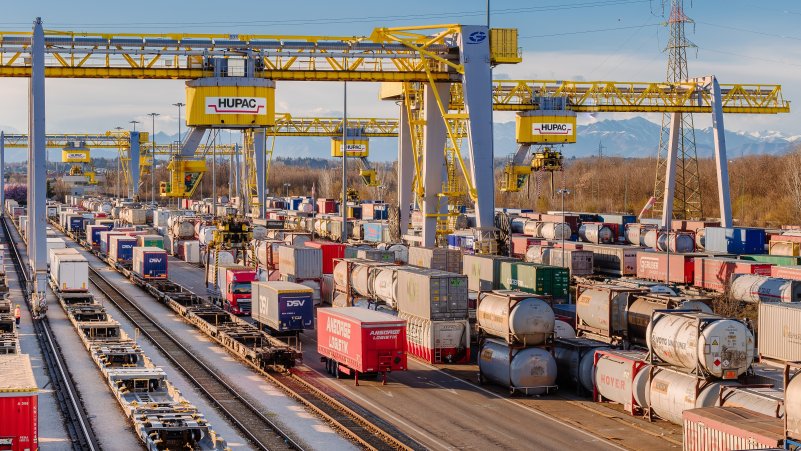
Intermodality is another pillar of Codognotto’s strategy. At the beginning of 2025, the company expanded its connections with Turkey, launching short-sea shipping services from the ports of Trieste, Bari and Venice to Istanbul, Izmir and Mersin, as well as rail links between Vienna and Halkali. Operations also continued on the China–Milan rail service, with three departures per week and a transit time of 22 days over approximately 11,000 kilometres, offering an alternative to maritime routes. Within Europe, the alliance with Gts rail enables the Piacenza–Gliwice connection, with the aim of shifting 50,000 tonnes of freight from road to rail and reducing road traffic by around 2,000 heavy vehicles per year.
The group’s international presence was further consolidated in 2025 with the full operation of its Dubai subsidiary, serving as a hub for Middle East activities and a gateway to flows linked to the Imec corridor. This is complemented by a weekly air freight consolidation service on the Milan–Dubai route, launched in 2024 and continued through 2025. Finally, the group also monitors emissions and energy consumption at group level, including through the use of renewable energy generated by photovoltaic systems installed on its warehouses.