

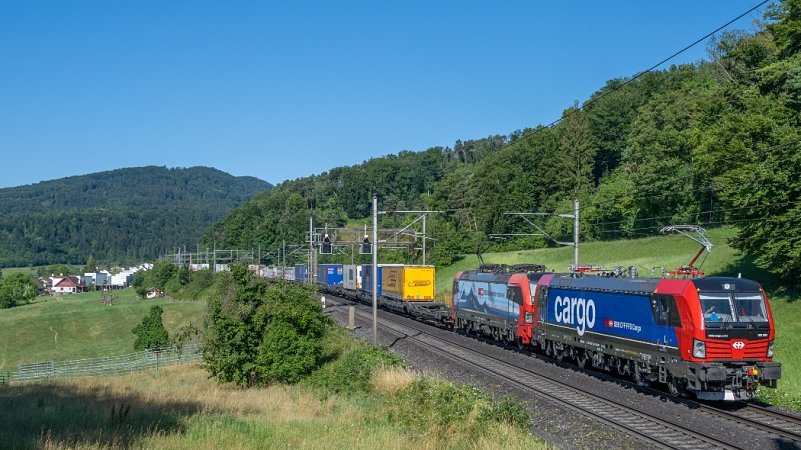




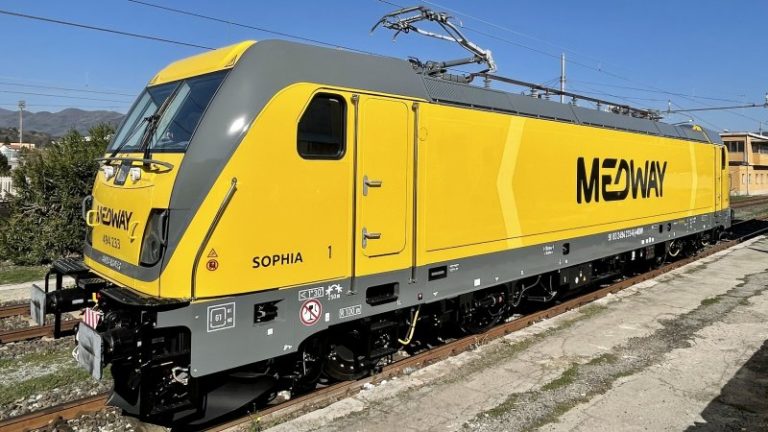
On 23 December 2025, Medway Italia, the rail operator of the MSC Group, signed the renewal of its company-level collective agreement, valid until 31 May 2028. The deal, announced by Fit Cisl, concerns around 216 employees and marks an important step in the company’s industrial development in Italy. After five years of activity in the country, Medway is defining a more stable and coherent contractual framework, moving beyond its initial start-up phase.
The agreement covers pay, regulatory and welfare aspects, introducing salary increases, new allowances linked to the specific nature of freight rail operations and strengthened protections for staff. The renewal fits within the framework of the recent update of the National Collective Labour Agreement for mobility, rail activities area, signed on 22 May 2025, and integrates its provisions by adapting them to Medway’s operational context in Italy.
On the pay front, the company agreement provides for a total increase of €230 on basic pay at the average grade, €120 of which had already been recognised previously. The increase comes on top of the economic adjustments set out in the national contract and helps to strengthen the fixed component of pay in a sector characterised by high professional specialisation and growing difficulties in recruiting qualified personnel, particularly train drivers.
Alongside basic pay, the agreement addresses variable remuneration through the introduction and reinforcement of allowances linked to working conditions. Higher payments are provided for night work, reserve duties and train driving activities, offering a more structured recognition of the operational specificities of freight rail transport. This activity largely takes place at night and at weekends to ensure integration with port and intermodal flows. These factors have a significant impact on employees’ work-life balance and represent one of the central issues in collective bargaining within the sector.
A key chapter of the renewal concerns corporate welfare and supplementary pension provision. The company has committed to paying an additional contribution equal to one per cent of pensionable pay into Fondo Priamo, the reference occupational pension fund for public transport workers and related sectors. The measure strengthens supplementary pension coverage at a time when retirement issues are becoming increasingly important, especially for professions characterised by demanding workloads and stringent psycho-physical requirements.
Of particular significance is the clause on protection in cases of physical unfitness. Should an employee lose the medical requirements necessary to perform their role, the contract guarantees employment continuity through redeployment within other companies of the MSC Group. This provision goes beyond existing legal obligations, which already require employers to explore alternatives to dismissal, and broadens the scope for redeployment to include logistics activities, port terminals and related services. In doing so, it reduces the risk of exclusion from the labour market for highly specialised workers.
Work organisation is another important element of the agreement. The parties have defined clearer criteria for the management of working hours, shift planning and the use of daily and weekly rest periods, with particular attention to mobile staff. While the national contract already regulates these aspects in detail, setting limits on night work and mandatory rest periods, the company agreement adapts these rules to Medway’s operational needs. The company mainly operates scheduled intermodal services between ports and inland terminals, often constrained by terminal operating windows and cross-border transit requirements.
In the freight rail sector, clarity of rules governing staff deployment is closely linked to safety and service reliability. Against this backdrop, the contract renewal also provides for strengthened training pathways and safety standards. The growing interoperability of services, with trains running across multiple European countries, requires increasingly complex technical and regulatory skills, particularly for driving staff who must operate locomotives and networks subject to different rules.
From an industrial relations perspective, the December 2025 agreement is the outcome of negotiations that were not without tension. During 2025, disputes emerged over the length of the talks, leading some autonomous trade unions to initiate cooling-off procedures.
The Medway contract sits within an Italian freight rail market marked by contrasting dynamics. On the one hand, the sector faces structural difficulties, with declining overall volumes, disruptions linked to infrastructure works financed by the PNRR and critical issues on major Alpine crossings. On the other, the intermodal segment, particularly container transport between ports and inland hubs, continues to show signs of growth, bucking the general trend. In this context, vertically integrated operators such as Medway, part of a group that controls maritime services, terminals and inland logistics, can rely on more stable and predictable traffic flows.
Antonio Illariuzzi