






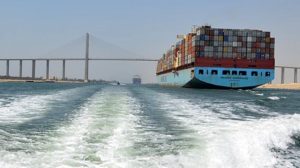
The prospect of reopening the Suez Canal following the ceasefire between Israel and Hamas brings the operational balance of global maritime trade back into focus. According to a Sea-Intelligence analysis dated 24 October 2025, a return to traditional routes between Asia and Europe, and between Asia and the US East Coast – thus abandoning the circumnavigation of Africa – would have an immediate impact on vessel capacity and the management of European ports.
The study, based on capacity and service frequency models, estimates that reopening Suez would release around 2.1 million TEU of nominal capacity, equal to 6.5% of the global container fleet. This volume is currently tied up in African circumnavigation, necessary to maintain regular schedules in the absence of Red Sea transit. Each Asia–Europe or Asia–US East Coast service requires up to four additional vessels per loop, with higher operating costs and longer rotation times.
From an operational standpoint, the main risk lies in managing inbound flows to Europe. Should transits via Suez resume immediately, arrivals from Asia could temporarily double, with an estimated 39% increase in throughput compared with the March 2025 record. Even a gradual return spread over eight weeks would still generate a steady rise of about 10% above historic highs.
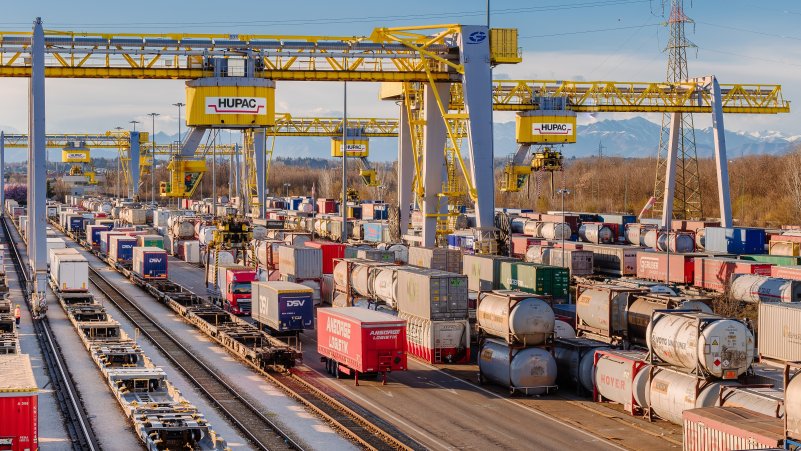
This scenario, Sea-Intelligence warns, would carry a serious risk of congestion. European ports already faced critical conditions during the early-year peak, and a rapid normalisation of traffic could saturate quays, storage yards and intermodal connections. A controlled, phased return could help ease pressure but would not remove it entirely.
Analytically, reopening Suez would deeply reshape global logistics. The additional vessel capacity would temporarily lower freight rates, but the effect would likely be offset by misalignments in port calls and service rotations. Carriers would face a readjustment phase marked by cost volatility, vessel return delays and repositioning of empty containers.
Meanwhile, Egyptian authorities are aiming to strengthen the Canal’s central role. The Suez Canal Authority has launched a series of infrastructure investments, including the late-2024 extension that allows an additional six to eight vessels per day. The goal is to enhance the infrastructure’s resilience and safeguard a key source of national revenue, which relies heavily on transit fees.
In this context, the durability of the ceasefire and the stance of armed groups in Yemen remain decisive factors. Until the Houthis declare a truce, shipping lines are likely to approach a Red Sea return with caution. However, should transits resume, the impact on global logistics would be immediate and significant, requiring close coordination among carriers, terminals and port authorities to avoid fresh bottlenecks.