








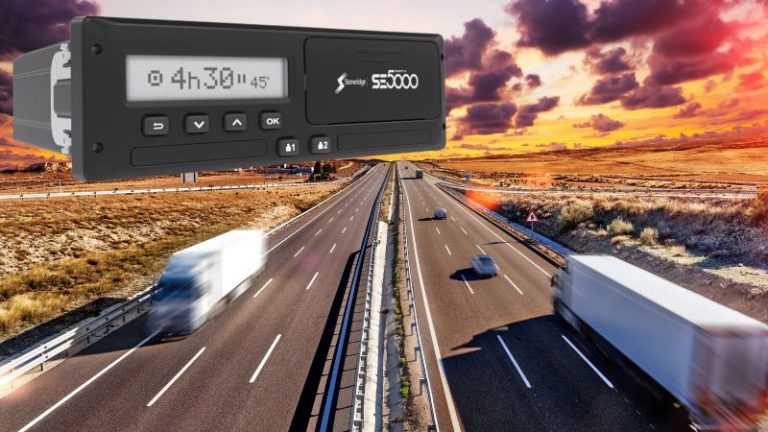
Coming shortly after the most recent tachograph-related deadline—December 2024, which required the upgrade of non-smart digital and analogue tachographs to second-generation smart models for vehicles involved in international transport—road haulage operators now face a new milestone. From 18 August 2025, they will be required to replace first-generation smart digital tachographs, installed between mid-2019 and August 2023, with the latest second-generation versions. This rule applies to vehicles weighing more than 3.5 tonnes that are used in international transport. A further deadline looms on 1 July 2026, which will extend this obligation to light commercial vehicles with a gross vehicle weight between 2.5 and 3.5 tonnes also used for international operations.
The December 2024 deadline posed difficulties for hauliers in several countries for a range of reasons. One was the heavy backlog at authorised workshops responsible for retrofitting, compounded by the fact that many companies missed the opportunity to carry out the update during the mandatory biennial inspection, despite recommendations from the European Commission’s DG Move in a communication issued in March 2024. According to the IRU, by September, only 6.42% of the European fleet had achieved compliance.
Another major issue—one that is likely still unresolved—is the shortage of qualified technicians capable of working on the latest generation tachographs. These devices require advanced skills to verify DSRC interfaces, GNSS satellite reception, and OSNMA authentication, in addition to standard checks on seal integrity. Further complications arose from supply chain issues affecting the availability of necessary equipment between July and September.
In response to the retrofit challenges, the European Commission introduced a two-month “educational learning period”, agreed upon during the Road Transport Committee meeting on 18 December 2024. This grace period, which extended until 28 February 2025, served as a compromise solution, avoiding the immediate enforcement of sanctions while preserving the validity of the legal obligation.
The 2024 experience should serve as a key lesson in preparation for the upcoming 18 August 2025 deadline, encouraging haulage firms not to leave workshop visits until the last minute. Especially as, for now, there is no mention of a new grace period. The estimated cost of replacing a tachograph ranges between €1,700 and €2,200, including the device, installation, and necessary certification. Companies must also account for indirect costs such as vehicle downtime during installation—roughly two hours per vehicle—staff training for the new features, and possible upgrades to fleet management systems to ensure compatibility with the updated data.