




- In the first half of 2026, battery-electric trucks accounted for 4.8% of new registrations in the European Union, up from 3.6% in the same period of 2025, with volumes rising by 47.7%. Diesel still accounts for 92.1%, while just three markets – Germany, the Netherlands and France – represent 74% of electric truck registrations.
- Europe has around 1,100 public charging points of at least 350 kW suitable for heavy-duty vehicles, compared with an estimated requirement of around 50,000 by 2030, including 35,000 MCS points, as well as at least 700 high-capacity hydrogen stations. VDA counts 216 hydrogen stations, compared with the 2,000 it says are needed.
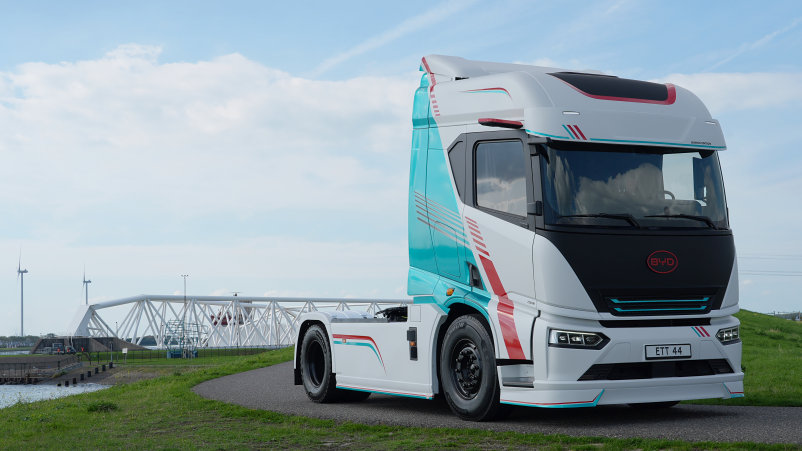
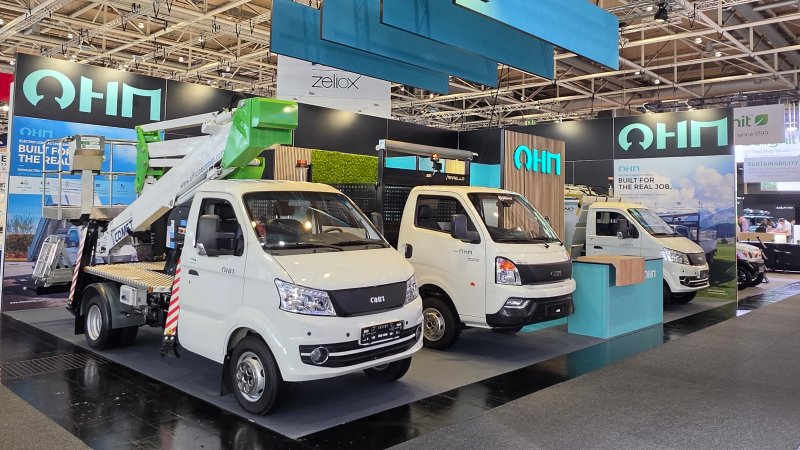
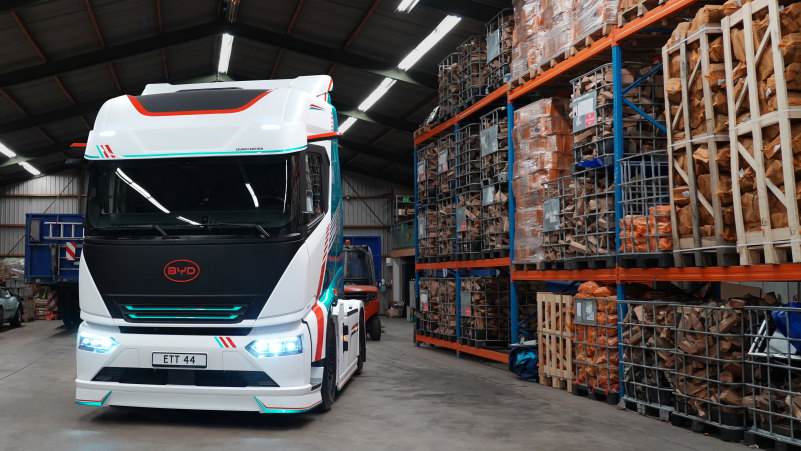
- Meanwhile, Chinese manufacturers are arriving with models that are not merely motor-show announcements, but are ready for European roads and, in some cases, have already been sold. SuperPanther and Sinotruk assemble vehicles in Austria, while Sany already has tractor units operating in Germany.
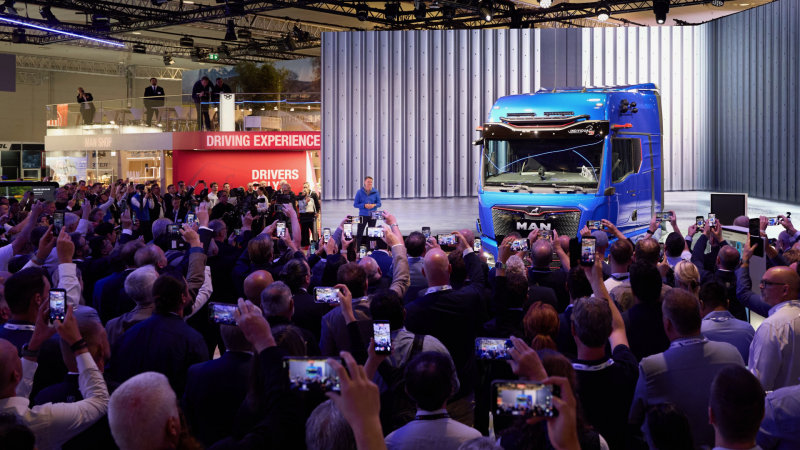
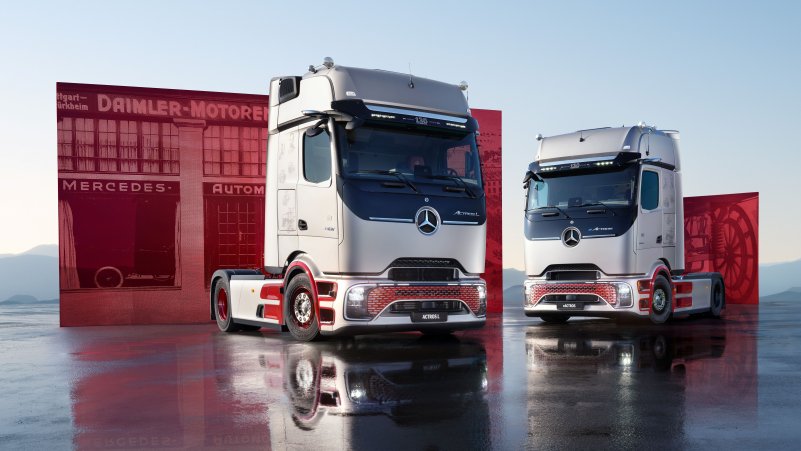
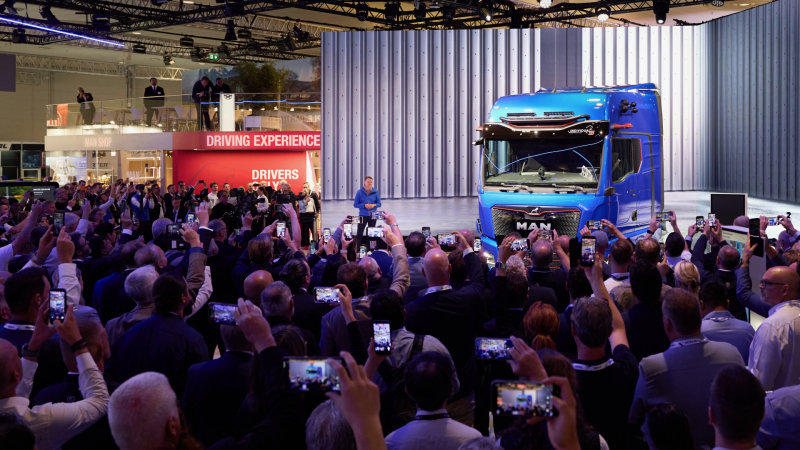
The German automotive industry association VDA organises the IAA in Hanover, which opens on 15 September 2026 and runs until 20 September. This year's event has given VDA an opportunity to issue a warning to Brussels: European industry has developed the vehicles, but without charging infrastructure, grid connections and sustainable energy costs, demand will not materialise and others will fill the gap. In this respect, it is warning about the strong presence of Chinese manufacturers at the show, displaying models that are not simply exhibition vehicles but are already ready for European roads. Iveco, by contrast, is absent from this year's event as it is currently facing its acquisition by India's Tata.
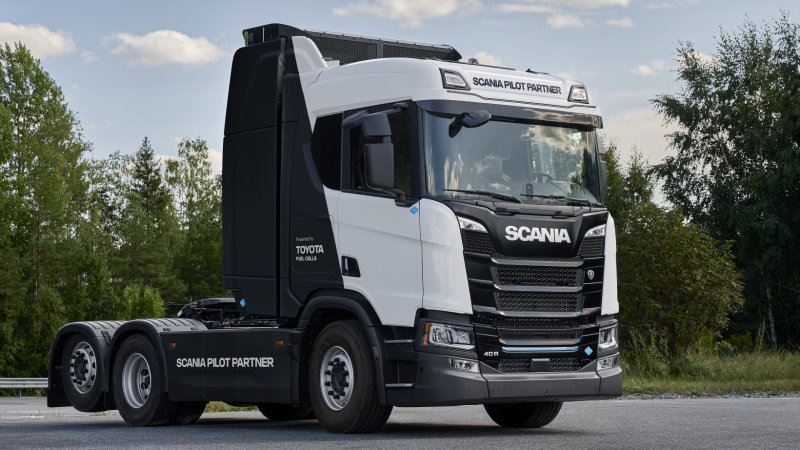
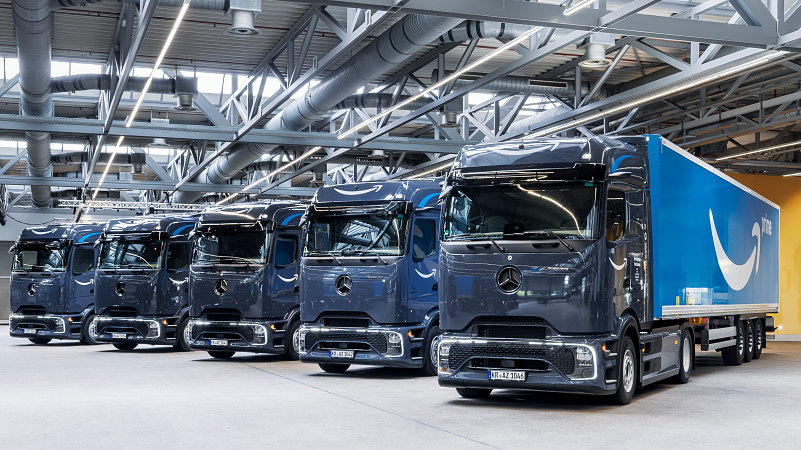
The argument reiterated by VDA president Hildegard Müller ahead of the opening is that the vehicle itself is no longer the bottleneck: European manufacturers offer battery-electric trucks with a stated range of more than 500 km and fuel-cell models capable of around 700-800 km, but there are major delays involving the electricity grid, charging points, electricity prices and permitting procedures. Market data for the first half of the year show growth, although it remains far from the scale required to meet EU targets. In the European Union, registrations of commercial vehicles rose by 9.8%, while battery-electric registrations increased by 47.7%, taking their share to 4.8%, compared with 3.6% in the first half of 2025, according to ACEA data. Diesel still accounts for 92.1% of newly registered trucks, while the increase in electric vehicles is concentrated in three countries: Germany, the Netherlands and France, which together account for 74% of European battery-electric truck registrations, with increases of 88.5%, 44.5% and 43.7% respectively.
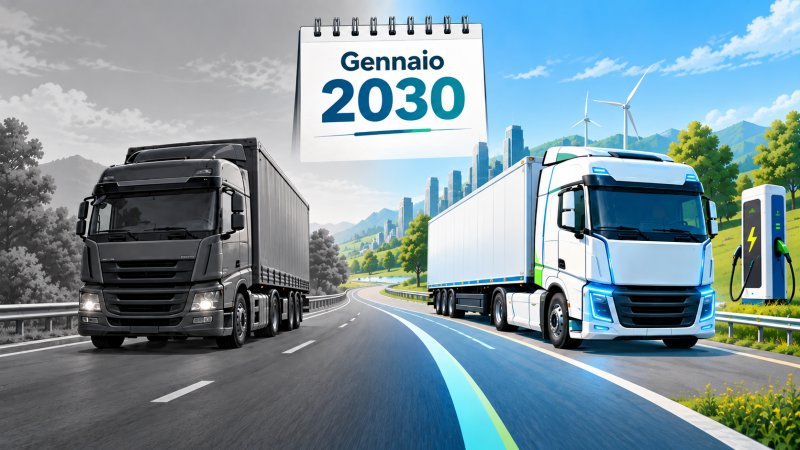
An analysis of weight categories in the first quarter of 2026 shows why VDA's warning primarily concerns long-haul transport. In the 3.5-16 tonne gross vehicle weight category, electric models reached a 16.2% market share, up from 14.8% for the whole of 2025. But above 16 tonnes, at the heart of European freight transport, electric registrations amounted to just 1,624 units out of 69,608, or only 2.3%. In the same quarter, the overall market for vehicles above 3.5 tonnes grew by 10.7% to 81,766 units. VDA also cites EU Regulation 2024/1610, which sets an average reduction in carbon dioxide emissions from new heavy-duty vehicles of 45% by 2030, 65% by 2035 and 90% by 2040 compared with the reference baseline. These are not sales quotas for individual models, but average fleet standards. To meet them, ACEA estimates that Europe would need around 400,000 zero-emission trucks on the road by 2030, while at least one in three new trucks would have to be zero-emission by the end of the decade. However, there are just over four years to move from the current 4.8% to 35%.
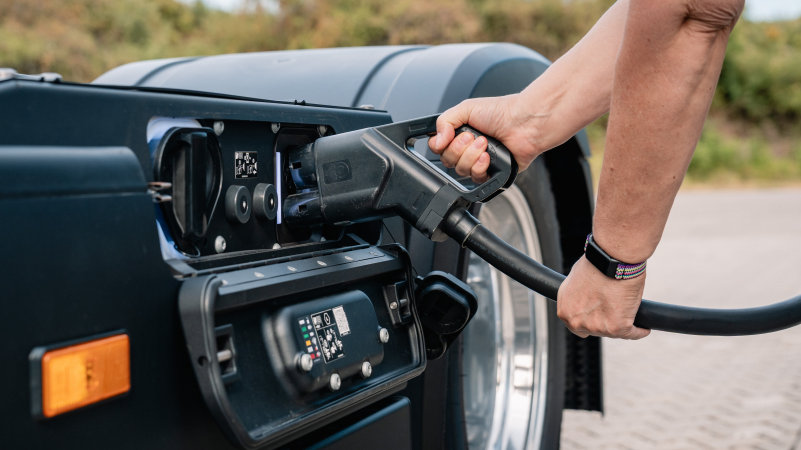
Against this backdrop, there is the major problem of the charging network: ACEA reports that around 1,100 public charging points of at least 350 kW suitable for heavy-duty vehicles are currently operational in Europe, spread across about a dozen countries. This compares with an estimated requirement by 2030 of at least 50,000 public charging points, including 35,000 using MCS technology, as well as at least 700 hydrogen stations with a capacity of six tonnes per day. In terms of installation rates, this means around 500 new public charging points dedicated to heavy-duty vehicles every month until 2030. VDA's assessment is even more restrictive, identifying 730 European truck-dedicated charging points with a capacity above 350 kW, plus just under 2,000 points accessible to commercial vehicles at mixed-use sites. For hydrogen, the German association identifies around 216 European stations serving road transport, compared with a requirement of around 2,000 equipped sites. The two sets of figures differ because of their definitions – charging dedicated exclusively to trucks versus mixed-use sites, power thresholds, accessibility and daily capacity – but both point to a similar scale of shortfall. It should be added, however, that these figures cover public charging points and do not include facilities at haulage depots, logistics platforms and industrial sites, where trucks can also receive partial charges.
The ICCT (International Council on Clean Transportation) estimates that the EU-27 will need between 60,000 and 80,000 public charging points by 2030 for electric trucks, in addition to 150,000-175,000 private charging points, and calculates that the requirements under the AFIR Regulation cover only 50-70% of public charging needs. Congestion on local grids, permitting times and investment in grid connections could, the institute says, materially delay the development of heavy-duty charging infrastructure. From 2025, AFIR requires stations of at least 350 kW every 60 km along the core TEN-T network and every 100 km along the comprehensive network, with full coverage by 2030. From 2030, it also requires hydrogen stations at urban nodes and every 200 km along the core network. By 31 December 2027, charging pools must be installed along at least half of the TEN-T network, with an aggregate power output of at least 1,400 kW, rising to 2,800 kW on the core network.
The demands VDA is bringing to the political table follow from this assessment: faster grid connections and permitting procedures, public heavy-duty charging along TEN-T corridors and at rest areas, more predictable electricity prices, emissions-based differentiated tolls, and a realignment of the implementation of carbon dioxide rules with the enabling conditions actually available. Individual European manufacturers are also taking action. On 15 September, the first day of the show, nine groups from the vehicle, transport and energy industries, led by Daimler Truck, will present in Hanover the operational plan for an alliance to develop hydrogen refuelling stations for trucks along European corridors, with a 2030 horizon and a section dedicated to fuel pricing.
Antonio Illariuzzi