







- The start of 2026 has brought a further rise in costs for the Italian road haulage sector, driven by increases in motorway tolls (+1.5%) and diesel prices (+3.6%). According to the Cgia Research Office, if prices remain stable, fixed costs could rise by several thousand euros per year, hitting smaller operators particularly hard.
- Between 2015 and 2025, the number of active Italian companies fell by 19,241 units (-22.2%). Almost all regions recorded significant declines, with particularly critical situations in Valle d’Aosta, Marche and Lazio. The only exception is Trentino Alto Adige, which posted positive growth of +12.1%.
- Despite the contraction of the business base, road haulage remains central to the Italian economy: more than 80% of goods in Italy travel by road. However, structural challenges persist, including late payments and a shortage of drivers, which continue to put pressure on companies’ financial sustainability.
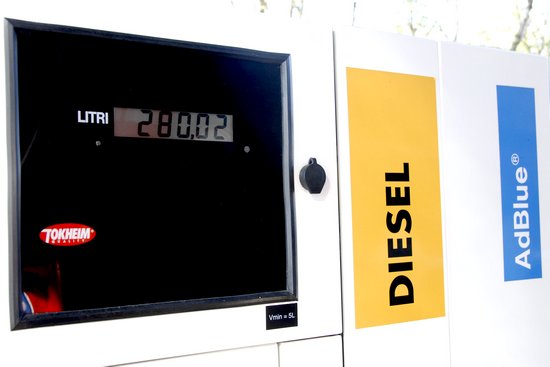
The beginning of 2026 has proved particularly challenging for the Italian road haulage sector. According to a report by the Cgia Research Office, released on 7 February 2026, the increase in motorway tolls, around 1.5%, and the rise in diesel prices, up 3.6% between the end of 2025 and the start of the year, have led to a sharp increase in fixed costs for operators. These increases affect the entire sector but weigh especially heavily on smaller businesses.
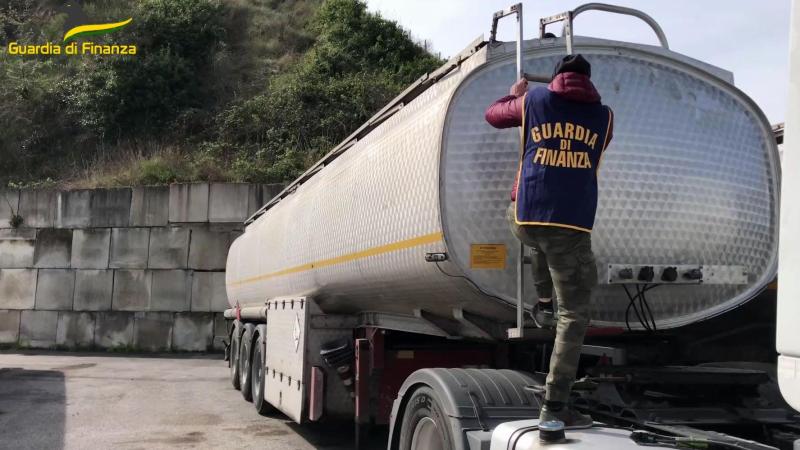
If pump prices for diesel were to remain unchanged throughout 2026, fixed costs for haulage operations could rise by several thousand euros per vehicle. The impact is greater for small firms and owner-drivers, who in most cases cannot access toll rebates or tax credits to offset the increase in excise duties. According to Cgia estimates, each heavy vehicle operated by these companies could face an average annual increase of around €2,000 for fuel purchases alone compared with 31 December last year, further compressing already thin margins.
Selective incentives represent one of the main imbalances in the system. Motorway toll rebates are reserved for companies that exceed certain annual spending thresholds and operate vehicles meeting Euro V or Euro VI environmental standards. Similarly, the fuel tax credit is limited to vehicles over 7.5 tonnes and subject to strict technical requirements. This framework excludes a significant share of the national vehicle fleet, particularly those used in local distribution and last-mile services.
These factors add to long-standing structural issues, starting with late payments by clients. At the end of October 2025, the Ministero dei Trasporti (Ministry of Transport) issued a circular calling on clients to end a widespread and repeated practice of late payments to carriers. The measure provides for penalties of up to 10% of annual turnover, imposed by the Autorità Garante della Concorrenza e del Mercato (Italian Competition Authority), on non-compliant parties. According to the Cgia Research Office, rising fixed costs and uncertainty in cash flows now represent two factors that seriously threaten the financial stability of many companies in the sector.
From a structural perspective, the report depicts a sector that has undergone a profound downsizing over the past decade. Between 2015 and 2025, the total number of active road haulage companies in Italy fell from 86,590 to 67,349, a loss of 19,241 businesses, equivalent to a 22.2% decline. However, the national average masks widely differing regional dynamics, clearly highlighted in the regional analysis.
The most critical situations are recorded in Valle d’Aosta (-34.1%), Marche (-33.4%) and Lazio (-32.5%), followed by Friuli Venezia Giulia (-30.5%) and Sardegna (-30.2%). The only region bucking the trend is Trentino Alto Adige, which over the same period recorded growth of 12.1%, equal to 165 additional companies. According to Cgia, in addition to the economic crises that followed one another over the decade, the growing competition from foreign carriers, particularly from Eastern European countries, and merger and acquisition processes have drastically reduced the number of single-vehicle operators.
An analysis of the leading regions by number of companies shows a strong geographical concentration. Lombardia, Campania, Emilia Romagna, Veneto and Sicilia together account for more than 54% of Italy’s road haulage companies. Lombardia remains the country’s main logistics hub, with 10,193 active companies in 2025, equal to 15.13% of the total, despite having lost 3,141 businesses compared with 2015 (-23.6%). This decline, above the national average, reflects both competitive pressures and corporate reorganisation processes.
Campania represents the exception among the major regions. With 7,517 active companies and an 11.16% share of the national total, it recorded a limited contraction of 5.9% over the decade, equal to 473 fewer businesses. This figure indicates greater resilience in the regional business fabric, supported in part by the weight of urban distribution and the region’s role as a logistics gateway for southern Italy.
Emilia Romagna and Veneto, by contrast, show more marked reductions. Emilia Romagna fell to 7,088 companies (-27.0%), losing 2,623 businesses, while Veneto counted 6,666 companies in 2025 (-24.3%), with 2,142 fewer than in 2015. Sicilia, with 5,263 active companies and a contraction of 8.9%, remains one of the main logistics hubs in island and southern Italy, showing relatively greater stability than regions in central and northern Italy.
Polarisation is also evident at provincial level. Napoli, Milano, Roma, Torino and Salerno represent the main provincial hubs of Italian road haulage, together accounting for more than one fifth of national companies. Napoli ranks first, with 3,984 active companies in 2025, and shows a limited contraction over the decade, confirming resilience above the national average. Milano follows with 3,102 companies but records a significant decline compared with 2015, in line with the structural challenges facing large northern urban centres.
Roma, with 2,854 active companies, shows one of the sharpest reductions among major Italian provinces, while Torino follows a similar pattern marked by a substantial loss of operators over ten years. Salerno completes the top five provinces, standing out alongside Napoli for a more limited contraction and for its strategic role in southern Italy’s logistics flows. Overall, the heterogeneity of provincial trajectories reflects a structural divide between northern and southern Italy, with greater adaptability in areas where transport is closely linked to distribution and last-mile services.
M.L.