











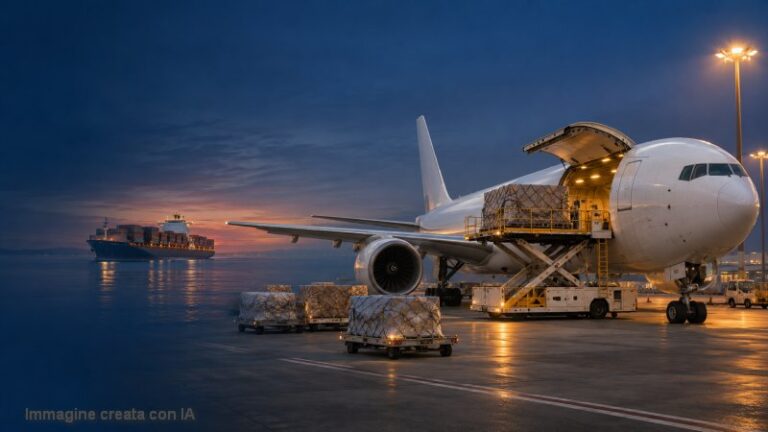
Air cargo volumes grew by 6% in October 2026 compared with the same month in 2025, marking the seventh consecutive month of growth following a 3% decline in March, when the escalation of the conflict in the Middle East had closed Gulf airspace. However, figures released by Xeneta on 6 November 2026 show no signs of a late seasonal peak, such as severe pressure on capacity, a surge in rates beyond levels already seen this year or a sharp increase in charter prices. "The market continues its steady growth, as we have been reporting since March. It is strong, but this is not a peak season, and time is running out for any surge in volumes," said Niall van de Wouw, Xeneta's head of air freight.
Spot rates, covering periods of up to one month, averaged $3.11 per kilogram, up 29% on October 2025 and 4% on September. The annual rate of growth in prices accelerated for the second consecutive month, following a slowdown between June and August. Available cargo capacity, unchanged year on year after a 2% increase in September, is supporting prices. With volumes growing faster than supply, Xeneta's dynamic load factor, which measures cargo volume and weight against available capacity, rose by two percentage points to 63%.
Rates increased on all ten routes analysed. The sharpest rise was recorded on westbound transatlantic services, where rates from Europe to North America climbed by 10% to $2.31 per kilogram as airlines switched to winter schedules, while reduced capacity is also pushing up the rates offered to freight forwarders in ongoing tenders. On transpacific routes, demand remains supported by shipments linked to artificial intelligence: chargeable weight from Asia-Pacific to North America increased by around 15% year on year, with freighter capacity growing at a similar rate. The Southeast Asia–North America route recorded a 3% increase to $6.34 per kilogram, while rates from Northeast Asia rose by 4% to $6.21. Rates on return routes increased by between 1% and 3%, with North America–Europe reaching $1.15 per kilogram (+3%).
Rates from Asia to Europe also increased, rising by 4% to $4.97 per kilogram from Northeast Asia and by 3% to $4.35 from Southeast Asia. However, Xeneta identifies two factors that could restrain traffic growth between Asia and Europe: declining e-commerce volumes and the return of container shipping services through Suez. E-commerce, which has filled many cargo aircraft bound for Europe in recent years, continues to contract. In the third quarter, Chinese exports of low-value consignments to the European Union fell by 61% year on year following the introduction of a €3 duty per item on 1 July. Exports to Europe as a whole declined by 29%, as shipments to Russia more than tripled. Since 1 November, the EU has also applied a €2 handling fee per item, which Xeneta expects to further dampen volumes, although only moderately, given that the flow has already more than halved. Direct air cargo capacity between Asia and Europe also declined in October, adding to capacity losses on routes via the Middle East, while rates from China to Europe rose by 6% year on year, compared with 38% towards North America. Europe also attracts a smaller share of cargo linked to artificial intelligence, accounting for around one-tenth of global trade in these products, compared with more than one-third of total global merchandise trade.
The second uncertainty comes from maritime transport. In October, capacity on container shipping services transiting the Red Sea reached around half its pre-crisis level, and just over half of capacity between Asia and Europe now passes through the Suez Canal in at least one direction, with one-third doing so in both directions. A Xeneta analysis based on Eurostat data shows how air freight's share of EU imports from Asia, measured in tonnes, is closely linked to the reliability of maritime schedules. It stood at 1.1% in 2023 and rose to 1.7% in 2024, when schedule reliability for vessels sailing from the Far East to Northern Europe fell from 28% to 9.3%, before declining to 1.2% in 2025 as punctuality recovered to 20%. In the first eight months of 2026, the share reached 1.3%, after the closure of the Strait of Hormuz in February prompted shipping lines to postpone their return to Suez. Eurostat data only extend to August and therefore do not yet reflect the autumn return of services to the Red Sea, while schedule reliability on the route remained around 10% in October. Xeneta expects cargo that switched to air transport for reliability rather than speed to return to sea once schedule reliability shows a sustained recovery, probably from the second quarter of 2027.
For 2027, Xeneta's baseline scenario forecasts an overall decline in air freight rates. Many shippers are avoiding negotiations in the fourth quarter and are launching tenders scheduled to close in the first or second quarter, but reaching agreement on long-term contract prices remains difficult. "Freight forwarders can offer twelve-month contracts, but under current market conditions they would have to factor in so much uncertainty that the price would become uncompetitive. Over the past two years, it has not been the level of demand that has driven rates higher, but the availability of capacity," explained van de Wouw.
Anna Maria Boidi