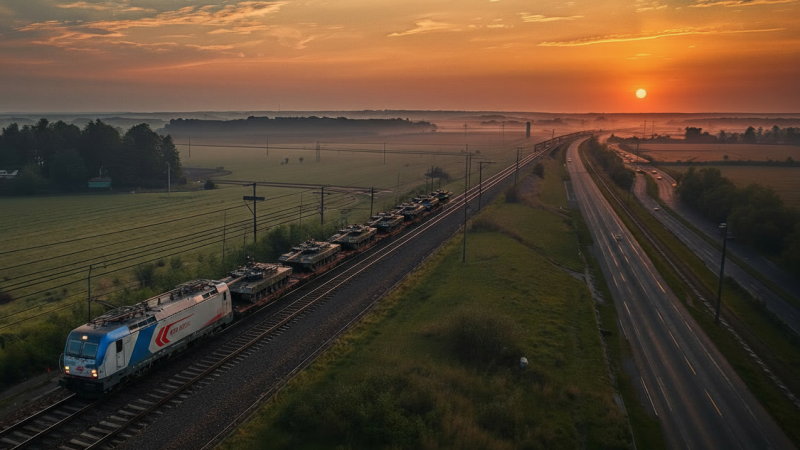





European rail freight transport is going through a phase of widespread criticality that is directly affecting the sector’s competitiveness. This was the picture that emerged from Fermerci’s assembly, opened by the speech of president Clemente Carta, who outlined a scenario marked by the combined impact of infrastructural, regulatory and organisational factors, with heavy consequences for service continuity.
According to Carta, the European context appears “extremely complex”, also due to the concentration of worksites and what is seen as insufficient international coordination. Among the most critical issues highlighted was the scheduling of closures in Germany on forty railway lines, together with the introduction of new Swiss regulations on freight wagons. The technical parameters set out, described as unrealistic, risk further reducing system capacity at a time when the European Union is calling for a greater modal shift from road to rail.
The president of Fermerci stressed that the concrete risk is a contraction of rail supply at a stage when the sector should instead be supporting European environmental and logistics objectives. The overlap between worksites, operational constraints and non-harmonised rules across different countries is creating bottlenecks along the main international corridors, with direct repercussions on freight flows.
The national picture is also marked by strong elements of complexity. In Italy, infrastructure works linked to the PNRR, considered essential to address historic shortcomings of the rail network, are leading to a significant increase in planned interruptions and construction sites. Carta underlined how these activities, although necessary, are producing negative effects on rail freight companies at a time already characterised by high operational and competitive pressure.
Traffic interruptions result in delays, service cancellations, the application of contractual penalties and, in some cases, the loss of customers. This situation is putting several companies under strain, especially during the transition period that will accompany the completion of works, scheduled by 2026. The effects of PNRR investments, as recalled during the assembly, will extend at least until 2027, making the adjustment path particularly delicate.
Added to this scenario are bureaucratic complexities. Administrative procedures make it difficult to implement the incentives envisaged for the sector and weaken regulatory certainty, further burdening rail freight companies. The combination of regulatory costs, operational discontinuity and regulatory uncertainty is reducing the ability to plan in the medium term.
Within the critical framework outlined, Carta nevertheless pointed to some positive elements. Dialogue with RFI has strengthened, encouraging a more structured discussion on how worksites are managed and how traffic is organised. However, the association continues to see the need for more effective European coordination as central, in order to avoid overlaps and misalignment between infrastructure choices made by different countries.
Among the proposals put forward, the president also referred to the possibility of assessing a selective opening of certain time windows currently reserved for passenger traffic, in order to ensure the continuity of freight services along the main routes, especially in the presence of prolonged interruptions. On the association front, 2025 was described by Carta as a year of strong growth for Fermerci. Institutional activity has intensified, new members have joined the association and initiatives across the country have received positive feedback. Among these, the Casa Fermerci project was cited as an example of strengthening ties with companies and operators in the sector.
Looking ahead to 2026, the scenario remains complex but with prospects considered more encouraging, in relation to the progress of infrastructure investments and the possibility of benefiting, over time, from PNRR-funded interventions. In this context, Fermerci reiterated its commitment to representing the sector and working towards a regulatory framework that is more balanced and consistent with the operational needs of rail freight transport.