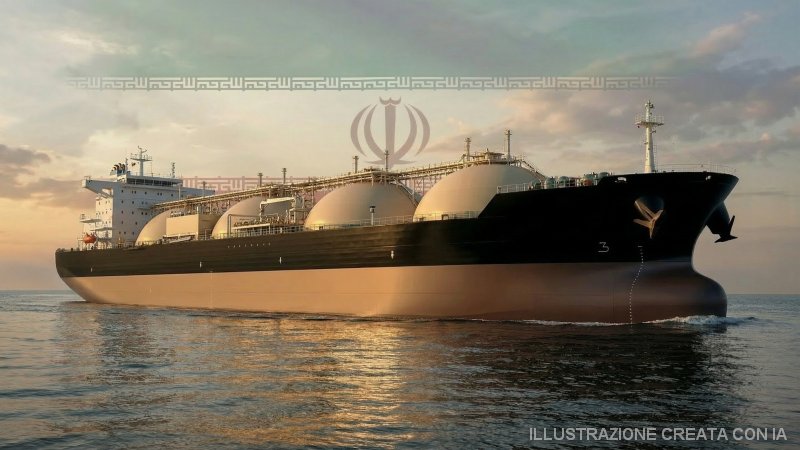





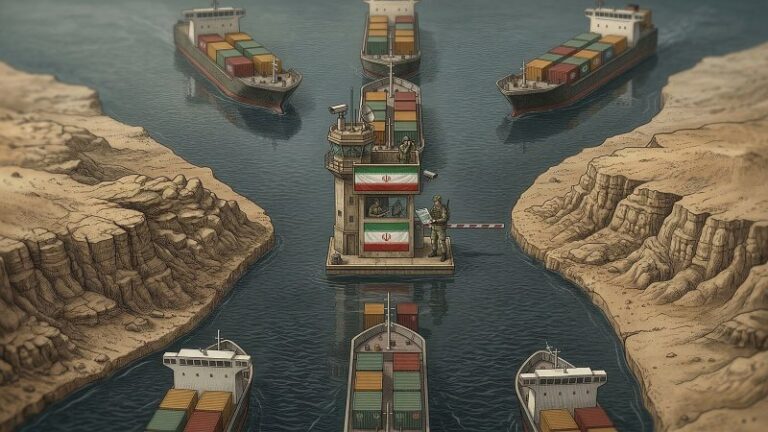
As of 10 April 2026, the Strait of Hormuz is formally open but operationally almost blocked. The corridor linking the Persian Gulf to the Gulf of Oman remains under the de facto control of Iranian naval forces, which have set a maximum threshold of fifteen vessels per day. Before the conflict triggered by the United States and Israel around five weeks ago, more than one hundred ships were passing freely through the strait each day. Maritime tracking data processed by Kpler and MarineTraffic illustrate the scale of the paralysis: on one of the days following the announcement of the truce between Washington and Tehran, made overnight between 7 and 8 April, only five transits were recorded. Hundreds of tankers and bulk carriers are still anchored in the Persian Gulf, reducing speed or reversing course while awaiting authorisations that are slow to arrive. The initial closure is estimated to have left nearly 800 vessels stranded in the area.
Iran is managing passages selectively, through the naval presence of the Pasdaran (Islamic Revolutionary Guard Corps) and patrol operations that give Tehran direct control over the pace of transits. AIS tracking shows ships slowing almost to a standstill near waters controlled by Iran, waiting for clearance signals. The cap of fifteen vessels per day is not codified in international rules: it is enforced in practice and effectively serves as a tool of political pressure linked to ceasefire arrangements with the United States.
The timeline of recent days highlights the fragility of political announcements. The truce agreement of 7–8 April raised market expectations of a reopening: in the first hours afterwards, a few transits were recorded, and the first non-Iranian tanker to cross the strait after the announcement was the Msg, flying the Gabon flag, carrying around 7,000 tonnes of Emirati fuel oil bound for India. A symbolic signal that remained just that. Israeli strikes on Beirut and the Bekaa Valley, interpreted by Tehran as a breach of the truce, quickly returned the situation to near-closure, while Hezbollah rocket responses in northern Israel fuelled a cycle of escalation that directly shapes Iran’s management of the strait.
US President Donald Trump has claimed the agreement with Tehran as a guarantee for reopening Hormuz, but accuses Iran of handling oil traffic “in a very poor way” and betraying the spirit of the truce. The US Navy remains one of the main guarantors of security for Gulf energy routes, while officially seeking to avoid direct escalation. UK Prime Minister Keir Starmer has raised “military options” to make the passage safe again and is working to build a naval coalition with allied countries. The EU has firmly rejected the idea of an Iranian toll on transiting vessels, invoking international law and freedom of navigation.
For Iran, control of the strait is a pressure lever in response to raids and the military presence of the United States and Israel in the region. Limiting traffic to fifteen vessels per day allows Tehran to strike at the heart of the global energy system without resorting to a total closure, which would also irritate strategic partners such as China and India. The management of Hormuz is part of broader negotiations on the truce, sanctions and the nuclear dossier: each partial reopening or new restriction becomes a bargaining chip at the political table.
The economic impact extends far beyond the region. Reduced flows through Hormuz are driving immediate increases in oil prices and marked volatility in energy markets, with knock-on effects on transport, inflation and monetary policy. Several analysts point out that Europe is among the most exposed regions, both in terms of energy costs and supply chain vulnerability. There are no comparable alternative maritime routes in terms of volume and cost: any diversions via pipelines or through other corridors such as Bab el-Mandeb, which links the Arabian coast to the Red Sea, cannot offset a closure of Hormuz.
Iran’s control over the Strait of Hormuz is in tension with the principles of freedom of navigation enshrined in international conventions, setting a precedent that concerns maritime powers. The prospect of multinational escort missions for vessels, raised by London and discussed with Washington and some European countries, signals the risk of further militarisation in an already highly sensitive area. The EU continues to emphasise diplomatic and multilateral tools, including recourse to UN forums and the law of the sea, to defend freedom of navigation without opening a direct military front.
The United Arab Emirates, Qatar and Bahrain, from which a large share of Gulf energy exports originate or transit, are directly affected by the slowdown and are becoming diplomatic hubs for contacts between Western leaders and regional actors. For shipowners, meanwhile, the situation translates into rising costs, idle vessels and increasing insurance premiums: the contrast between the rhetoric of political agreements and the silence of AIS tracking data now provides the clearest measure of the gap between the announced truce and an operational normality that remains distant.
M.L.