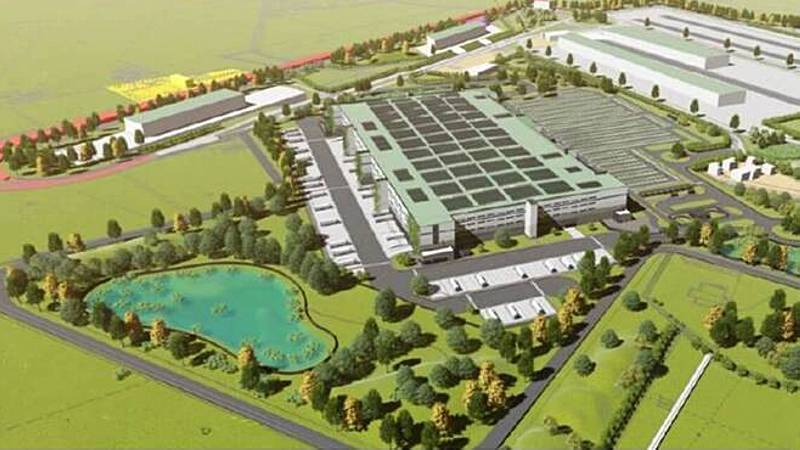









On the morning of 18 December 2025 the procedure concluded for the tender launched on 30 May by Interporto di Padova to select the operators with whom to jointly develop the intermodal terminal at the Veneto hub. The winning bid was submitted by the consortium formed by Psa Intermodal Italy and Logtainer which, the freight village company explained, put forward an economic offer of €75 million, compared with a base value of €61 million. Also under consideration was the proposal from the consortium comprising Rail Hub Milano, part of the Contship group, and Medlog Holding Italia of the MSC group.
The next step will be the creation of a new company to operate the intermodal terminal, Intermodal Terminal Padova, in which Interporto di Padova will hold a 30 per cent stake, appoint one representative to the board of directors and chair the board of statutory auditors. In addition, the freight village company has introduced a number of safeguard clauses, including the impossibility of changing the intermodal use of the area without the consent of Interporto Padova, regardless of the shareholding in the new company, as well as various rights relating to corporate bodies and the transfer of shares.
Completion of the transaction is expected by June 2026, following the necessary formal procedures, including approval by the reference shareholders, namely the Chamber of Commerce, the Municipality of Padua and the Province of Padua, as well as by the institutional supervisory bodies, the Court of Auditors and the Italian Competition Authority.
“Today Interporto Padova reaches a highly ambitious milestone, which only a year ago seemed like a dream,” commented president Luciano Greco. “First in Italy and among the first in Europe, through a rigorous and highly competitive public selection we have identified global-level partners such as Psa Intermodal Italy and Logtainer, with whom we can consolidate and further develop the inland intermodal terminal that is already the most competitive and innovative in Italy and in Europe.”
The conclusion of the tender comes at the end of a particularly significant year for the Padua freight village. In March it launched the trial of remote control for electric gantry cranes, becoming the first Italian facility to introduce them. Operators manage the cranes from a control room located in the office building, ensuring greater comfort and safety. The next step will be automation, with the cranes operating according to instructions from a Terminal Operating System software integrating artificial intelligence applications. The trial is focused on the southern yard of the terminal, which has four 750-metre tracks served by three cranes.
Another major innovation came in June, when the freight village obtained from Enac the first operational authorisation in Italy for automated video surveillance of a freight village area using drones. The drone takes off autonomously from a robotic hangar on the roof of the headquarters and flies over the intermodal terminal area of around 350,000 square metres, operating 24 hours a day.
The system, developed in collaboration with Remotely Piloted Aircraft Systems Academy Cardtech, represents a new paradigm in the industrial use of drones. When sensors detect anomalies, such as people in restricted areas or early signs of fire, the drone automatically sends an alert to the control room, where a pilot can take manual control to investigate further.
Over the year, the terminal also enhanced automation of access for industrial vehicles, with entry gates and three exit gates that automatically recognise loading units. In addition, two rail portals automatically identify wagons entering and leaving across all eighteen loading and unloading tracks.
On the energy front, Interporto di Padova has continued the renewal of the photovoltaic system that has been operating on warehouse roofs for more than ten years. The upgrade has increased total installed capacity from 13 MWp to 16.3 MWp. In addition, the 1 MW photovoltaic plant with a 1 MWh storage battery, dedicated to powering the electric gantry cranes and terminal operations, has been enhanced with a predictive system that optimises the use of self-generated energy.
Still in the energy field, in April 2025 Interporto Padova promoted the city’s first industrial-scale Renewable Energy Community. On the roof of a warehouse in Corso Stati Uniti, a 1 MWp photovoltaic system was installed across 20,000 square metres, capable of producing more than one million kilowatt-hours per year and avoiding the emission of around 520 tonnes of CO₂. The plant is open to companies in the Padua industrial zone, with the medium-term goal of covering up to 30 per cent of the area’s energy demand.
In rail transport, a fast customs corridor between the freight village and the port of La Spezia was activated in August, enabling the rapid and secure transfer of containers under temporary storage. As a result, goods arriving at the Ligurian port do not need to wait for customs clearance, which is completed directly at their destination in Padua. The system is based on digital technologies for real-time tracking and on a shared platform between the Italian Customs and Monopolies Agency and the freight village. To this end, the Veneto terminal has a large AEO-certified customs area.
Another important step was the completion in July of the merger by incorporation of the Consorzio Zona Industriale e Porto Fluviale di Padova into Interporto Padova Spa. This transaction, approved in April 2024 by an extraordinary shareholders’ meeting, increased Interporto Padova’s share capital from €37.081 million to €44.929 million.