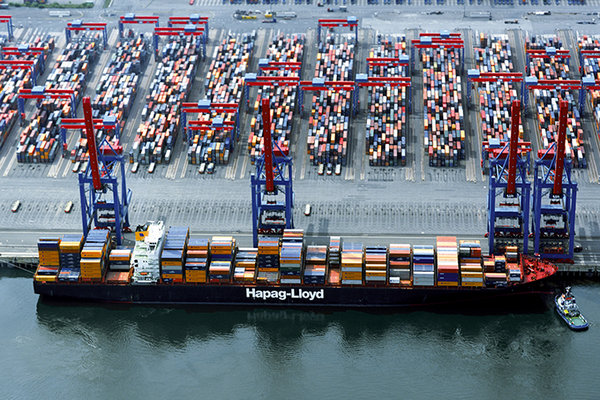






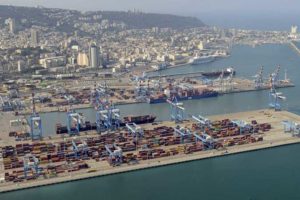

Hapag-Lloyd’s acquisition of Zim Integrated Shipping Services has begun on a difficult footing. The day after the agreement was announced, employees of the Israeli carrier launched an open-ended general strike against the sale. The protest was initiated by Zim’s workers’ committee, led among others by Oren Caspi and union representative Ziva Lainer Schkolnik, with the backing of Histadrut, Israel’s main trade union organisation. According to MarketScreener, around 800 employees out of roughly 1,000 in Israel joined the walkout, halting operational activities from the day following the announcement of the deal. The workforce includes about 800 unionised employees, around 100 on individual contracts and some 300 working through contractors. The strike has been centred in Haifa, the company’s headquarters and one of the country’s main ports, and has also involved the port of Ashdod. In both locations, loading and unloading operations linked to Zim vessels have been blocked, with ships held at berth and activities suspended.
The contested agreement provides for a far-reaching reorganisation of the Israeli company. Hapag-Lloyd will integrate Zim’s international operations into its global network, while part of the business will be spun off and transferred to Fimi, an Israeli investment fund. This entity, referred to as New Zim, is expected to operate 16 vessels dedicated to ensuring direct maritime connections for Israel and to employ around 120 staff. The Israeli state will retain its golden share, preserving special powers over decisions deemed sensitive for national security.
The configuration of New Zim is one of the main sticking points. Workers’ representatives argue that the proposed perimeter would be too limited to guarantee long-term industrial sustainability and a strategic role. According to union estimates, of the current roughly 1,000 employees in Israel, up to 900 jobs could potentially be at risk under the new structure. Such a reduction is seen as incompatible with employment stability commitments signed over the years and with the company’s historic function.
Histadrut has taken a firm stance, stating it is ready to use “all the tools at its disposal, including shutting down the company”, to defend jobs and the public interest. The union has framed the dispute not only as a corporate conflict but as an issue of national importance, linked to supply security and the continuity of maritime connections in crisis scenarios. Haifa’s mayor, Yona Yahav, has expressed support for the workers, highlighting the local employment impact and the company’s role in the city’s economy and the national port system.
Zim is widely regarded as a strategic asset for Israel, particularly in emergency situations. Around 98% of Israeli imports arrive by sea through Mediterranean ports. In this context, trade unions and local authorities fear that transferring control of international operations to a foreign operator could weaken the country’s ability to secure critical supplies in the event of war, sanctions or route disruptions, despite the state’s continued golden share. Another concern relates to the potential redistribution of routes. Unions fear that the most profitable services could move directly into Hapag-Lloyd’s orbit, while less remunerative activities would remain within New Zim’s perimeter, further eroding the Israeli company’s economic base.
Hapag-Lloyd has stated that all managers and headquarters staff at Zim will retain their positions once the transaction is completed and that Israel will remain an important base for the group’s integrated operations. The company has also signalled its willingness to negotiate in good faith with workers’ representatives and has cited examples of companies comparable in size to the future New Zim operating profitably. According to Reuters, the German group also plans to open a research and development centre in Israel that should absorb part of the technology workforce. For the workers’ committee, these assurances do not provide binding guarantees for operational staff and do not clarify the effective scope of activities that will remain under Israeli control. The central demand is the introduction of written, structural guarantees on employment, strategic role and the critical mass of New Zim.
The dispute comes at a stage when the transaction remains subject to regulatory approval. Completion of the acquisition is conditional on authorisation from the competent authorities and on approval by Zim’s shareholders’ meeting. In this context, the strike also represents a negotiating lever aimed at influencing the final design of the deal, as the government, investors and buyer seek to balance international integration with the protection of national interests.
From a financial perspective, several observers have noted that the protest introduces a short-term operational risk, with potential repercussions for activities in Israeli ports and the continuity of services linked to Zim. Moreover, an escalation of union conflict could affect the perceived risk profile of the transaction, at a time when the approval process has yet to be finalised.
Pietro Rossoni