






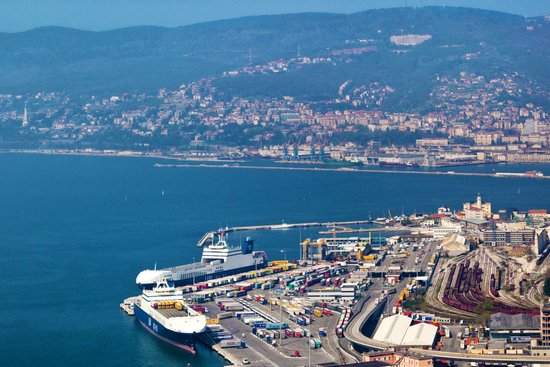
The Autorità di Sistema Portuale del Mare Adriatico Orientale (Eastern Adriatic Sea Port System Authority) is coordinating Shieldport, an acronym for Cross-border Cooperation for Smart and Resilient Port Security, as lead partner. It is the only project entirely dedicated to the cybersecurity of port infrastructure to receive funding under the third call of the Interreg Italy-Croatia 2021-2027 Programme. The total budget is about €1.37 million, distributed among the members of the cross-border partnership. The Port of Trieste has been allocated €222,000, fully covered by European and national funds, with no cost to the authority’s budget. The partnership brings together seven Italian and Croatian port authorities, in line with the cross-border scope of the programme, which covers the Adriatic regions of the two countries. The lead authority manages the ports of Trieste and Monfalcone as a non-economic public body with administrative, budgetary and financial autonomy, under the framework established by Law 84/1994 and later amended by Legislative Decree 169/2016.
The €222,000 earmarked for Trieste forms part of a programme already under way. The authority is also pursuing two other European projects in the same field: Podres, worth €1.5 million, and Cresport, funded with €368,750. Taken together, the three initiatives bring the resources the authority is devoting to the digital security of the Julian port to more than €2 million. The funding mechanism follows the usual Interreg model: 80 percent co-financing from the European Regional Development Fund (ERDF), with national funding covering the remaining 20 percent. This structure explains why there are no direct costs for the budgets of the beneficiary port authorities.
The Interreg VI-A Italy-Croatia 2021-2027 Programme has an overall budget of between €216 million and €222 million, 80 percent of it from the ERDF. The first call was launched in December 2022 and distinguished between standard projects, with budgets ranging from €500,000 to €2.2 million, and small-scale projects, worth between €165,000 and €200,000. The third call, under which Shieldport was selected, was published on 7 May 2025 and covers standard projects and projects with limited financial scope. The programme has five priorities, including the sustainable growth of the blue economy, sustainable multimodal maritime transport and integrated governance, with digitalisation as a cross-cutting theme.
Strengthening the cyber resilience of ports responds to two sets of factors: the increase in cyber threats in an unstable geopolitical environment and the new obligations introduced by the NIS2 Directive, which redefines the scope of security requirements for critical infrastructure, including maritime infrastructure. The day-to-day operation of a port now depends on interconnected digital systems that manage gates, cargo handling, customs documentation and communication between terminals and carriers.
The North Adriatic is not an isolated case. The Port of Taranto has received €772,506 for a programme to strengthen the port’s cyber resilience, while the port system of Genoa and Savona has launched similar initiatives in recent years. At EU level, the European Commission has funded the Safedigimar project, aimed at strengthening cybersecurity in the maritime sector in line with the same NIS2 Directive.