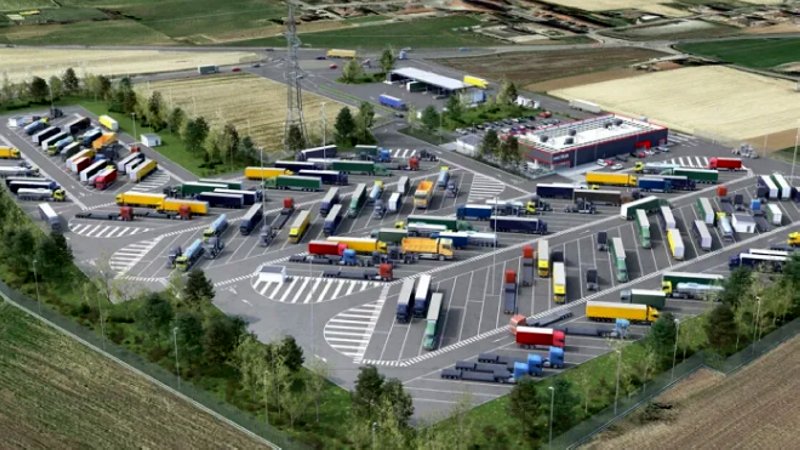






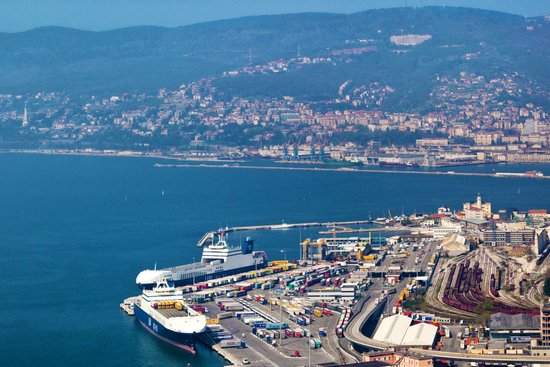
The port of Trieste has returned to the centre of dialogue between Italy and Hungary. On 12 February 2026, at the Ministero dei Trasporti (Ministry of Transport) in Rome, Deputy Minister Edoardo Rixi met Levente Magyar, Hungary’s Deputy Minister of Foreign Affairs and Trade, to strengthen cooperation in logistics, connectivity and infrastructure investment. Discussions focused on Hungary’s investment in the Julian port, particularly the Noghere terminal and the former Aquilinia refinery area, adjacent to the navigable canal.
According to the ministry, political and financial support for the development of the Hungarian terminal was reaffirmed, with the facility regarded as a strategic hub linking the Mediterranean, Central and Eastern Europe, and the Balkans. The meeting underscored close collaboration between the two countries along an axis aimed at consolidating logistics flows between the Adriatic Sea and Europe’s industrial heartland.
The talks also reaffirmed the importance of Adria Port’s commitment and the Italian Government’s backing for the works under way. Quay construction and dredging operations, funded with approximately €45 million, are progressing on schedule and are due to be completed by August 2026. The procedure to allocate a further €10 million for the completion of dredging is at an advanced stage. These resources are considered essential to enable the berthing of large vessels and the full-scale development of the ro-ro terminal.
Upgrading quay infrastructure and seabed depth is a technical prerequisite for expanding berthing capacity and improving the regularity of maritime services, with positive impacts on rail intermodal links to Central and Eastern Europe. Already integrated into European logistics corridors, Trieste is further strengthening its role as a gateway to the Hungarian and Balkan markets, at a time when supply chains are being reorganised.
The dialogue between the two deputy ministers also highlighted the broader dimension of cooperation along the Adriatic–Central and Eastern Europe axis, with a focus on integrated logistics corridors and connections to Ukraine. The shared objective is to support supply chain resilience and contribute to reconstruction efforts through infrastructure capable of ensuring continuity and adequate freight capacity.