



The European Commission will present in November 2025 a package of measures to set up a coordinated military transport network within the Union. As reported by the Financial Times on 29 October 2025, the initiative is designed to enable the swift transfer of heavy equipment such as tanks and artillery in response to potential threats along Europe’s eastern borders. The project is a direct response to the logistical shortcomings revealed by the conflict in Ukraine, which exposed the difficulty of moving personnel and materials quickly across civilian infrastructure not built for military loads.
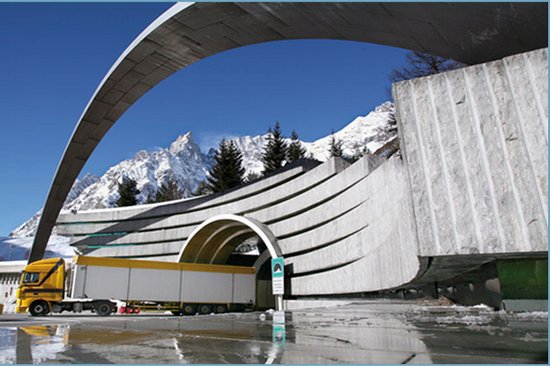
EU Transport Commissioner Apostolos Tzitzikostas highlighted that the structural limitations of Europe’s transport network continue to hinder NATO movements: bridges insufficiently reinforced, tunnels too narrow and border procedures still slow make rapid mobility difficult in emergencies. To address these challenges, the Commission intends to launch an infrastructure and regulatory plan involving the continent’s main rail and logistics operators.
According to preliminary reports, the new regulatory framework — called the “Military Mobility Package” — will include a joint communication, a Regulation proposal and targeted amendments to existing EU legislation. Its aim is to harmonise national rules and procedures for the transport of troops and military equipment by 2027. Four priority multimodal corridors (rail, road, sea and air) will be identified in cooperation with NATO and the member states to facilitate short-notice movements.
The project foresees an initial €70 billion investment to urgently upgrade rail, road and port corridors, while the European Parliament estimates that a further €75–100 billion will be needed by 2035 to complete infrastructure modernisation. The Commission also proposes to increase the budget for military mobility to €17.65 billion in the 2028–2034 multiannual financial framework, multiplying current resources tenfold.
One key innovation will be the creation of a “solidarity pool” for military transport, inspired by the rescEU mechanism already used in EU civil protection. Member states will provide ships, aircraft, rail wagons and trucks that can be used to move military material or support civil protection operations. However, EU officials acknowledge that the legal complexity and dual-use nature (civilian and military) of the assets involved will require a clear governance structure and coordination between armed forces, private operators and national authorities.
Germany will play a central role as the continent’s logistics hub, leveraging its rail network and partnerships with companies such as Deutsche Bahn Cargo, Rheinmetall and Lufthansa. According to the Financial Times, Berlin has already set aside capacity for 343 flat wagons and two daily slots dedicated to military transport, while Rheinmetall will provide support for armoured vehicle movements and Lufthansa will contribute to air operations and aircraft maintenance.
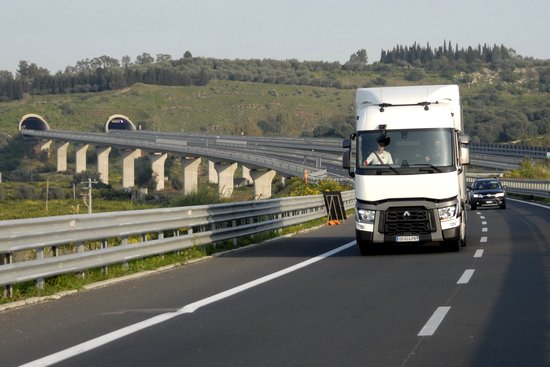
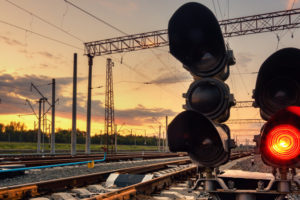
From a technical perspective, European military logistics still face major infrastructure constraints. Forty per cent of bridges and a quarter of main roads cannot bear the weight of modern armoured vehicles, while the lack of suitable rail wagons limits rapid transport capacity. Differences in rail gauge between countries, combined with fragmented customs procedures, further slow down convoy movements. The Commission therefore intends to introduce emergency mechanisms to shorten authorisation times and create a “military Schengen” that would allow cross-border passage within a few days.