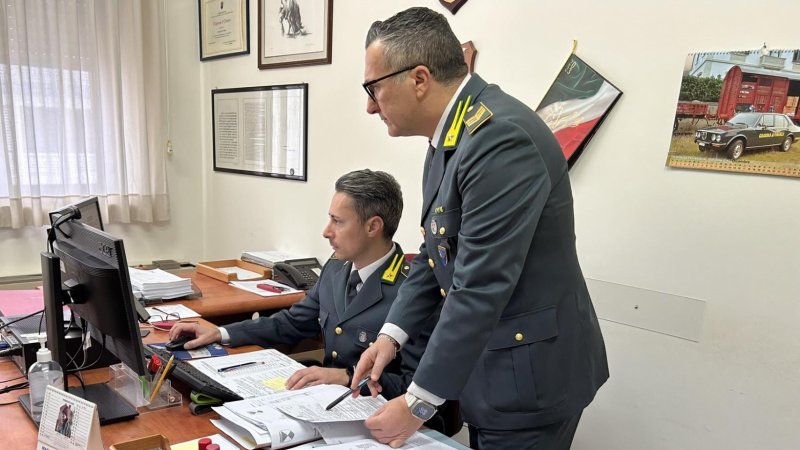








On 24 January 2025, the Provincial Command of the Guardia di Finanza in Como (Italy) announced the preventive seizure of assets worth €2.3 million. The measure, ordered by the investigating judge of the Como Court, stems from a large-scale tax fraud investigation in the labour and logistics sectors. Coordinated by the Como Public Prosecutor’s Office, the inquiry has implicated twelve companies and twenty-two individuals (whose identities remain undisclosed) across Lombardy, Piedmont, and Calabria, with a particular focus on the Como province.
The investigation centres around twelve companies formally registered in different regions of Italy but effectively managed by a group operating from offices initially located in Luisago and later in Cadorago, both municipalities within the Como area. The fraudulent scheme revolved around the over-invoicing of services such as cleaning, porterage, transport, and logistics, which were provided by two Como-based companies to colluding clients.
These clients, by paying the inflated invoices via bank transfers, gained undue tax advantages. Specifically, they could report higher operational costs, artificially reducing taxable income, and access greater VAT credits. Once payments were made, the administrators of the two Como firms withdrew the funds from company accounts and returned them in cash to the clients, who used them for untraceable purchases or other illicit activities.
To sustain this system, the two Como firms also issued invoices for non-existent transactions, using “shell companies” controlled by the same individuals orchestrating the fraud. This tactic allowed them to cancel out the declared revenues, creating a vicious cycle of accounting irregularities. Investigators estimate that over €3.5 million was returned in cash to clients out of a total of €17 million in fictitious invoices.
The investigation, carried out through searches, bank account checks, and data cross-referencing using tools available to the Guardia di Finanza, yielded evidence deemed crucial by the authorities. During the searches, officers uncovered significant amounts of cash hidden in bags, detailed notes in diaries documenting illicit operations, and electronic devices containing additional critical information for the inquiry. The gathered evidence enabled investigators to charge the suspects with issuing and using false invoices and failing to pay VAT. Based on this, judicial authorities ordered the seizure of company bank accounts, real estate, movable assets, and corporate shares to cover the unpaid tax amounting to €2,318,000.