



Array ( [0] => 8 [1] => 41 )

Podcast K44

Cronaca

  • Carabinieri scoprono 387 kg di hashish su camion a Capua

    Carabinieri scoprono 387 kg di hashish su camion a Capua

    Un autoarticolato con targa spagnola partito da Barcellona e diretto nel Casertano è stato fermato dai carabinieri al casello di Capua lungo l’A1. Nel semirimorchio, tra l’ortofrutta i militi hanno scoperto 387 kg di hashish confezionati in panetti.

Normativa

Mare

  • Petroliere e portacontainer colpite non solo nel Golfo Persico

    Petroliere e portacontainer colpite non solo nel Golfo Persico

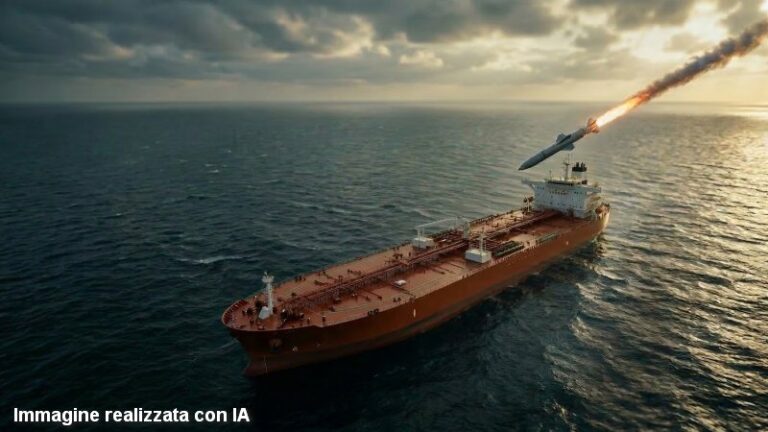
    Tra l’11 e il 12 marzo altre navi cargo, tra cui portacontainer e petroliere, sono state colpite dall’Iran. Undici mercantili coinvolti in 24 ore. Il caso della Source Blessing di Hapag-Lloyd mostra che la minaccia si estende all'intera area e il Brent torna sopra i 100 dollari al barile.

Autotrasporto

  • Insolvente l’austriaca Nothegger, conseguenze su Italia

    Insolvente l’austriaca Nothegger, conseguenze su Italia

    Il tribunale di Innsbruck ha aperto la procedura di insolvenza per il gruppo tirolese Nothegger Transport Logistik, operatore austriaco del trasporto e della logistica con circa 300 dipendenti e oltre 700 mezzi. La crisi, legata anche ai rientri delle moratorie fiscali e contributive Covid, coinvolge una rete di filiali che …

    Tankers and container ships hit not only in the Persian Gulf

    • On 11 March alone, at least six merchant vessels were targeted in attacks in the Persian Gulf and the Strait of Hormuz: three bulk carriers and container ships in the Strait and two tankers in Iraqi waters.
    • The Source Blessing, a 2,700 TEU chartered container ship hired by Maersk for the Oman Gulf Shuttle service within the Gemini network, was struck by shrapnel on the morning of 12 March while waiting at anchor. The crew were unharmed and the fire was quickly extinguished, but the episode shows that the threat now extends well beyond vessels transiting the Strait.
    • The price of Brent crude has risen back above $100 per barrel. The International Energy Agency has proposed a record release of 172 million barrels from US strategic reserves, while Maersk estimates that at least one week would be needed to normalise its network once any ceasefire is reached.


    In the early hours of 12 March 2026, a Hapag-Lloyd chartered container ship was hit by shrapnel in the Persian Gulf. The vessel was the Source Blessing, with a capacity of 2,700 TEU, which had been chartered to Maersk as part of the Oman Gulf Shuttle service linking inner Gulf ports with the hubs of Sohar and Salalah located outside the Strait of Hormuz. According to an official communication from Hapag-Lloyd, the crew were unharmed and the onboard personnel extinguished the fire quickly, bringing the situation under control. The key point, however, concerns not only the material extent of the damage. The Source Blessing was not attempting to cross the Strait, nor was it in the immediate vicinity of the transit route. It had been anchored and waiting ever since — six days before the attack — Hapag-Lloyd had suspended the OGS service due to the ongoing conflict. In other words, the vessel was one of the units “trapped” in the Gulf since the start of hostilities.

    The attack on the Source Blessing came at the end of a day, 11 March 2026, already described by Reuters and Bloomberg as “among the heaviest since the beginning of the conflict” in terms of the number of merchant vessels involved. On the morning of 11 March, UK Maritime Trade Operations (Ukmto) and several news agencies confirmed three attacks in the Strait of Hormuz and adjacent waters. The Japanese container ship One Majesty was hit at 01.58 GMT about 25 nautical miles north-west of Ras Al Khaimah in the United Arab Emirates, sustaining minor hull damage while the crew remained safe. A few minutes later, at 02.05 GMT, the Thai bulk carrier Mayuree Naree (30,197 dwt), controlled by Precious Shipping, was struck by a projectile 11 nautical miles north of Oman, causing a fire that required the partial evacuation of the 23 crew members, who were later rescued by the Royal Thai Navy. Around the same time the bulk carrier Star Gwyneth, flying the flag of the Marshall Islands and owned by the Greek shipowner Star Bulk, was also hit about 50 nautical miles north-west of Dubai. Risk management firm Vanguard confirmed that the crew were safe and that no cargo losses had been reported.

    During the night between 11 and 12 March, the theatre of the attacks shifted northwards to Iraqi territorial waters near the ports of Basra and Umm Qasr. According to videos released by Iraqi port authorities, two tankers loaded with petroleum products shipped from Iraq were attacked by fast boats armed with explosives that approached the hulls, triggering fires documented in footage from the port authority. The vessels involved were reportedly the Safesea Vishnu (Marshall Islands flag) and the Zefyros (Malta flag). Iraqi authorities reported one fatality and 38 crew members rescued, with search and rescue operations still under way when the news was released. Iran claimed responsibility for the attack on at least one of the tankers, describing it as a “US-owned vessel” and explicitly linking the action to military operations by the United States and Israel in the Gulf, according to Investing.com. The Iranian account, however, does not match in every detail the information released by Iraqi ports and maritime intelligence companies.

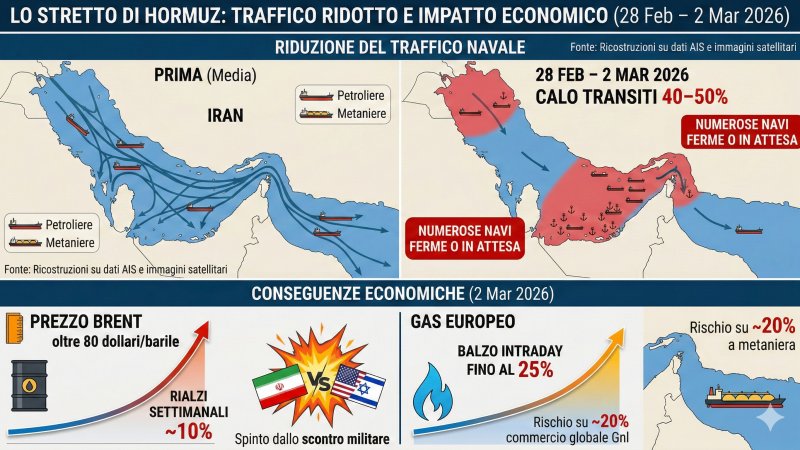
    The overall picture emerging from these episodes is one of a progressive geographical expansion of the threat. The attacks are no longer limited to vessels transiting the Strait of Hormuz, the narrow passage through which roughly 20% of global oil trade flows. They are also targeting ships anchored at sea, tankers in the territorial waters of a third country such as Iraq, and vessels of widely differing nationalities, including Japanese, Thai, Greek-Marshallese and Maltese. UK Maritime Trade Operations has issued advisories recommending that ships in transit maintain maximum vigilance, update security plans and consider route deviations.

    The consequences for container shipping companies are worsening. A.P. Møller-Maersk told the Wall Street Journal that ten of its container ships are currently stuck in the Persian Gulf and estimated that at least a week would be required to resume normal operations after any ceasefire reopening the Strait. Senior analyst Haider Anjum of Jyske Bank noted in a briefing that the issue goes beyond the ships already halted: “The biggest challenge lies in the delays that accumulate across Maersk’s entire global container network.” This cascading effect spreads along all routes connected to the ports that would normally be served from the Gulf, from South Asia to the eastern Mediterranean.

    Another element of complexity concerns transits by vessels with transponders switched off. Between 5 and 10 March two tankers bound for India carrying a combined cargo of three million barrels of Iraqi and Saudi crude reportedly crossed the Strait of Hormuz with their automatic identification systems turned off. An Iranian official told Reuters that Iran had not authorised the passage of these ships, raising questions about the actual level of control over the Strait and about the practices adopted by operators to reduce exposure to the threat, with significant implications for cargo traceability and the management of insurance risk.

    In energy markets, the attacks of 11 and 12 March have helped push again Brent crude back above $100 per barrel. The International Energy Agency has proposed a record release of strategic reserves, including a contribution of 172 million barrels from the US Strategic Petroleum Reserve, to mitigate the impact of disruptions to Gulf flows. A spokesperson for the Iranian government, quoted by BBC, said that “the world must prepare for $200 oil”, explicitly linking price levels to regional stability.

    M.L.

    © TrasportoEuropa - Riproduzione riservata - Foto di repertorio
    Segnalazioni, informazioni, comunicati, nonché rettifiche o precisazioni sugli articoli pubblicati vanno inviate a: redazione@trasportoeuropa.it


      Puoi commentare questo articolo nella pagina Facebook di TrasportoEuropa

      bottone newsletter piccolo Vuoi rimanere aggiornato sulle ultime novità sul trasporto e la logistica e non perderti neanche una notizia di TrasportoEuropa? Iscriviti alla nostra Newsletter con l'elenco ed i link di tutti gli articoli pubblicati nei giorni precedenti l'invio. Gratuita e NO SPAM!


    CONTENUTI SPONSORIZZATI


Videocast K44

Aereo

  • Piloti Lufthansa in sciopero il 12 e 13 marzo 2026

    Piloti Lufthansa in sciopero il 12 e 13 marzo 2026

    Il 12 e 13 marzo 2026 i piloti di Lufthansa, Lufthansa Cargo e CityLine scioperano per 48 ore su pensioni e retribuzioni. La protesta del sindacato Vereinigung Cockpit segue il fallimento dei negoziati con il gruppo e minaccia nuove ricadute sul traffico passeggeri e merci.

Ferrovia

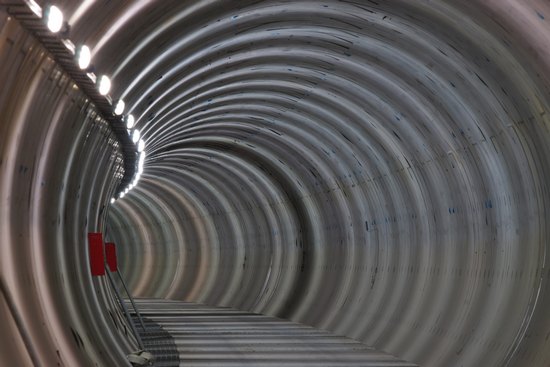
  • La galleria del Brennero sarà rinviata al 2034?

    La galleria del Brennero sarà rinviata al 2034?

    L'apertura della galleria ferroviaria di base del Brennero potrebbe slittare di due anni e quindi nel 2034. L’ipotesi nasce su una richiesta avanzata dal consigliere di Stato ai Trasporti austriaco a Bbt con l'invito a comunicare una "data realistica".

Persone

  • Torello perde il fondatore Nicola

    Torello perde il fondatore Nicola

    La mattina del 5 marzo 2026, la società di trasporto campana Torello ha annunciato la morte del fondatore Nicola Torello. Ha trasformato un’impresa individuale in una multinazionale europea.
Multitrax presenta un semirimorchio per container separabile

TECNICA

Multitrax presenta un semirimorchio per container separabile
Geotab presenta la dash cam GO Focus Pro con IA

TECNICA

Geotab presenta la dash cam GO Focus Pro con IA
Viberti presenta Evo, semirimorchio centinato competitivo

TECNICA

Viberti presenta Evo, semirimorchio centinato competitivo
Camion ad accesso laterale integrale per la distribuzione

TECNICA

Camion ad accesso laterale integrale per la distribuzione
Nuovo semirimorchio Schmitz, con uno sguardo all’America

TECNICA

Nuovo semirimorchio Schmitz, con uno sguardo all’America
previous arrow
next arrow
Confisca definitiva per imprenditore della logistica

LOGISTICA

Confisca definitiva per imprenditore della logistica
Come lo spedizioniere può affrontare una crisi geopolitica

LOGISTICA

Come lo spedizioniere può affrontare una crisi geopolitica
Raben Italy rafforza hub logistico Bologna

LOGISTICA

Raben Italy rafforza hub logistico Bologna
Confetra ricorre al Tar contro la tassa sui pacchi

LOGISTICA

Confetra ricorre al Tar contro la tassa sui pacchi
Due arresti per appalti illegali nella logistica di Trieste

LOGISTICA

Due arresti per appalti illegali nella logistica di Trieste
previous arrow
next arrow
Anche lo Hvo segue l’aumento di prezzo del gasolio

ENERGIE

Anche lo Hvo segue l’aumento di prezzo del gasolio
Aumentano le gasiere dirottate dall’Europa all’Asia

ENERGIE

Aumentano le gasiere dirottate dall’Europa all’Asia
La guerra all’Iran spinge in alto il prezzo di gasolio e Gnl

ENERGIE

La guerra all’Iran spinge in alto il prezzo di gasolio e Gnl
La crisi di Hormuz può portare il gas europeo a 90 € per MWh

ENERGIE

La crisi di Hormuz può portare il gas europeo a 90 € per MWh
Hormuz bloccato e i prezzi di petrolio e gas aumentano

ENERGIE

Hormuz bloccato e i prezzi di petrolio e gas aumentano
previous arrow
next arrow
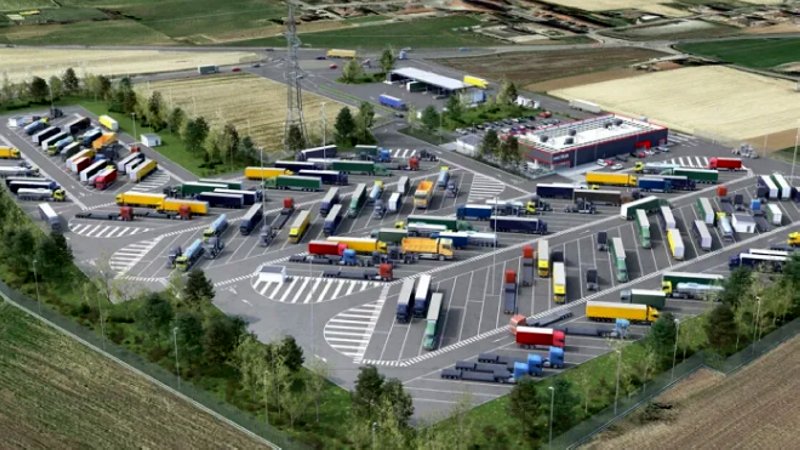
Padrosa realizzerà un parcheggio per camion ad Alessandria

SERVIZI

Padrosa realizzerà un parcheggio per camion ad Alessandria
Leviahub e Pionira accelerano sull’adozione dell’eCmr

SERVIZI

Leviahub e Pionira accelerano sull’adozione dell’eCmr
Trans.eu avvia il pagamento sicuro per l’autotrasporto europeo

SERVIZI

Trans.eu avvia il pagamento sicuro per l’autotrasporto europeo
Sanilog rinnova nel 2026 il piano sanitario per lavoratori della logistica

SERVIZI

Sanilog rinnova nel 2026 il piano sanitario per lavoratori della logistica
L’IA si sta sempre più integrando nel trasporto

SERVIZI

L’IA si sta sempre più integrando nel trasporto
Scania amplia la rete di assistenza nel Lazio

SERVIZI

Scania amplia la rete di assistenza nel Lazio
Nuovi contributi per cibersicurezza alle Pmi e autonomi

SERVIZI

Nuovi contributi per cibersicurezza alle Pmi e autonomi
Dkv Mobility presenta un nuovo software per gestione trasporti

SERVIZI

Dkv Mobility presenta un nuovo software per gestione trasporti
Forto nomina Matteo Caiti Country Manager Italia

SERVIZI

Forto nomina Matteo Caiti Country Manager Italia
Nuove tecnologie Geotab per il trasporto refrigerato

SERVIZI

Nuove tecnologie Geotab per il trasporto refrigerato
Sanzione antitrust di 5 milioni sul noleggio veicoli per Ald

SERVIZI

Sanzione antitrust di 5 milioni sul noleggio veicoli per Ald
Circle Group potenzia software per porti e interporti

SERVIZI

Circle Group potenzia software per porti e interporti
Scania realizza una struttura per i camion a Milano

SERVIZI

Scania realizza una struttura per i camion a Milano
Transporeon introduce nuove soluzioni TMS con l’intelligenza artificiale

SERVIZI

Transporeon introduce nuove soluzioni TMS con l’intelligenza artificiale
Pietro Lanza è direttore generale di SB Italia

SERVIZI

Pietro Lanza è direttore generale di SB Italia
previous arrow
next arrow