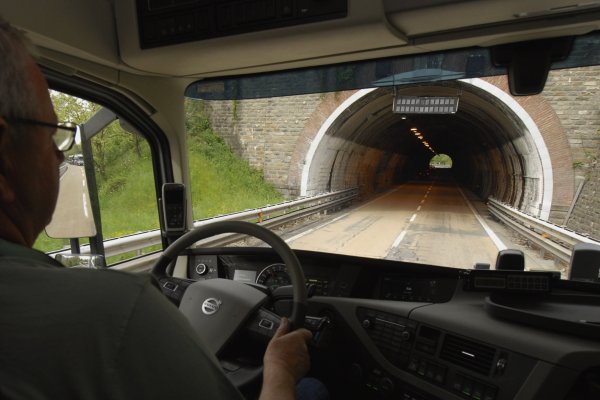








The government has put forward a draft law that could have a major impact on the daily routines of truck drivers: a ban on smoking in all work-related vehicles, including lorry cabs. The initiative, presented by the Ministry of Health under Mónica García, marks the first wide-ranging reform of anti-tobacco legislation in fourteen years and is part of the Comprehensive Plan for the Prevention and Control of Tobacco Use. The stated aim is to reduce consumption and strengthen health protection in shared spaces.
The draft, currently under public consultation, covers a broad spectrum of situations. It does not focus solely on transport but also extends to terraces of bars and restaurants, university campuses, sports facilities, public swimming pools, open-air nightclubs and bus shelters. However, the extension to lorry cabs has sparked the strongest reaction, as it would prevent professional drivers from smoking even when travelling alone in their vehicles, in conditions of working isolation.
The government intends to move swiftly. Once consultation is concluded, the text will go before the Council of Ministers and then progress through Congress and the Senate. Minister García has repeatedly underlined her aim to secure approval by the end of the year, political calendar permitting. In addition to extending the ban, the law would place e-cigarettes and heated tobacco devices on the same legal footing as traditional cigarettes. Penalties could be severe, with fines of up to 600,000 euros for the most serious violations, forcing companies to review internal regulations, manuals and contracts, an additional burden on a sector already facing structural difficulties.
Transport associations reacted immediately. The Federación Nacional de Asociaciones de Transporte de España (Fenadismer) labelled the proposal disproportionate and discriminatory, arguing that drivers spend most of their working hours alone and therefore pose no risk to others. More critically, they highlight a safety issue: many drivers use smoking as a release during long hauls, and banning it could increase anxiety and stress while reducing concentration at the wheel. European rules on driving and rest times allow sessions of up to four and a half hours, and in this context, drivers argue that denying smokers a cigarette could have negative consequences.
Plataforma Nacional has also voiced opposition, accusing the government of legislating from offices without listening to the industry or understanding the day-to-day reality of truckers. Jorge Martín Serrano, president of Ata Aragón, stressed that drivers’ health is already under pressure from endless shifts, physical problems, sleep disorders and high stress levels, and that removing tobacco could worsen matters. He framed the issue as one of personal freedom, noting that when a professional travels alone they should be able to decide for themselves what to do with their own body.
The Ministry of Health has defended the proposal by appealing to European recommendations and scientific evidence, stressing that tobacco remains one of the leading threats to public health and that every space freed from smoke is a gain for life and wellbeing. The government argues that allowing drivers to smoke in lorries or vans would be inconsistent with workplace health protection principles applied in other sectors. The initiative is presented as part of an integrated strategy combining bans with support for quitting, through new forms of healthcare assistance and higher tobacco taxes.
On the question of fairness, however, associations point to a glaring imbalance: private citizens will still be able to smoke in their cars, even with passengers, while professional drivers will not be allowed to do so even when travelling alone. According to Fenadismer, this amounts to discriminatory treatment without technical justification. The debate also touches on road safety.
The Dirección General de Tráfico does not explicitly forbid smoking while driving but advises against it due to the distraction risk, noting that lighting and smoking a cigarette takes over three minutes during which a driver’s attention is not fully on the road. However, this analysis concerns the act of smoking, not the psychological effects of an outright ban. Statistics show that 40% of Spanish truck drivers are smokers, and three-quarters of them consume more than fifteen cigarettes a day, a higher rate than the national average. The prevalence reflects the working conditions of the profession, with long hours seated, intense schedules and physical strain inherent to a demanding job.