




Array ( [0] => 8 [1] => 41 )

Podcast K44

Cronaca

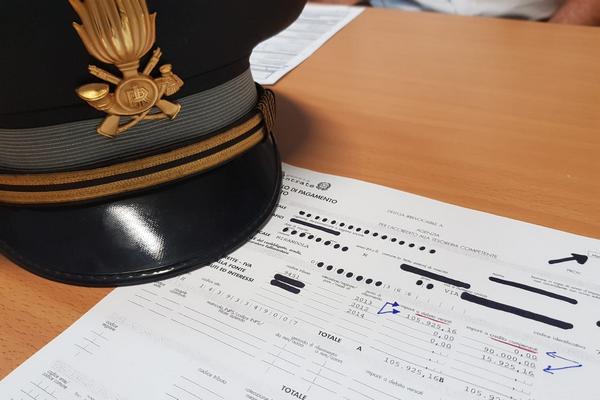
  • 17 camionisti arrestati a Savona per furto di gasolio

    17 camionisti arrestati a Savona per furto di gasolio

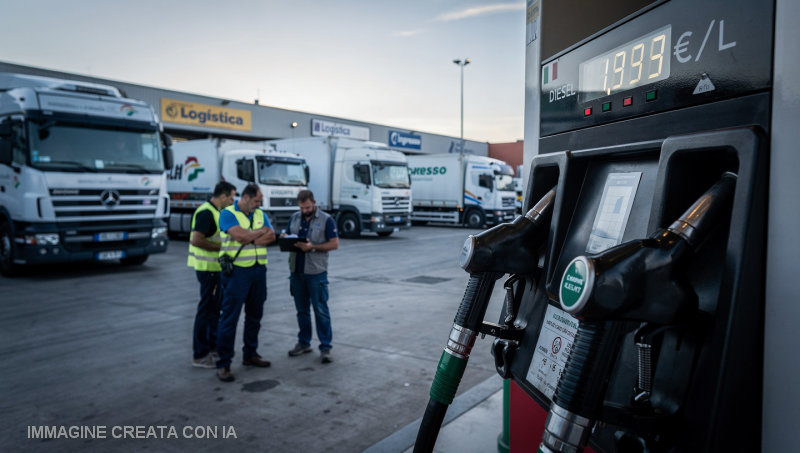
    Un’indagine della Guardia di Finanza nel deposito fiscale carburanti di Vado Ligure ha coinvolto diciassette autotrasportatori, col sequestro di oltre 3.700 litri di gasolio. Il prodotto veniva sottratto durante il carico e rivenduto fuori circuito a prezzi inferiori.

Normativa

Mare

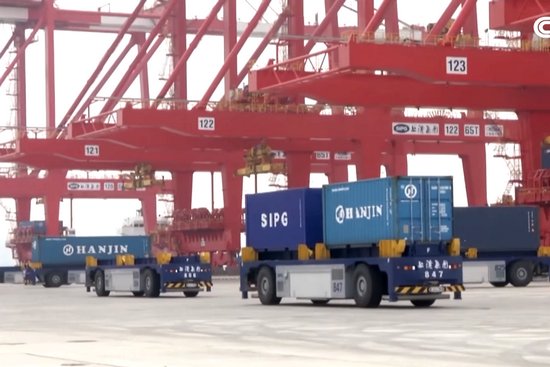
  • China Merchants vuole entrare nella vendita dei porti CK Hutchison

    China Merchants vuole entrare nella vendita dei porti CK Hutchison

    China Merchants Group tratta l’ingresso nel consorzio per acquistare oltre quaranta terminal di CK Hutchison. L’operazione, frenata dalle tensioni tra Usa e Cina, resta legata alle autorizzazioni dei regolatori e al possibile vertice tra Donald Trump e Xi Jinping.

Autotrasporto

  • Ministero Trasporti pubblica il bando per esodo monoveicolari

    Ministero Trasporti pubblica il bando per esodo monoveicolari

    Il ministero dei Trasporti apre le domande per il bando 2026 che incentiva la chiusura delle microimprese dell'autotrasporto: due milioni di euro in totale, un contributo forfettario da 15mila euro a impresa e un divieto di rientro nel settore lungo dieci anni. Domande fino al 25 maggio (ma nel testo …

    Risks and consequences of the closure of Hormuz

    Rather than de-escalating, the confrontation between Israel and Iran has intensified, with missile salvos exchanged on both sides and the looming threat of US intervention. In this context, on the morning of 19 June 2025, Behnam Saeedi, a member of the Iranian Parliament’s National Security Committee, stated that "Iran has a variety of strategies to counter its enemies and chooses these strategies based on prevailing circumstances" and described the closure of the Strait of Hormuz as one of Iran’s "possible responses" to foreign aggression.

    The question remains whether it can actually do so. Iran does not possess a navy with large warships, which in any case would be unable to counter the US naval presence already strongly established in the area. However, the Islamic Revolutionary Guard Corps (IRGC) operates an extensive fleet of small fast-attack boats, missile catamaran corvettes, and midget submarines. Over the past three years, Iran has commissioned hundreds of new vessels, including four missile catamaran corvettes designed for high-seas operations. Iranian tactics for a potential closure would likely involve naval mines, historically one of the most immediate means of halting or slowing maritime traffic through the strait. Iran could also deploy land-based cruise and ballistic missiles, as well as kamikaze drones. Electronic warfare should not be overlooked either, including satellite signal jamming, which could lead to serious accidents.

    The consequences of a closure—or even a mere reduction or delay in maritime traffic—would be severe, particularly for Europe. The Strait of Hormuz is considered the "world's most significant oil transit chokepoint" according to the US Energy Information Administration. Every day, around 20 to 21 million barrels of oil pass through it, equivalent to 20 percent of global consumption. Reliance on this passage varies among oil-producing countries, with Kuwait sending all its exports through the strait, followed by Iraq at 95 percent and the United Arab Emirates at 85 percent.

    Unlike the Red Sea, which offers the alternative of circumnavigating Africa, the Persian Gulf route through the Strait of Hormuz has no maritime alternatives. While there are land-based pipeline options in the event of a closure, their capacity is limited compared to maritime volumes. Saudi Arabia operates the Petroline (also known as the East-West Pipeline), which runs across the country from the Abqaiq facility to the Red Sea and has a nominal capacity of around 4.8 million barrels per day. It is currently underutilised, with a spare capacity of approximately 2.8 million barrels per day. The United Arab Emirates runs the Abu Dhabi Crude Oil Pipeline, capable of transporting 1.5 million barrels per day, linking Abu Dhabi’s onshore oil fields to the port of Fujairah on the Gulf of Oman, allowing crude oil shipments to bypass the Strait of Hormuz. The government has planned to increase this capacity to 1.8 million barrels per day in the near future.

    Analysts predict a wide range of scenarios regarding oil prices, depending on the duration and extent of any potential closure. Deutsche Bank estimates that a total shutdown disrupting 21 million barrels per day for two months could push oil prices beyond 120 dollars per barrel. Rabobank suggests prices could even spike to 150 dollars per barrel, recalling that Brent briefly reached 139 dollars in 2022 following Russia’s invasion of Ukraine.

    But it’s not just oil that flows through Hormuz. Liquefied natural gas (LNG) is even more vulnerable, as 20 percent of global LNG trade passes through the strait, including all exports from Qatar, the world’s second-largest LNG exporter. Eighty percent of these volumes are destined for Asia, while Europe receives about 20 percent, meaning any disruption would intensify competition between regions. Qatar has already taken precautions, instructing LNG vessels to wait outside the Strait of Hormuz until they are ready to load. This decision reflects the level of concern among major energy exporters.

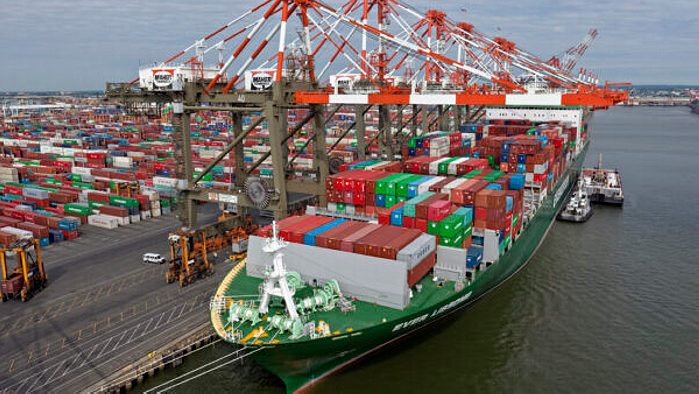
    There is also the matter of non-energy goods. Ports in the Persian Gulf, such as Jebel Ali and Khor Fakkan, have become significant global transshipment hubs, with feeder services extending into the Persian Gulf, South Asia and East Africa. A considerable portion of cargo from these ports is bound for Dubai, which has established itself as a key transshipment centre linking large container ships to smaller feeder vessels operating across a vast region from the Persian Gulf to South Asia and East Africa. Disruption or delays in this supply chain would have knock-on effects across a wide area, causing logistical breakdowns and port congestion.

    The maritime insurance sector has been quick to respond, with premiums already rising for ships transiting Hormuz. According to Marsh McLennan, the world’s largest insurance broker, hull and machinery insurance costs for vessels operating in the region have risen from 0.125 percent to 0.2 percent of the ship’s value, an increase of over 60 percent. This means insuring a 100 million dollar ship now costs around 200,000 dollars, up from the previous 125,000 dollars. War risk premiums for Red Sea transits have also climbed, while coverage for Israeli ports has tripled to 0.7 percent. Additionally, the validity period of insurance quotes has been halved from 48 hours to 24, signalling the growing volatility of the market.


    © TrasportoEuropa - Riproduzione riservata - Foto di repertorio
    Segnalazioni, informazioni, comunicati, nonché rettifiche o precisazioni sugli articoli pubblicati vanno inviate a: redazione@trasportoeuropa.it


      Puoi commentare questo articolo nella pagina Facebook di TrasportoEuropa

      bottone newsletter piccolo Vuoi rimanere aggiornato sulle ultime novità sul trasporto e la logistica e non perderti neanche una notizia di TrasportoEuropa? Iscriviti alla nostra Newsletter con l'elenco ed i link di tutti gli articoli pubblicati nei giorni precedenti l'invio. Gratuita e NO SPAM!



    CONTENUTI SPONSORIZZATI


Videocast K44

Aereo

  • Il cargo aereo italiano punta verso l’intelligenza artificiale

    Il cargo aereo italiano punta verso l’intelligenza artificiale

    Il 51% delle imprese del cargo aereo italiano ha già adottato soluzioni d’intelligenza artificiale o avviato progetti pilota, una quota destinata a salire al 77% nei prossimi tre anni. È quanto emerge dall’ottavo Convegno Osservatorio Cargo Aereo organizzato da Anama.

Ferrovia

  • Nuovo collegamento ferroviario Bologna-Marcianise

    Nuovo collegamento ferroviario Bologna-Marcianise

    FS Logistix e Anita attivano un nuovo servizio ferroviario intermodale tra Bologna e Marcianise, estendibile fino a Catania con una sola prenotazione. L’iniziativa nasce in risposta all’aumento del costo del carburante e punta a ridurre emissioni e costi operativi.

Persone

Kässbohrer amplia l’offerta per i trasporti eccezionali

TECNICA

Kässbohrer amplia l’offerta per i trasporti eccezionali
Volvo presenta il camion elettrico da 700 km

TECNICA

Volvo presenta il camion elettrico da 700 km
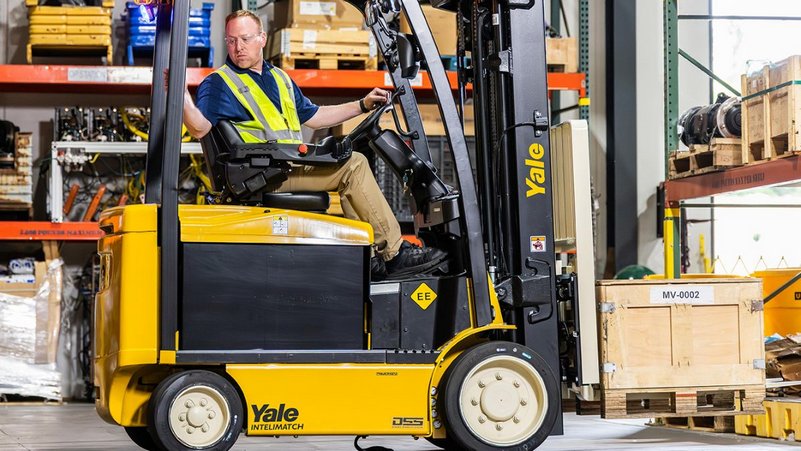
Yale aumenta la sicurezza dei pedoni nella logistica

TECNICA

Yale aumenta la sicurezza dei pedoni nella logistica
Still automatizza carico e scarico dei camion

TECNICA

Still automatizza carico e scarico dei camion
Amazon vuole portare i robot dal magazzino alla porta di casa

TECNICA

Amazon vuole portare i robot dal magazzino alla porta di casa
previous arrow
next arrow
Frode da 166 milioni nella logistica per Gdo in Campania

LOGISTICA

Frode da 166 milioni nella logistica per Gdo in Campania
Spediporto punta sulla Zls per Genova

LOGISTICA

Spediporto punta sulla Zls per Genova
Maurelli gestisce la logistica dei ricambi Lamberet in Italia

LOGISTICA

Maurelli gestisce la logistica dei ricambi Lamberet in Italia
La crisi di Hormuz può favorire la logistica europea

LOGISTICA

La crisi di Hormuz può favorire la logistica europea
Sogedim alleata con Fortune per il project cargo

LOGISTICA

Sogedim alleata con Fortune per il project cargo
previous arrow
next arrow
Operazione Red Gold contro frode nei carburanti in Abruzzo

ENERGIE

Operazione Red Gold contro frode nei carburanti in Abruzzo
Quattro indagati per uso stradale di gasolio agricolo nel Salento

ENERGIE

Quattro indagati per uso stradale di gasolio agricolo nel Salento
Il taglio delle accise è prorogato fino al primo maggio

ENERGIE

Il taglio delle accise è prorogato fino al primo maggio
Petrolio sopra 110 dollari al barile dopo dichiarazioni di Trump

ENERGIE

Petrolio sopra 110 dollari al barile dopo dichiarazioni di Trump
Scoperti a Fiumicino i vampiri del carburante per aerei

ENERGIE

Scoperti a Fiumicino i vampiri del carburante per aerei
previous arrow
next arrow
Transporeon introduce la ricerca con l’intelligenza artificiale

SERVIZI

Transporeon introduce la ricerca con l’intelligenza artificiale
Nasce Synlog Alliance consorzio dati per la logistica

SERVIZI

Nasce Synlog Alliance consorzio dati per la logistica
Sogedim potenzia le spedizioni per America Latina con Eagle Service

SERVIZI

Sogedim potenzia le spedizioni per America Latina con Eagle Service
Leviahub cresce in Spagna con due acquisizioni

SERVIZI

Leviahub cresce in Spagna con due acquisizioni
Trans.eu cresce in Italia con la borsa carichi relazionale

SERVIZI

Trans.eu cresce in Italia con la borsa carichi relazionale
L’evoluzione della borsa carichi autotrasporto è relazionale

SERVIZI

L’evoluzione della borsa carichi autotrasporto è relazionale
Padrosa realizzerà un parcheggio per camion ad Alessandria

SERVIZI

Padrosa realizzerà un parcheggio per camion ad Alessandria
Leviahub e Pionira accelerano sull’adozione dell’eCmr

SERVIZI

Leviahub e Pionira accelerano sull’adozione dell’eCmr
Trans.eu avvia il pagamento sicuro per l’autotrasporto europeo

SERVIZI

Trans.eu avvia il pagamento sicuro per l’autotrasporto europeo
Sanilog rinnova nel 2026 il piano sanitario per lavoratori della logistica

SERVIZI

Sanilog rinnova nel 2026 il piano sanitario per lavoratori della logistica
L’IA si sta sempre più integrando nel trasporto

SERVIZI

L’IA si sta sempre più integrando nel trasporto
Scania amplia la rete di assistenza nel Lazio

SERVIZI

Scania amplia la rete di assistenza nel Lazio
Nuovi contributi per cibersicurezza alle Pmi e autonomi

SERVIZI

Nuovi contributi per cibersicurezza alle Pmi e autonomi
Dkv Mobility presenta un nuovo software per gestione trasporti

SERVIZI

Dkv Mobility presenta un nuovo software per gestione trasporti
Forto nomina Matteo Caiti Country Manager Italia

SERVIZI

Forto nomina Matteo Caiti Country Manager Italia
previous arrow
next arrow