









Following two days of what were described as “intense” talks, on Sunday 26 October 2025 the United States and China reached a preliminary agreement on tariffs and, more broadly, on restrictions affecting their reciprocal exports. In the first official statements, both sides expressed satisfaction: US Treasury Secretary Scott Bessent called the understanding “a very substantial framework”, while China’s chief trade negotiator Li Chenggang described it as a “preliminary consensus”. The agreement paves the way for the meeting between Trump and Xi Jinping, scheduled for 30 October in South Korea.
The negotiations covered a wide range of issues, from rare earths (and components containing them) to soybeans and, naturally, tariffs. The context remains tense, with the US currently applying an additional 30% tariff on Chinese imports and China imposing 10% on American goods. In recent weeks tensions have risen, with Trump threatening 100% tariffs and Xi Jinping tightening restrictions on exports of rare earths and related products. According to Li Chenggang, the current truce will be extended beyond 10 November, meaning the 100% increase will not be implemented. Bessent announced that China will resume “substantial” purchases of US soybeans, following a complete halt at the beginning of 2025 amid the trade conflict.
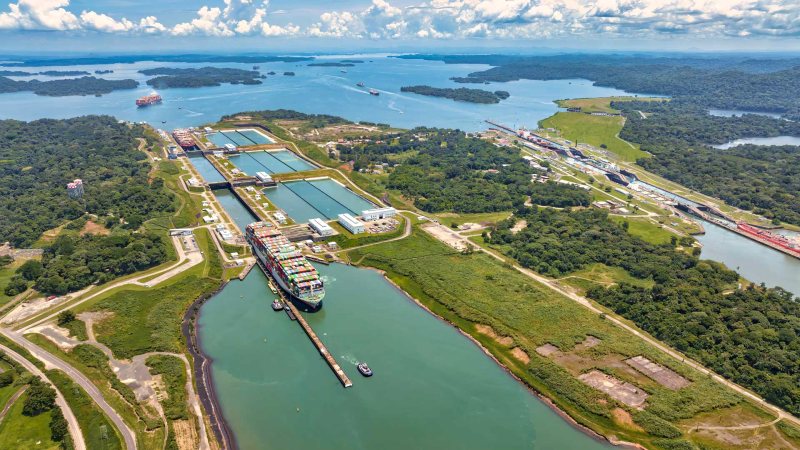
A key issue discussed during the talks concerns the US tariff on all vessels built in China that enter American ports, imposed from 14 October 2025. Every ship built in China, regardless of ownership or operator, must pay 18 dollars per net ton or 120 dollars per unloaded container, with progressive increases planned until 17 April 2028, when tariffs will reach 33 dollars per net ton or 250 dollars per container. The sums are significantly higher if the vessel is owned or managed by a Chinese entity: 50 dollars per net ton, rising to 140 dollars by 2028.
So far, neither delegation has clarified the terms of any agreement on this matter, which are likely to be announced after the presidential meeting on 30 October. However, some progress seems to have been made. Li Chenggang said the issue was one of the central points of the discussions. The Chinese newspaper China Daily reported that a “basic consensus was reached on arrangements to address each side’s concerns”, with a commitment to “determine additional specific details and follow their respective domestic approval procedures.”
So far, the official statements have been predictably optimistic. Yet independent Chinese and American sources have offered more cautious assessments. Some analysts have pointed out that the deal may resemble the 2020 “Phase One Trade Agreement”, representing a step-by-step approach rather than a comprehensive resolution of structural issues. The president of the US-China Business Council, Sean Stein, said that for Trump, reaching a “fantastic” agreement with China would simply mean “turning the clock back” to the pre-trade war period.
The Wall Street Journal reported that, according to sources close to Chinese policymakers, Xi has abandoned China’s conventional diplomatic playbook and developed a new strategy tailored specifically for Trump. This strategy involves offering concessions on high-profile issues in which Trump has a personal stake — an approach that, according to the sources, aligns with the US president’s self-image as a master negotiator.
Other observers note that the official statements on the preliminary deal have yet to tackle the most contentious issues. Sun Chenghao, a researcher at Tsinghua University in Beijing, wrote in Bloomberg that “the ‘big deal’ requires addressing deep divisions over state subsidies, technological competition and national security — areas where both sides’ fundamental models clash.” Further negotiations on sectoral agreements will therefore be required.