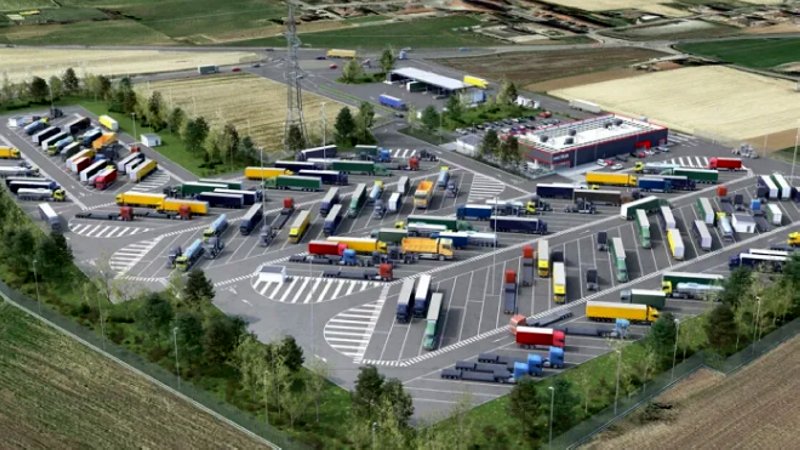





The project outlined by Siemens Mobility and Railpool adds a significant piece to the service network supporting rail freight transport. According to the preliminary agreement with the Consorzio Zai, the two companies will build a maintenance centre within the Verona freight village on a 15,000 sqm site, with a total investment of €20 million. Designed as an open access facility, it will accommodate locomotives from different manufacturers and provide light maintenance across five tracks, as well as a track equipped with a wheel-profiling lathe, a technical asset that reduces downtime and increases operational continuity for units deployed in logistics chains.
The location within the Verona freight village responds to rising demand for capacity along Europe’s freight corridors. Verona occupies a strategic position on the north–south axis and on key routes of the TEN-T network, with the future strengthening of the Brenner corridor in view. Establishing the new facility here creates a complementary structure to the Siemens Mobility centre already operating in Novara, broadening the geographical coverage of services and giving operators a more extensive system for fleet management.
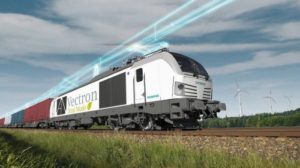
The partnership between Siemens Mobility and Railpool builds on a long-standing relationship. As the two companies recall, in 2024 they signed a framework agreement for the supply of around 250 Vectron locomotives in Europe. Siemens Mobility contributes its experience from an international network of more than 100 maintenance sites, while Railpool provides a growing fleet of multi-system locomotives and a network of workshops and spare parts used by cross-border freight operators.
The development of the centre addresses the need to guarantee greater efficiency of traction units, a condition essential to supporting the growth of rail flows. According to sector trends, the search for lower-impact transport modes compared with road haulage is pushing operators to expand their use of rail, but fleet availability remains a decisive factor in planning. Having a maintenance infrastructure in an intermodal node such as Verona helps stabilise operations, reduce delays and enhance the overall reliability of the logistics chain.
The facility will focus in particular on multi-system locomotives and direct-current units compatible with signalling standards used on major European lines. This choice reflects the evolution of international traffic and the increasing demand for interoperability, especially on routes involving operators and infrastructure in different countries. With this investment, Italy strengthens its role in continental rail logistics. Beyond acting as a transit hub, the country positions itself as a centre for developing expertise and services dedicated to fleet maintenance and efficiency, an area that is becoming central in a market where operational continuity has a direct impact on competitiveness.