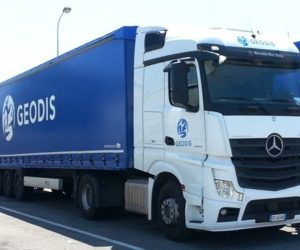









On 6 February 2026 Geodis reported a ruling by the Justice of the Peace of Cremona (Italy) concerning the company, following an appeal against a penalty. The magistrate’s decision directly addresses the legal boundary between road cabotage and international road–rail transport. The case dates back to May 2021, when an articulated vehicle consisting of a Bulgarian-registered tractor unit and an Italian-registered Geodis semi-trailer was operating an international intermodal transport from the Orbassano interporto, with Cremona as its destination.
During the journey, in the province of Verona, the vehicle was stopped for a roadside inspection. The officer classified the operation as road cabotage, contesting the lack of documentation required for that type of transport and arguing that Orbassano was not the nearest suitable terminal to the place of destination. The report indicated Melzo and Busto Arsizio as alternative inland terminals, considered closer to Cremona.
Geodis and the carrier lodged an appeal, submitting documentation proving that the operation was an international intermodal transport, in particular the CMR consignment note and the Community licence. The appeal stressed that the operation fell within the scope of international combined road–rail transport governed by Directive 92/106/EEC and that, for this mode, the choice of terminal is not based solely on kilometre distance but must prioritise the functional suitability of the infrastructure. It was also pointed out that no kilometre limit applies to road–rail intermodality, unlike combined road–sea transport, for which the legislation sets a 150-kilometre limit, improperly invoked by the inspecting authority.
The Justice of the Peace upheld the appeal and annulled the penalty notice. In the grounds of the judgment, the magistrate explicitly referred to the definition of international combined transport contained in Directive 92/106/EEC, clarifying that it concerns the carriage of goods between European Union Member States in which the lorry, trailer or semi-trailer, with or without a tractor unit, performs the initial or final leg of the journey by road, while the remaining part is carried out by rail. The judge specified that this scenario is not subject to the 150-kilometre limit, contrary to what was stated in the inspection report.
Another key aspect of the ruling concerns the relationship between combined transport and cabotage. According to the judge, international combined transport excludes the application of rules on the posting of workers and, therefore, of the provisions typically associated with cabotage. As a result, the contested operation could not be subject to the regime governing national transport operations carried out by foreign hauliers, rendering the imposed penalties unfounded.
The judgment also addresses the choice of inland terminal, clarifying that the appellant demonstrated, through the contractual documentation carried on board the vehicle, that Orbassano was the nearest usable and suitable terminal for the service in question. The judge noted that the inland terminals of Melzo and Busto Arsizio, informally indicated by the inspecting officers, do not have rail connections with France, an essential element for qualifying the transport as international combined transport.
This ruling represents an important precedent, as it reinforces the interpretation that the correct classification of a transport operation must be based on its actual structure and on the accompanying documentation, avoiding automatic assimilation to cabotage. It also reiterates that, in road–rail intermodality, the infrastructural suitability of the terminal prevails over the mere criterion of geographical distance.