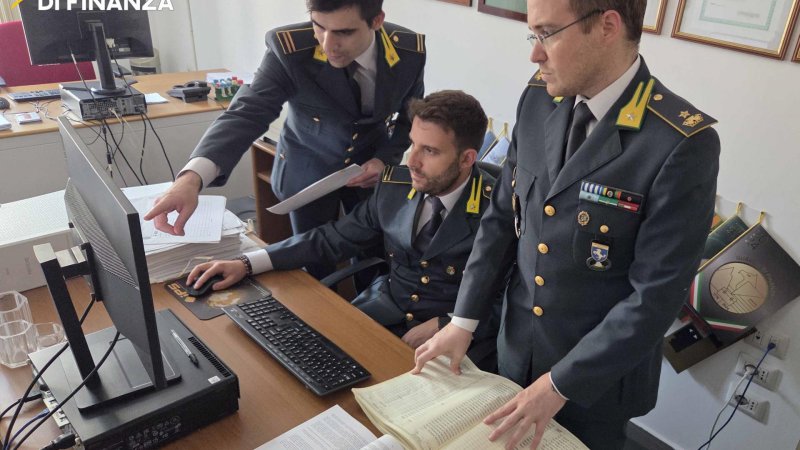









Once again, the Italian logistics sector has come under judicial scrutiny, this time in Turin, with allegations of tax fraud and unlawful labour supply. On 10 September 2025, the Guardia di Finanza announced Operation Epicentro, coordinated by the Public Prosecutor’s Office, which led to the preventive seizure of assets and financial resources worth 26.5 million euro from ten companies and nine individuals. The investigation, conducted by the Economic and Financial Police Unit, covers the years 2018 to 2023 and involves two entrepreneurial groups from Turin whose names have not been disclosed.
According to investigators, the companies allegedly organised a scheme based on the irregular supply of labour through fictitious outsourcing contracts. The system identified by the authorities mirrors previous cases and was structured on three levels: “reservoir” companies, “filter” companies and client companies. The first, formally managed by front men and devoid of real business activity, existed solely to hire workers, while the related tax and social security debts remained in their name. The second, also based in Turin, received invoices from the “reservoir” companies and re-invoiced them to the clients, shielding relationships and taking on a neutral fiscal position.
The clients were large logistics operators with sites in Piedmont, Lombardy, Veneto, Liguria, Lazio and Emilia-Romagna. Through this mechanism, they were able to access labour at lower costs, since tax and contribution obligations were left with the intermediaries. The Guardia di Finanza estimates that, on average, more than two thousand workers were involved each year, employed in warehouses and distribution activities, with underpriced labour made possible by tax evasion.
The inquiry highlighted that real control over the workforce lay with the client companies, which provided tablets, handheld devices and parcels for delivery, set working hours, decided the daily number of staff to be deployed and exercised disciplinary authority. Checks also revealed the fictitious nature of the “reservoir” companies, which had no operational structures and were created solely as containers of personnel.
By cross-referencing databases, conducting searches and examining both paper and digital records, investigators reconstructed non-existent commercial operations amounting to more than 100 million euro. The invoices exchanged among the companies at different levels documented legal relations other than the real ones, making it possible to charge offences such as issuing and using false invoices, fraudulent declarations, failure to declare and failure to pay VAT.
The seizures involved cash, registered movable property and real estate traceable to the suspects. At the same time, one of the main “filter” companies, employing over 500 staff, was placed under seizure and subsequent judicial administration to prevent further consequences of the alleged crimes. According to investigators, the company had diversified its activities over the years, while retaining a central role in labour management for logistics. The measures were issued at the preliminary investigation stage, and the presumption of innocence applies until final determination of liability.