





29 July 2025 will be remembered as a milestone in American rail transport history. It marks the day Union Pacific, one of the most historic railway companies in the United States, unveiled its agreement to acquire Norfolk Southern in a transaction valued at 85 billion dollars. Structured as a mix of cash and stock, the deal is the largest merger ever undertaken in the rail freight sector, giving rise to a new entity with a combined market capitalisation estimated at around 200 billion dollars.
Under the terms of the agreement, Norfolk Southern shareholders will receive one Union Pacific share and 88.82 dollars in cash for each share they own. The total value per Norfolk Southern share stands at 320 dollars, reflecting a 23 percent premium over its pre-announcement value. Union Pacific will issue approximately 225 million new shares, granting existing Norfolk Southern shareholders a 27 percent stake in the newly formed company. The deal is expected to close in early 2027, subject to approval from the relevant regulatory bodies.
The merger promises to establish an unprecedented rail network in the United States, where most railway companies also own the infrastructure. It will connect the west coast, traditionally served by Union Pacific, directly to the east coast, where Norfolk Southern is the dominant operator. The stated goal is to enhance logistical efficiency, reduce delivery times, and bolster the competitiveness of rail transport in a market increasingly driven by speed and intermodality.
Jim Vena, Union Pacific’s chief executive officer, will lead the new company and has already stated his intention to remain at the helm for at least five years. In a message to employees, he emphasised that the deal aims not only to improve economic efficiency but also to generate new jobs, with all existing union contracts set to be upheld.
Despite the unanimous backing from both boards of directors, the transaction faces a critical hurdle: the scrutiny of the Surface Transportation Board and antitrust regulators. The US freight rail sector is already highly concentrated, with only six freight operators classified as Class 1 carriers, including BNSF, CSX, Canadian National Railway, Canadian Pacific Kansas City, and the two companies involved in the merger. The last major consolidation occurred in 2023, when Canadian Pacific acquired Kansas City Southern for 31 billion dollars. The Union Pacific–Norfolk Southern deal reignites speculation about a fresh wave of industry consolidation.
The current stance of the US administration may prove decisive. The appointment of Patrick Fuchs—widely seen as supportive of industry consolidation—as head of the Surface Transportation Board has been interpreted by many as a positive signal for the deal’s approval. Nevertheless, according to Bloomberg Intelligence, any green light is likely to come with significant conditions and concessions.
This merger is also seen as a response to mounting competitive pressure from road transport, which in recent years has been steadily chipping away at rail’s market share. By unifying the two networks, the companies aim to revitalise rail’s role in long-distance freight transport, strengthening connections between the country’s most strategic industrial regions.
The announcement comes at a turbulent time for Norfolk Southern, which has recently undergone a period of internal upheaval. In 2024, CEO Alan Shaw was removed following an internal investigation into violations of corporate policies. The company also faced a fierce proxy battle with activist fund Ancora, which succeeded in securing three seats on the board.
But what does this merger mean in concrete terms? The new railway giant will own around 84,000 kilometres of track stretching across 43 of the 50 US states, from coast to coast. Of this network, approximately 52,600 kilometres in 23 states currently belong to Union Pacific. The combined infrastructure will serve around one hundred ports across the Pacific, Atlantic, and Gulf coasts. Union Pacific contributes an active fleet of 7,175 locomotives across 42 different models, while Norfolk Southern adds more than 2,000, for a total of about 9,301 units, along with over 155,000 freight cars. The new company will employ more than 50,000 workers, eighty percent of whom are unionised.
From an operational standpoint, the merger will eliminate costly and time-consuming interchanges—one of the main barriers to the growth of rail freight in the US. The western and eastern networks intersect at key points in Chicago, St. Louis, Kansas City, Shreveport, and New Orleans. This integration will make long-distance freight faster and enable the creation of new connections, especially in the intermodal sector. The companies anticipate a reduction in journey times of 10 to 15 percent.
Financially, the merger is projected to yield 2.75 billion dollars in benefits within three years of integration, including 1.75 billion in additional revenue and about 1 billion in cost savings. Cost reductions will stem primarily from optimised routing, the elimination of duplicated administrative functions, and improved operational efficiency. Revenue growth will be driven by the ability to offer seamless coast-to-coast transcontinental services and attract new customers seeking enhanced connectivity.
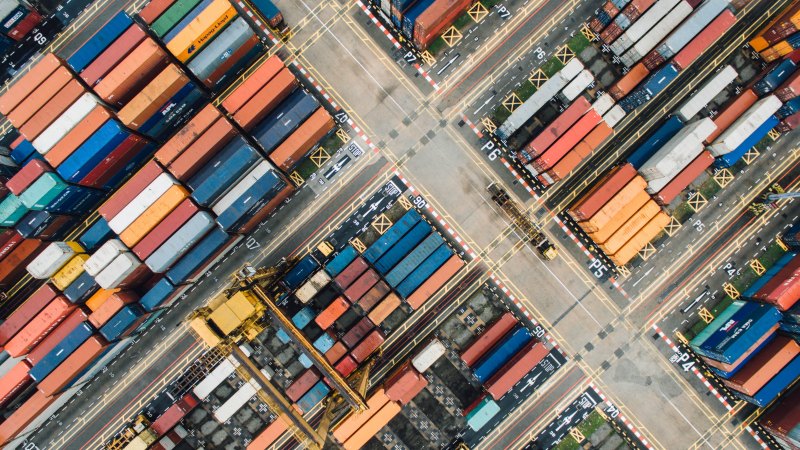
Intermodal freight will be at the heart of traffic development, expected to account for 53 percent of combined volumes. This refers primarily to containers moving between ports and inland destinations, or across the Atlantic and Pacific coasts. Bulk commodities, including vast quantities of coal transported by Union Pacific from the Powder River Basin, will represent around 15.6 percent of volumes. The remaining 31.6 percent will comprise general cargo such as chemicals, motor vehicles, petroleum products and other assorted goods.
Besides intermodal transport, the automotive and chemical sectors will be the most directly affected by the merger. Norfolk Southern handles more finished vehicle traffic than any other rail operator, while Union Pacific is the primary carrier in the west and for cross-border transport with Mexico. The integration of their networks could eliminate the need for interchanges currently managed by Indiana Harbor Belt and the Belt Railway of Chicago, as well as Alton & Southern in St. Louis.
In the chemical and petroleum freight segment, Union Pacific holds a leading position in the US, thanks to its dominant access to the petrochemical plants of the Gulf Coast. At present, most of this eastbound traffic is interchanged with CSX, but the merger could reroute it through Norfolk Southern lines towards Conrail Shared Assets territories in New Jersey and Philadelphia, via Sidney or Memphis.
However, the fusion between the two rail giants will face multiple obstacles beyond antitrust regulation. The country’s major railway unions have historically opposed such mergers, arguing that they lead to workforce reductions. Smart-TD has already pledged to make its voice heard before the Surface Transportation Board and directly to President Trump.
Customers, too, have expressed concerns, mainly about two potential risks. The first is the disruption or delay of services during the lengthy integration process, and the second is a rise in freight rates due to diminished competition. This latter consequence could be exacerbated if the Union Pacific–Norfolk Southern merger sparks further consolidations. There is already speculation that BNSF and CSX are exploring potential merger strategies.