





A large international drug trafficking network that used the French ports of Le Havre, Moulineaux in the Rouen area and Dunkirk as its main logistical hubs for entry into Europe has been progressively dismantled by the French judicial authorities between December 2023 and September 2025. The operation, coordinated by the Juridiction Interrégionale Spécialisée of Lille and the Lille parquet, is the result of an investigation launched in March 2022 into trafficking initially confined to the Rouen area and later revealed to be part of an international criminal structure with branches in Morocco and Colombia.
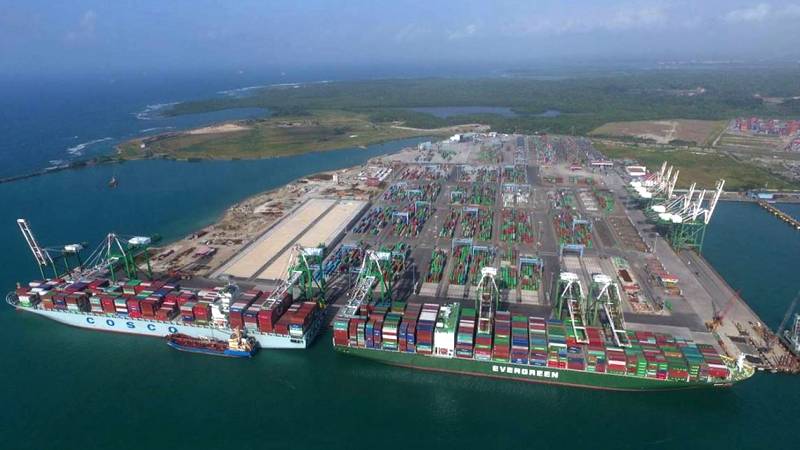
According to the account provided in a statement from the Lille parquet and taken up by several French media outlets, the organisation imported cocaine from Colombia and cannabis resin and marijuana from Morocco, systematically exploiting French maritime and port logistics chains. Shipments entered the country mainly by sea, either in containers or through drop-off operations offshore, before being redistributed across the whole of France.
The investigation reached a first turning point in June 2023 with the seizure of 183 kilograms of cocaine inside a container intercepted at the port of Le Havre. In the following months, investigators identified further cocaine imports carried out using the drop-off technique, which involved releasing loads of between 400 kilograms and one tonne per operation at sea, later recovered by vessels linked to the criminal network. On 11 December 2023, a coordinated operation led to nine individuals being placed under investigation, including several dock workers, with six remanded in custody and three placed under judicial supervision with a ban on professional activity.
A central element of the investigation concerns the role of dock workers at container terminals. According to judicial sources and the regional Norman press, some port employees provided crucial operational information for the success of the trafficking, such as identifying containers, their position in storage yards, handling schedules and time windows with fewer controls. In some cases, they are also alleged to have physically facilitated the exit of containers or the removal of illicit cargoes, exploiting their legitimate access to port IT systems and handling infrastructure.
The international dimension became clear during 2024, when the alleged head of the organisation was located in Casablanca. Arrested on 22 February 2025 by the Moroccan authorities, he was extradited to France on 23 September 2025 and formally placed under investigation the following day on charges including organised drug importation, criminal conspiracy, aggravated money laundering and active corruption. The Lille parquet has also documented operational links with major drug traffickers in Marseille, outlining cooperation between different criminal groups aimed at managing large-scale imports and nationwide redistribution.
From a logistical perspective, the case file highlights a strong capacity for adaptation by criminal networks. Alongside the use of “contaminated” containers inserted into flows of legal goods, the organisation resorted to alternative techniques such as maritime drop-offs, reducing exposure to traditional customs controls. In a broader context, there was also a separate but significant seizure at the port of Le Havre on 30 December 2024, when more than two tonnes of cocaine were intercepted in a “cloned” container, confirming the high level of logistical sophistication reached by illicit maritime trafficking.
French authorities estimate that the overall profits of the dismantled network amounted to several million euros, against a still very low container interception rate in major European ports. Le Havre, in particular, stands out as one of the main entry points for cocaine into France and northern Europe, with seized quantities representing, according to analyses cited in the file, only a fraction of actual flows.
Pietro Rossoni