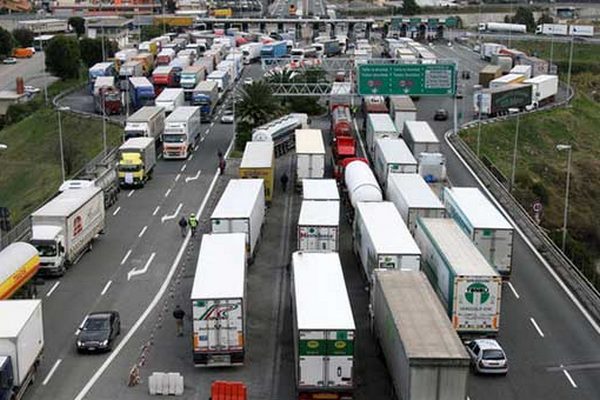







In the Netherlands, drivers of heavy goods vehicles on international routes recorded the fastest wage growth of any professional category in the sample of Dutch small and medium-sized enterprises in the first quarter of 2026. According to the Loonindex published by Van Spaendonck and Loket, a tool analysing around 1.2 million monthly payslips across the Dutch productive sector, the average salary for this category reached €3,840 gross per month, up 13.4% from the fourth quarter of 2025. Over the same period, the median wage across all SMEs stood at €3,612.52, with quarterly growth of 3.21%.
This data comes against a backdrop of already strong wage dynamics at the collective bargaining level. The Cao Beroepsgoederenvervoer, the national collective agreement for road freight transport signed between employers’ associations, primarily Tln, and trade unions Fnv and Cnv, has introduced a sequence of increases over the past two years that together exceed 14%. From 1 January 2024, base wages rose by 4%, followed by a further 2% increase on 1 July 2024. A new 4% rise took effect on 1 January 2025, and from 1 January 2026 all grades from A to H benefited from an additional 4% increase, which also applied to key allowances, including reimbursements for overnight stays away from home.
Pay tables published by Tln, Sfmobiliteit and Loonwijzer provide detailed gross monthly figures in force since the start of 2026. A driver classified in grade D, typical for standard national and international transport, can reach a maximum of around €3,520 gross per month. For grade E, reserved for more skilled roles or more complex loads, the maximum approaches €3,840. At the top of the structure, grade H, which includes specialised transport, senior roles and high responsibility, exceeds €5,000 gross per month.
These figures, however, represent the minimum guaranteed under the collective agreement. For drivers operating on international routes, actual pay is higher due to additional components not reflected in the base tables, including daily allowances, premiums for nights spent away from home, and compensation for overtime and night work. These elements explain why, in the Loonindex data, international drivers are not only better paid than colleagues on domestic routes, but also show much sharper increases.
The contractual framework over the past two years has not been limited to percentage adjustments. Renewals have also reshaped the internal structure of the grading system, removing lower tiers such as the former A’ grade and the so-called “step 0”, and raising entry levels within the pay scales. This approach is explicitly aimed at making the profession more attractive in response to a labour shortage that industry bodies and trade unions have long described as structural. One of the stated objectives of recent pay agreements is to attract new drivers, particularly younger entrants and newcomers. Vacancies remain high, and recruitment difficulties are concentrated above all among those willing to work international routes, with schedules and conditions often incompatible with family life.
Comparison with macroeconomic data from Cbs (Centraal Bureau voor de Statistiek, Statistics Netherlands) helps place sector trends in a broader perspective. In the first quarter of 2026, collectively agreed wages rose on average by 4.5% year on year, with real growth of 2% after inflation. The gap with the 13.4% quarterly increase recorded for international drivers is significant and suggests that, at least in this segment, market forces are operating with far greater intensity than collective bargaining. However, Cbs also highlights a point of tension for companies: over the past decade, productivity in the transport sector has not increased. Rising wages, without corresponding efficiency gains, are putting pressure on the operating margins of haulage companies, already dealing with high energy costs and intense international competition. While justified by labour shortages, the surge in driver pay raises questions about the medium-term sustainability of the model.
Pietro Rossoni