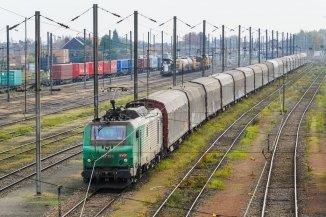
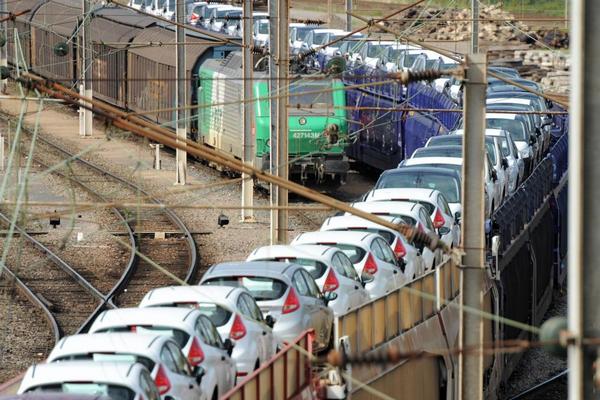







It took eight years, marked by bureaucratic hurdles and technical uncertainties, to erase the disaster of Rastatt. On 12 August 2017, the collapse of part of the eastern bore of the twin tunnels under construction for the doubling of tracks on Europe’s main north–south rail axis brought traffic to a standstill along the entire route on the German side of the Rhine for 51 days, with economic losses estimated at two billion euros. Now, in August 2025, Deutsche Bahn has declared the civil works on the Rastatt tunnel completed, reopening a crucial chapter in the line between Offenburg and Karlsruhe.
The tunnel, stretching 4,270 metres, is the centrepiece of the four-track expansion of this section of the Rhine Valley Railway linking Switzerland (Basel) and Germany. With the civil engineering phase concluded, work will now move on to all railway-related systems, including track-laying, electrification, signalling and telecommunications. DB expects to open the new section to service by the end of 2026.
Construction of the new twin-bore tunnel beneath the existing two-track line, designed to employ two tunnel boring machines simultaneously, began in May 2016 but came to a halt with the August 2017 collapse of one of the bores. The failure affected the historic railway line above, forcing a total shutdown of the corridor. The line reopened on 2 October 2017 thanks to an emergency solution that, while effective, carried a heavy drawback: part of the collapsed tunnel was filled with concrete, entombing the tunnel boring machine, while a reinforced concrete slab nearly 300 metres long was laid above the collapsed section.
This decision, likely unavoidable at the time, meant a long and complex restoration effort. The first step required removing the concrete plug and dismantling, piece by piece, the 2,000-tonne boring machine before excavation could continue to the planned depth. It is estimated that more than 50,000 cubic metres of soil and material were removed in the process.
The quadrupling of the entire rail corridor between Basel and Karlsruhe remains far from complete, with projections now stretching towards 2040. The central section in Germany, a stretch of around 100 kilometres between Schliengen and Offenburg, is still missing, aside from the part under advanced construction at Rastatt. This less than optimistic outlook has repeatedly led operators to call for urgent action to also strengthen the rail line on the left bank of the Rhine.
Piermario Curti Sacchi