




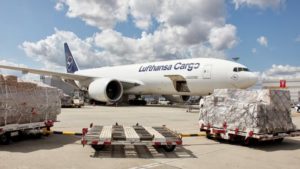
Lufthansa begins autumn 2025 facing two fronts of labour unrest: the reduction of 4,000 administrative roles and the looming threat of a pilots’ strike. The German carrier, which employs over 103,000 people worldwide, unveiled its new reorganisation plan on 29 September 2025 in Munich during its first Capital Markets Day in six years. The project foresees the elimination of around 20% of administrative jobs by 2030, with the IT division hit hardest, losing up to 2,000 positions. Most cuts will take place in Germany, particularly at the Frankfurt headquarters.
Management has clarified there will be no compulsory redundancies but rather a gradual process of natural turnover supported by digitalisation and automation. At the same time, the airline is introducing its Matrix Next Level strategy, designed to centralise functions previously divided among the group’s various subsidiaries. On the technology front, the One IT project aims to streamline what is seen as a fragmented and redundant IT infrastructure.
Financial targets remain at the core of the measures. The group is aiming for an adjusted Ebit operating margin of between 8% and 10% for the 2028–2030 period, up from the previous 8%. From 2028 onwards, structural savings of €300 million are expected, while one-off restructuring costs will reach €400 million. The target for free cash flow is set at over €2.5 billion a year.
According to Bernstein Research, Lufthansa Airlines’ operating margin has fallen to zero over the past twelve months, compared with 8% in 2019, a figure that explains investors’ calls for decisive action. Markets responded positively to the announcement, with shares rising 3.4% on the day of the presentation, though analysts remain cautious about the airline’s ability to meet its new goals.
As the restructuring gathers pace, the company is also facing a standoff with its pilots. From 12 to 29 September, the Vereinigung Cockpit union held an internal ballot that saw a 90% turnout among Lufthansa pilots and 95% among those at Lufthansa Cargo. The strike was approved by 88% of passenger pilots and 96% of cargo pilots, involving around 4,800 professionals. According to union president Andreas Pinheiro, “strikes are possible at any time.”
The main issue concerns the company’s pension scheme. Since 2017, the system has no longer guaranteed fixed benefits but only defined contributions, transferring investment risk to employees. The unions have criticised the deterioration in conditions, despite the fact that pilots’ company pensions average over €8,000 per month on top of state pensions. Lufthansa’s management has rejected the demands, arguing that there is no room to strengthen what it considers an already generous scheme.
Timing could hardly be worse: Germany’s autumn holidays begin on 13 October, and a pilots’ strike could disrupt thousands of journeys, with cancellations mainly affecting flights through Frankfurt and Munich. Eurowings operations, however, would not be affected. The pilots’ protests have been joined by the Verdi union, which described the cuts as “decimations” and vowed to fight them in upcoming labour negotiations. The European Trade Union Confederation has also voiced concern over the social impact of Lufthansa’s restructuring.
According to industry analysts, Lufthansa’s challenges go beyond cost containment. Gerald Wissel of Airborne Consulting noted that the airline continues to suffer from the complexity of operating thirteen different long-haul aircraft models, a figure set to drop to nine in the coming years. Organisational fragmentation, resulting from successive acquisitions and disparate IT systems, adds further inefficiency. Nonetheless, the group is pursuing expansion plans: by 2030, it aims to integrate 230 new aircraft, including 100 long-haul units.